“River” (Joni Mitchell song)
The Hanging GirlJoni Mitchell’s “River” (Joni Mitchell song) enters the investigation first as a fragment remembered from June Habersaat’s words on a road in Aakirkeby. Its longing to escape and its image of a river where one might skate away turn a song into a possible clue: the investigators use it to test memories and to reconnect people with Alberte’s past.
Identification and First Recognition
Carl Mørck asks Assad to repeat what June had said on the road. Consulting his notebook, he reconstructs the lines imperfectly, including the wish for a river to skate away on and the contrast with a place where it stays green rather than snowing. Hardy Henningsen recognizes the words as Joni Mitchell. The recognition matters because Carl has not been asking about music in general; he is trying to establish whether June’s recalled phrase belongs to a particular song.
At Mika’s suggestion, the group finds the track on Hardy’s iPod playlist and plays it through a docking station. Mika identifies it as Joni Mitchell’s “River,” from 1970. The recording opens with a jazz-like, discordant rendition of “Jingle Bells” before arriving at the lyric Assad has been listening for. Its clear voice and melancholy piano make the song’s four minutes a sustained expression of longing and loss, rather than merely a matching phrase in Carl’s notebook. Carl suspects that Hardy’s familiarity with it is not coincidental, though Hardy says he does not know June and cannot explain what the song means in this particular situation.
Meaning as Clue and Repeated Test
Carl searches for an explanation beyond the song’s identification. A page of search results describes “River” (Joni Mitchell song) as a song about Christmas spent far from home, amid unfamiliar traditions and without snow or ice-skating; more broadly, it frames the song as a wish to leave the present behind and return to simpler, more innocent days. That account gives June Habersaat’s remembered words a possible emotional resonance, but it does not settle what they mean in the case. Hardy says the song reaches him deeply, while acknowledging that he cannot connect it to June or to the situation Carl has described.
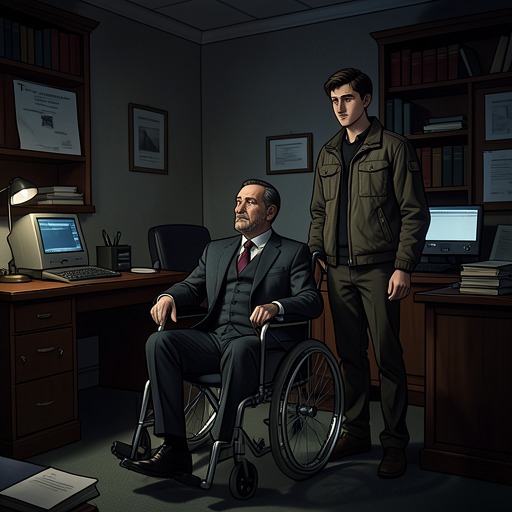
The investigators then turn the song from an object of discussion into part of a test. Mika places a call and holds the phone near Hardy’s ear; when June Habersaat answers, Mika plays the recording and gradually moves the phone toward Hardy’s mouth. Hardy sits motionless, his eyes unfocused, concentrating on timing, tone, and an anonymous-sounding voice. The scene makes the song more than a remembered lyric: its playback helps stage a carefully controlled encounter with June, while Hardy’s disciplined performance recalls his work as a policeman.
The track also provides a route back to Alberte’s memory. Rose asks Synne Veland whether Alberte might have sung “River,” recalling that she had earlier described Alberte as a good singer. Synne listens to the recording, initially absorbed by it, then recognizes it and says Alberte may have hummed it. Her recollection is cautious rather than definitive, but it gives Carl’s musical lead an independent connection to Alberte. The song thus gathers uncertain memories from different people: June’s words on the road, Hardy’s recognition, and Synne’s impression of Alberte humming. Its recurring image of escape and its melancholy tone bind those recollections without proving that they all refer to the same moment or intention.
The Song as Evidence and Performance
“River” moves through the investigation in forms that carry different kinds of authority: a phrase in a notebook, a recorded performance, and a recollection prompted by listening. None is equivalent to direct proof. The words can be recognized, played back, and associated with Alberte, yet each step depends on a person’s memory and interpretation. The song therefore works less like a cipher with one recoverable answer than like a shared reference point around which uncertain testimony can be compared.
Its most consequential shift is from something remembered to something deliberately performed. When the recording accompanies the call to June Kofoed, the track becomes part of a police-style test: sound, timing, and an anonymous voice are arranged to provoke a response. That transformation gives the song a practical role without making its meaning certain. Its language of departure and loss may suggest an emotional frame for the recollections, but the evidence does not establish why June used the lyric or whether every memory of the song belongs to the same occasion.
The Remembered Line and the Recorded Song
The difference between Carl’s notebook version and the lyric that eventually plays is small but telling. His hurried recollection begins with a wish for a river and adds that it does not snow where everything stays green; on the recording, the line Assad is waiting for begins, “Oh, I wish I had a river I could skate away on.” The recording does not explain June’s purpose in saying it, but it lets the investigators distinguish a recognizable lyric from Carl’s approximate transcription. In that passage, “River” (Joni Mitchell song) is at once a memory people can misstate and a fixed recording against which their memories can be checked.