Birch Plywood Fragment
The Hanging GirlThe Birch Plywood Fragment is a small piece of processed wood recovered near Alberte Goldschmid’s bicycle, whose significance remained contested throughout the investigation of her death. Its location seemed to align with the path between the collision point and the bicycle’s resting place, and its birch-and-glue composition suggested plywood. Yet investigators initially treated it as unrelated to the collision, while Christian Habersaat believed the conclusion was premature. Later tests confirmed the splinter was plywood but did not establish that the board found in the water had caused the collision. The fragment thus became a material clue that raised questions without resolving them.
Discovery and physical description
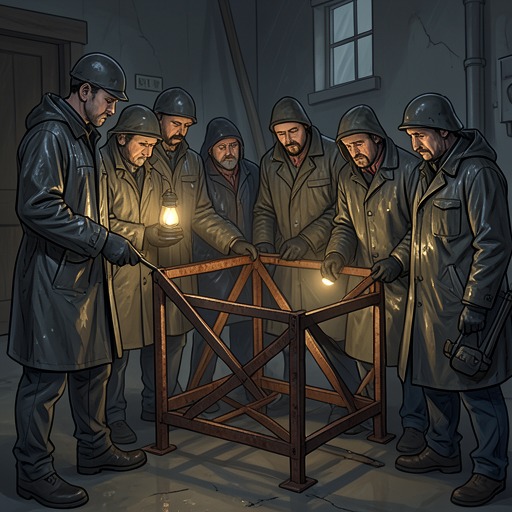
After technicians had cleared the area, Habersaat recorded finding the splinter six metres north of Alberte’s bicycle. The bicycle had been recovered from a thicket, and the fragment’s position was described as lying almost in a straight line between the place where the bicycle had been hit and where it came to rest. A separate note, also in Habersaat’s handwriting, emphasized this alignment. The location made the fragment worth considering in relation to the collision, though position alone could not show how it arrived there or what part, if any, it had played.
A local technical team examined the fragment and identified its material as apparently birch. Remnants of glue suggested that it came from plywood. These observations gave the object a more specific identity than an unexplained piece of wood, but they did not establish its source. The technicians reported that no similar fragments had been found in the collision area and concluded that the splinter did not originate from the collision. Their conclusion distinguished what the material could indicate from what the scene evidence, as they assessed it, could prove.
Habersaat’s challenge to the initial assessment
Habersaat disagreed with the technicians’ conclusion. He reported the fragment to the investigation leader, Detective Jonas Ravnå, and requested closer analysis by the police technical department in Copenhagen. The request was denied. The island’s vehicles had been summoned for examination, but no material that could be connected to the find had been identified at that point. In Habersaat’s account, therefore, the absence of a match did not settle the question; it was also the reason for seeking further examination.
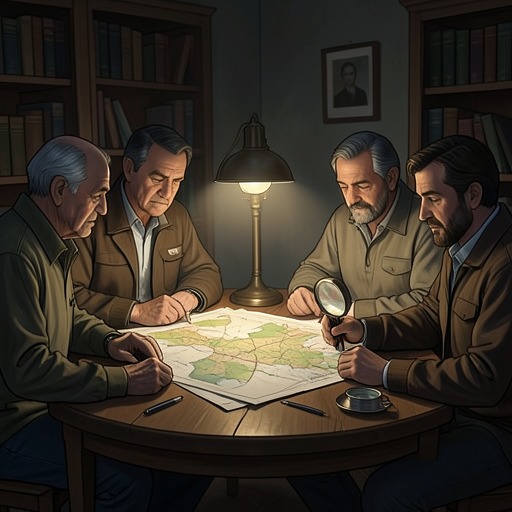
The fragment’s importance sat within a broader uncertainty about the collision scene. Carl Mørck questioned whether Alberte’s death could be established with certainty as traffic-related and asked what the postmortem and the scene had shown. He also noted the absence of leads such as skid or tire marks and asked whether it had been raining. These questions do not supply answers about the fragment, but they show why a small piece of material could matter: the scene offered few obvious traces, and the fragment’s location and composition invited comparison with other evidence.
Habersaat’s records also included a plan showing a tree, the road beside it, and the bicycle in the thicket. Carl observed that the plan was precise enough that technicians had probably drawn it rather than Habersaat himself. The diagram placed the bicycle and its surroundings into a spatial account of the incident; the fragment’s recorded position added another point to that account. Neither the drawing nor the alignment, by itself, identified a vehicle or demonstrated a mechanism of impact.
Comparison with the board found in the water
A later record noted that the material of another item was also birch, while a closer examination could not determine with certainty whether it came from the same board as the splinter. Habersaat requested a comparative analysis of the glue on the fragment and the plywood, pointing out that this comparison had not previously been made. Authorization was again not granted. The distinction is consequential: a shared material category did not amount to a demonstrated match, and the proposed adhesive comparison remained unavailable at that stage.
When the old examinations were eventually recovered, technical staff confirmed that the splinter was plywood. They also concluded that the board found in the water was not the board that had sent Alberte up into the tree. This result narrowed one possible connection without establishing the fragment’s full provenance. The fragment was indeed plywood, but the identified board could not account for the collision in the way previously considered.
The later technical review also tested the proposed means of attaching a board to a Volkswagen Kombi. The boreholes Habersaat had described could not, by themselves, have been used to fasten the board to the vehicle; hooks through the holes would have been necessary, leaving the further question of where those hooks could attach. If the board had been fixed to the furrow beneath the windshield wipers, the technicians reasoned, both the windshield and board would have been thrown clear, and traces would have been expected. The surviving evidence therefore challenged the suggested arrangement rather than confirming it.
Evidentiary limits and significance
The fragment’s investigative history turns on distinctions among observation, inference, and proof. Its location was recorded; its birch material and plywood origin were assessed; and its position prompted Habersaat to question the initial dismissal. But the fragment was not conclusively matched to the board found in the water, and later technical work ruled that board out as the object that propelled Alberte into the tree. The available evidence does not establish what the splinter came from or how it reached the roadside.
That unresolved status makes the Birch Plywood Fragment significant as a record of both the promise and limits of physical evidence. A narrow strip of wood could be mapped against the bicycle’s position, examined for material and adhesive, and compared with a larger board. Each step clarified something, but none supplied the missing connection between the fragment, a vehicle, and the fatal collision. The fragment preserves the investigation’s central tension: a clue can be concrete enough to challenge an early conclusion and still remain insufficient to identify a cause.