Hammerknuden
The Hanging GirlHammerknuden, known in the account as Camel Head Cliffs, is the rocky Bornholm setting for the discovery of a plywood board that Christian Habersaat regarded as a possible piece of evidence in a collision investigation. The board’s battered condition, birch construction, and uncertain relationship to an earlier fragment made the site a source of both renewed hope and unresolved doubt.
Setting and Name
The journal entry places the find at Hammerknuden on Wednesday, August 2, 2000. In a later exchange, Assad asks what the cliffs were called and is told Camel Head Cliffs, confirming the name used for the spot in the account. The discovery took place among rocks at the cliffs, where a board had become wedged.
The Board's Discovery
Peter Svendsen, a ten-year-old boy from Hasle, pulled the board free while playing at Camel Head Cliffs. It was heavy, so he left it on land rather than carrying it away. His father, Gorm Svendsen, a local community officer, then contacted Habersaat. Gorm recalled Habersaat’s local television interview, in which he had appealed for a plywood board that might have produced a splinter relevant to the investigation.
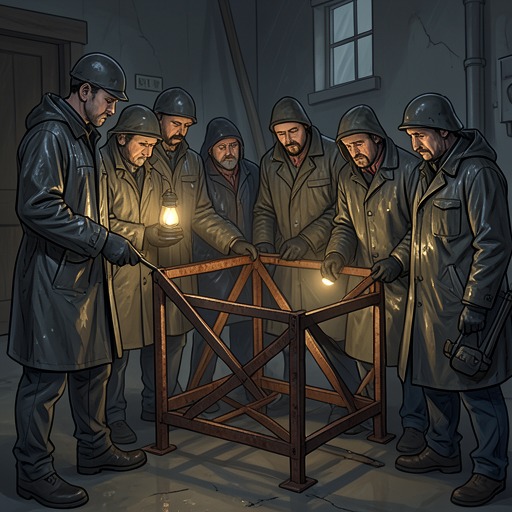
The board was not intact: Habersaat described it as a fragment of a larger piece, perhaps originally about one metre high and two metres wide. It was extremely battered, but several layers of glue remained intact, suggesting that the plywood had originally been watertight. Bore holes and faint shadows on one side hinted at printing or similar markings, though the account does not establish what those traces showed.
Forensic Examination and Uncertainty
Habersaat requested a thorough analysis of the wood and obtained authorization after discussion with his superiors. The examination identified birch, as it had in the earlier splinter, but could not determine with certainty whether both came from the same board. Habersaat’s theory was that the splinter had peeled away from an outer layer of the plywood during the board’s time in the water. Working with technicians, he estimated that the board had been 20 to 24 millimetres thick, with the middle 18 millimetres still intact.
He also sought a comparative analysis of the glue on the splinter and the board, a test he considered important because it had not been done before. Authorization was refused. Habersaat therefore held to his theory that the board was involved in the collision while acknowledging the weakness of the inference: flotsam and jetsam were common on the island, and matching wood types could be coincidental.
The Missing Board
A later note records that the plywood board found on 8/2/2000 had gone missing and might have been destroyed. The disappearance removed the physical object from further examination, leaving Habersaat’s proposed connection dependent on the limited tests already carried out. Hammerknuden thus remains significant not because the find conclusively solved the case, but because it offered a tangible lead that could not be securely verified—and was ultimately no longer available for study.