Johannes Tausen
The Hanging GirlJohannes Tausen is a professor emeritus of theology whose recollections give Carl Mørck and Assad their first substantial account of Frank Brennan as a student and religious thinker. A former lecturer at the Open University, Tausen remembers Frank as unusually inquisitive and describes a conversation in which Frank presented the sun and nature as the foundations of religious meaning. The recollection supplies an intellectual thread connecting Frank to the solar language later heard at the Nature Absorption Academy, though Tausen does not claim knowledge of Frank’s subsequent life or whereabouts.
Identity and Academic Background
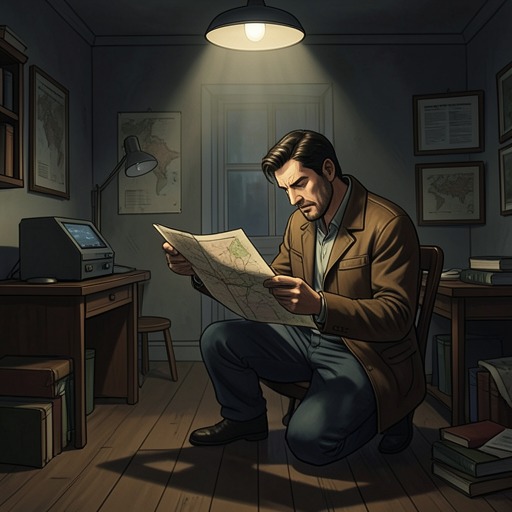
Tausen is introduced as a genuine professor emeritus of theology, an appearance Carl Mørck contrasts with an imposing scholarly image: Tausen is hunched over, and the pain he lives with has become familiar to him. His hand shakes as he pours Earl Grey tea, but his attention is alert. The contrast between physical frailty and intellectual readiness shapes the encounter; once the investigators explain their purpose, Carl recognizes that Tausen may be able to help them unravel more than a routine academic question.
Tausen had given a short, open lecture series at the Open University in the fall of 1995. Its title, From Star Myths to Christianity, reflected its subject: interpretations of religious traditions through astronomical phenomena. He recalls strong attendance and says the topic was controversial. The theories that caught his interest had first been taken up by a young American woman challenging established science, and Tausen found the resulting controversy refreshing. He mentions the documentary Zeitgeist as a later account that might be similar to his own, while making clear that he has not seen it.
The Investigators’ Visit
Carl Mørck and Assad come to Tausen while investigating Frank in connection with an accident on Bornholm. They initially have only the name Frank Scott, which Tausen suspects is mistaken. When Assad shows him a photograph of the man beside the VW Kombi, Tausen studies it and says he believes he recognizes the person, though his identification is qualified rather than absolute. The image prompts recognition, but it is his memories of the student that give the identification meaning.
Tausen takes care over the possibility that his recollection might be wrong and cause someone harm. Carl Mørck encourages him to say what comes to mind and promises the information will be filtered. Carl privately knows that spoken information cannot simply be taken back. The exchange frames Tausen not as a confident witness with a complete record, but as a careful source whose partial memory must be weighed against the investigation’s other evidence.
Frank as a Student
Tausen remembers Frank as different from most students: someone who seemed to have undergone an awakening and became the most inquisitive student he had ever taught. He explains that lecturers remember students who keep a discussion alive. This detail gives Frank an academic identity distinct from the false or uncertain name first supplied to Tausen: he was not merely present at the lectures, but engaged enough to remain vivid in his former teacher’s memory.
When asked what Frank believed, Tausen first connects his ideas to the lecture’s larger subject. He agrees that religions often follow the sun and stars because life on Earth and in the universe can be understood through those patterns. In his account, astronomical observation offers a way of thinking about existence, even the existence of God. This is Tausen’s interpretation of the ideas under discussion; he presents it as a view Frank shared, not as a doctrine he can document in writing.
The Recalled Message and Its Significance
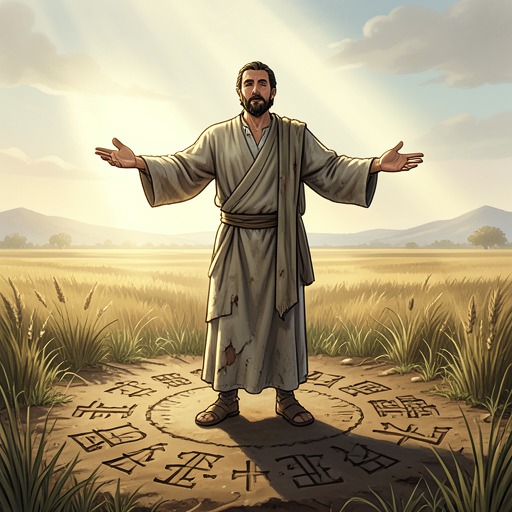
After a pause, Tausen says he thinks he remembers what Frank told him the last time they spoke. Because he introduces the recollection as approximate, its substance matters more than any claim to exact wording: Frank had argued that people seeking to worship everything divine should turn toward what is certain—the sun as a source of life and nature as a source of food. He invoked Horus as the first sun god and as a primal human instinct, then urged reverence for both sun and nature. The remembered appeal ended with urgency: these neglected forms of respect should be taken up as soon as possible. Tausen recalls that Frank then thanked him.
The idea resonates with the Nature Absorption Academy’s public teaching, where Atu Abanshamash Dumuzi invokes Horus and presents nature and life as sufficient grounds for ritual gratitude. At the Academy, that language is delivered to assembled disciples and repeated through collective practice; Tausen’s account instead locates a related argument in Frank’s conversation with a theology lecturer. The resemblance helps the investigators understand the religious vocabulary surrounding Frank, but the evidence does not establish that Tausen knew the Academy or that his lectures caused its teachings.
Tausen’s importance lies in this limited but consequential bridge between a photograph, a remembered student, and a belief system. He cannot provide the investigators with Frank’s whereabouts, and he repeatedly marks the uncertainty of his memory. What he can supply is a distinctive intellectual portrait: an unusually questioning student who connected religious history to the sun, nature, and the conditions of life. That portrait makes the figure in the photograph more than a name attached to an accident, while leaving the investigation to establish what Frank did with those ideas afterward.