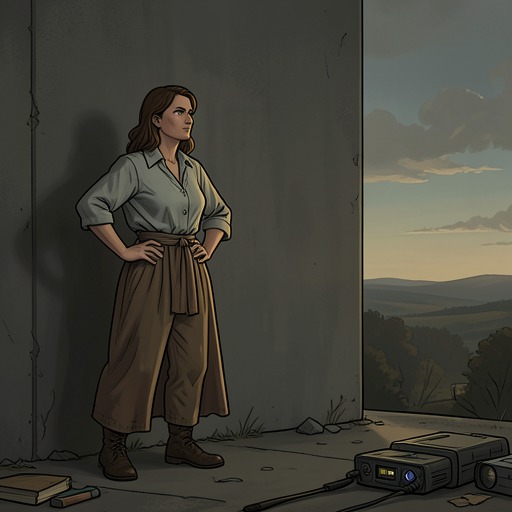
Kalmar Central Station
The Hanging GirlKalmar Central Station is the arrival point that turns Wanda Phinn’s journey toward Atu Abanshamash Dumuzi into an immediate test of resolve. Wanda reaches it in October 2013 expecting no welcome, but determined to find her way to him regardless. For Pirjo Abanshamash Dumuzi, the station and its square are where an unwelcome arrival becomes visible and urgent: she sees Wanda there and recognizes that simply hoping the visitor will go away is no longer an option.
The End of Wanda’s Journey
Wanda’s final approach to Kalmar begins when she boards a train in Copenhagen. After the flight, the rail journey through Sweden feels to her unlike any landscape she has known: farmland broken by bedrock and long dry-stone walls gives way to red wooden houses and pine forests. She imagines this unfamiliar country as the place where she can escape her past, establish a life with Atu, and find a kingdom of her own. Her romantic certainty shapes the significance of the station before she even arrives: it is not merely a stop on a route, but the threshold to the future she believes awaits her.
By the time the train has passed Karlskrona, Wanda is told that Kalmar is about half an hour away. A man sitting opposite asks whether she has been there before. When she names Atu, the man’s response suggests concern, and he asks whether she knows what she is getting herself into. Wanda reads his question as possible prejudice rather than as a warning she should heed. At the station he helps her off the train and sets down her suitcase, making this brief encounter her first contact with someone who appears to know that her arrival may not be straightforward.
Waiting in the Station Square
Wanda has not been invited, and she anticipates that those around Atu may resist her presence. She has nevertheless announced her arrival by email and planned for either outcome: if someone meets her, she can proceed with them; if nobody comes, she has booked a hotel, has enough money for several weeks, and expects persistence to secure an audience. Her preparation makes the empty welcome a setback, not a reversal of purpose.
She waits in the square, leaning against a flagpole and squinting at the sun. No one has come to meet her. Rather than abandon her plan, she considers taking her suitcase to the hotel, where she expects she can arrange a taxi and continue toward the Academy. The scene places practical uncertainty beside her confidence: she does not know how she will gain access, but she is already making the next move.
Pirjo Sees Wanda
Pirjo has anticipated Wanda’s arrival and is troubled by what it could mean for her life with Atu. She believes Wanda’s interest could awaken Atu’s curiosity and desire, and she cannot tolerate the possibility that Wanda might enter their world. With Wanda expected at Kalmar Central Station, Pirjo thinks through the situation and decides to improvise rather than let the visitor’s arrival unfold beyond her control.
In October 2013, Pirjo sits astride her scooter and sees Wanda in the square in front of the large yellow building, leaning against a flagpole with her suitcase. The sight makes the threat immediate. Pirjo measures Wanda’s beauty and difference against the twenty years she has devoted to Atu and the hope that he would eventually return her love. She briefly wonders whether to turn around, but concludes that Wanda would find her own way even if left alone. She trembles, yet stops short of immediate violence: before going to extremes, she decides that other methods must be tried. The station square thus marks both Wanda’s arrival and Pirjo’s shift from anxious anticipation to action.