Listed Community Hall
The Hanging GirlListed Community Hall is a community venue in Listed whose ordinary calendar of local activities stands in sharp contrast to the violence that took place there at Christian Habersaat’s retirement reception. Habersaat chose the hall for a gathering only six hundred meters from his house; the reception ended with him drawing his pistol in front of the attendees and shooting himself. The room subsequently became a crime scene, a place of witness recollection, and a point of departure for the investigation into his death.
A local gathering place
The hall served as a venue for events large and small in the remote community. Listed’s local program included activities for elderly residents such as line dancing, Nordic walking, and pétanque, and events for children including a bonfire, bread baked over a fire, softball, and pumpkin carving. A civic-association account addressed practical questions about the town: whether homeowners should have to meet a residency requirement, whether a bench by Mor Markers Gænge road should be replaced, and whether there was enough money for a pontoon bridge by the bathing area. The notice announcing these activities appeared on an unattractive glass-fronted board, a modest detail that locates the hall within a world of everyday local administration and recreation.
This public life is not presented as grand or ceremonial. The program concerned small, immediate matters, and the community hall brought residents together around them. Habersaat’s choice of the venue placed his retirement reception in that familiar local setting rather than at a distance from the community where he had worked. Its significance in the story therefore grows from the collision between an ordinary civic space and an extraordinary act carried out before local witnesses.
Habersaat’s retirement reception
Habersaat had rejected the idea of being honored by colleagues whom he regarded as supporters of a system he despised, and he resented the direction society was taking. He chose Listed Community Hall for the main reception, close to home, believing that what he had planned would be more decent there. Before leaving, he inspected and laboriously ironed his parade uniform in the room that had once been his family’s lively living room. The hall thus became the destination for a formal occasion prepared against the backdrop of his estrangement from both professional institutions and his former family life.
The attendance fell far short of what Habersaat appears to have expected. He had hoped to see people he had helped through hard times, people for whom he had tried to correct injustices, retired colleagues from the uniformed police in Nexø, and residents who had sought his help in the small community. Instead, those present included the chair and substitute accountant of the civic association, the police commissioner and his immediate subordinate, the police union representative, and only five or six people whom he had invited personally. Faced with this small gathering, he abandoned his long prepared speech and proceeded without it.
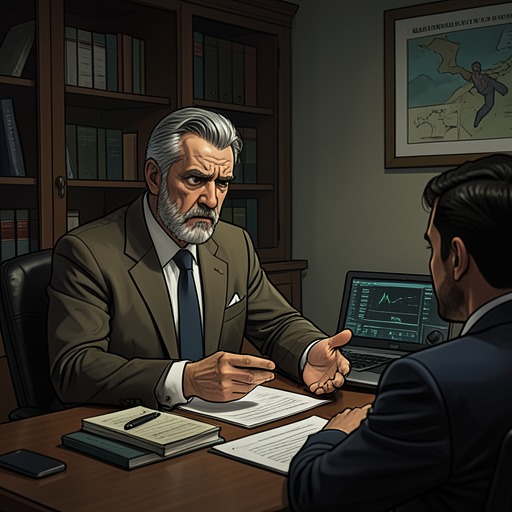
Habersaat thanked the attendees on a sunny morning and nodded to his old neighbor Villy Kure, known locally as Uncle Sam, to begin filming. He poured white wine into plastic glasses and set out peanuts and potato chips on foil trays; no one else offered to help. As the attendees gathered in front of him, he discreetly took the safety off his pistol. When some objected to his tone, Habersaat acknowledged that they were right, but described the moment as one in which he intended to put an end to things and make an example his colleagues would not forget. He then pulled out the pistol and pointed it at his superiors. The reception became the setting for his suicide, rather than the recognition of his career he had anticipated or staged.
The scene and its witnesses
The hall’s role changed at once from community venue to the location of a violent death. Villy Kure’s recording preserved the reception, and the police commissioner later gave Carl Mørck, Assad, and Rose a DVD made by the friend who had been invited to film. The recording connected the investigation to an event that had taken place before a small group in the hall, rather than leaving Habersaat’s death as an account without a direct record.
When Carl Mørck and Rose visited the venue, they met Bolette Elleboe, the civic association’s substitute accountant and the hall’s keyholder, and Maren, its chair. Rose asked Bolette whether the shooting had happened there in the manner she demonstrated. Bolette confirmed the location and pointed to the remaining stain on the floor. She did not plan to clean it herself again and said she would call a cleaning company. The trace made the hall’s recent past materially present: the site’s ordinary maintenance had become entangled with the aftermath of the shooting.
Bolette explained that years working as a social worker in settlements in Greenland had exposed her to violence and that, although the event affected her, she felt she had to move on. Her account distinguishes composure from lack of impact. Maren, by contrast, appeared sad and uneasy about the visit. The witnesses’ different responses place the hall not only in the sequence of events but also within the community’s work of living with what happened there.
Community memory and the Alberte case
The hall’s everyday civic function also gives it a wider connection to the investigation into Alberte Goldschmid’s death. At the Bornholm Folk High School, about fifty students aged eighteen and older had spent November 20, 1997, taking courses in music, glasswork, painting, or pottery, with no sense of danger; Alberte had been killed in a car accident that morning. More than a day passed before she was found high in a roadside tree by Christian Habersaat, then a uniformed officer from Nexø. The later inquiry into the hall shooting therefore opened onto the unresolved case that had occupied Habersaat for years, rather than ending with the circumstances of his suicide.
Residents and former school associates supplied memories shaped by repeated questioning and by the passage of time. Inge Dalby recalled that Habersaat had asked her many times about the name of the man Alberte had been seeing, and later said he repeatedly returned to the school, pressing people to identify someone among them who might have killed Alberte. Her recollections were incomplete: she remembered that the name sounded unusual and that the man came from Copenhagen, while the vehicle associated with him was recalled as a VW of a similar color and shape to a photograph. These statements belong to the broader investigation, not to the hall’s physical history, but they explain why the place where Habersaat died became the entry point to the case he had pursued so obsessively.
Listed Community Hall consequently holds two contrasting kinds of memory. It is the practical meeting place of a small community, where residents debated benches, bridges, and local events; it is also where Habersaat’s failed retirement celebration became a filmed death witnessed by neighbors and local representatives. The remaining floor stain, the recording, and the witnesses’ accounts turn that familiar venue into both evidence-bearing ground and a public reminder of the case that had defined Habersaat’s final years.