Ronny's Claimed Memoir
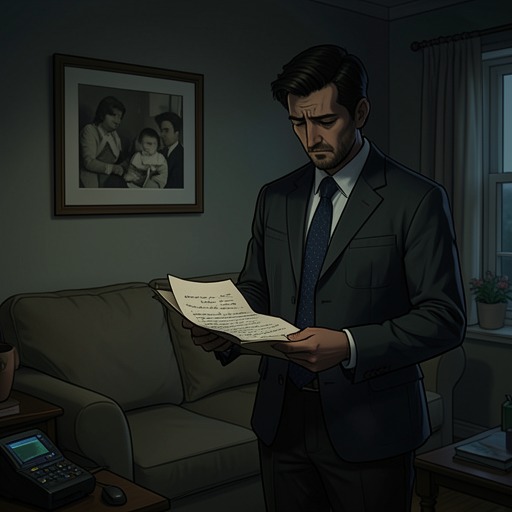
The Hanging GirlRonny's Claimed Memoir is an unpublished account that Ronny reportedly said he had put into writing and planned to publish. Its importance lies less in any known contents than in the danger Carl Mørck believes it carries: it may preserve Ronny's claim that he killed his father and implicate Carl as an accomplice. After Ronny dies, the manuscript becomes something Carl wants to find before it circulates among the family, while its truth and even its eventual fate remain uncertain.
Origins and Alleged Contents
Carl learns of the project through Ronny's last email, whose tone he reads as a threat. He concludes that his cousin means to blackmail him, and considers Ronny capable of doing so, particularly because Carl believes Ronny is often short of money. The threat is therefore not merely that Ronny might make an accusation aloud: he says he has recorded it in book form and intends to seek publication.
The alleged material is especially damaging because Ronny had repeatedly blurted out that he had murdered his father. He had also publicly declared that Carl helped him commit the killing during a fishing trip. The memoir would thus supposedly join Ronny's self-incrimination to a charge against Carl, turning an accusation already voiced in public into a written account that might be passed around or published. The excerpt supplies no pages from the manuscript and no independent confirmation of its claims. What is known about it comes through Carl's recollection of Ronny's email and his account of earlier statements.
Carl's Fear and the Question of Credibility
Carl dismisses the accusation as nonsense, but his certainty about its falsity does not prevent him from fearing its effects. He worries that the allegation could damage him in his position of trust, especially under a superior such as Lars Bjørn. His concern is practical as well as personal: even a baseless claim, once repeated or circulated, could become difficult to contain. The threatened book therefore exerts pressure before anyone knows whether it exists in a finished or publishable form.
The narrative presents Ronny's account through Carl's hostile, anxious perspective. Carl regards the email as blackmail and the accusation as drivel, while his account also records that Ronny had made the murder claim more than once. These details do not establish whether Ronny's statements were truthful, fabricated, or deliberately manipulative. Nor does the possibility of financial motive resolve that uncertainty. The memoir remains an alleged record, framed by a recipient who has reason to fear it and a dead author who can no longer explain or defend it.
The Manuscript After Ronny's Death
Ronny's death does not end Carl's concern. He has heard nothing further about the matter, but decides that the situation must now be laid to rest. That resolution depends on locating the writing: Carl considers attending the funeral in Brønderslev and wonders whether Sammy might persuade Ronny's wife to surrender some of the inheritance. He suspects that she would keep anything of financial value and give up the rest, a category that might include Ronny's literary papers.
Carl thinks Sammy could succeed in getting the notes home and decides he must obtain them first, before they make the rounds of the family. This is a plan, not a reported recovery: the evidence does not say that Carl attends the funeral, finds the manuscript, or prevents its circulation. His urgency instead reveals how the book has changed status. While Ronny lived, it was a threatened publication; after his death, it becomes a potentially inheritable object whose custody may determine who encounters the accusation next.
Narrative Function and Unresolved Status
A report from Carl's mother that Ronny was rich by the end sharpens the uncertainty around both the cousin and his papers. Carl responds by speculating that Ronny may have dealt in drugs and wondering whether he might have ended up executed within the Thai justice system. The exchange offers no proof about the source of Ronny's wealth, but it sits beside Carl's earlier suspicion that Ronny wanted money from him. Together, these details keep financial motive in view without confirming it.
The memoir's force comes from the gap between its claimed existence and its absent contents. It has enough reported substance to threaten Carl, yet no reader or investigator in this passage can assess the writing itself. Its projected movement—from Ronny's email to a possible inheritance, then into family circulation or publication—makes possession as consequential as authorship. Whether the manuscript is a genuine confession, a calculated accusation, or something less complete remains unresolved.