Rose
The Hanging GirlRose is the incisive, unsentimental investigator in Carl Mørck’s team, and her work proves central to reopening the Alberte Goldschmid case. She turns disorder into usable evidence: coordinating the team’s review of Christian Habersaat’s files, contacting people connected to Bornholm, and patiently searching Bjarke Habersaat’s computer. Her precision advances the investigation, but the footage of Christian’s suicide also brings an unexpected personal distress into view; later, her sister reports finding Rose injured and confused.
Identity and Place in the Investigation
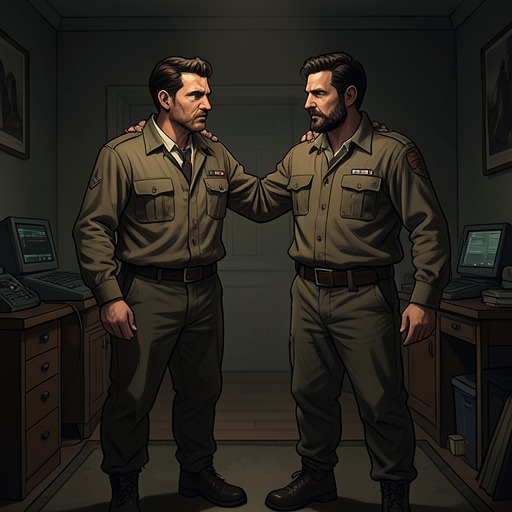
Rose works alongside Carl Mørck and Assad, contributing both practical organization and a readiness to challenge the team’s assumptions. When John Birkedal brings material from Christian Habersaat’s investigation, Rose takes charge of the process rather than allowing the visit to end prematurely. She proposes that the three investigators sit together and read through the files, anticipating that they will need further questions about the case and its history. Her composed persistence contrasts with Birkedal’s apparent wish to avoid further involvement.
Her manner can be caustic, but it is not evidence of indifference. She waves away Carl’s tobacco smoke with visible disgust, and later punctures his pride in arranging the case material by pointing out the dust on a shelf. The joke does not undo the accomplishment: Rose recognizes that the material has been brought into view and can now be worked through. Across the investigation, her humor and impatience sit beside serious attention to details others might overlook.
Organizing the Case and Pursuing Leads
Rose’s contribution begins with the practical work of sorting Habersaat’s papers. At the house, amid boxes and documents, she notices folders of interview transcripts from the students who knew Alberte. Several described Alberte as someone who flirted with many of the young men; the attention she received, they said, annoyed other students. Rose’s discovery gives the investigators a more complicated picture of Alberte’s relationships than a file of police leads alone could supply.
She also takes responsibility for contacting Bornholm associations and people connected with the commune active in 1997. When those inquiries produce no immediate breakthrough, she continues calling people rather than treating an absence of results as an answer. Three practitioners of alternative treatments tell her they have worked in their fields for nineteen, twenty-five, and thirty-two years. Only Beate Vismut, who worked with the relationship between body and nature, remembers the young man with the VW Kombi. Vismut cannot provide his name or a fuller description and says she avoids learning clients’ personal histories, explaining that she was born blind and works differently from sighted people. Rose nevertheless extracts something new from the conversation, even though the account does not identify it.
Rose’s persistence also helps turn a public appeal into a new investigative opportunity. After Carl’s appearance on television, she welcomes him with unusually open admiration: several people have called, and one lead seems promising. Assad is already speaking with the caller when Carl arrives. Rose’s response marks a change in the team’s immediate prospects, though the caller’s recognition of the man remains a question at that point.
Alberte’s Drawings and the Search for Frank
Among the material Rose obtains is a copy of the list of works intended for the folk school exhibition cancelled after Alberte’s death. Alberte’s drawings are numbered twenty-three through twenty-six. Rose brings the sketches to the team and singles out the last one: it resembles an earlier drawing of Alberte nude in front of a mirror, but this time a man’s face appears behind her. The image gives the investigators their most detailed likeness of Frank Brennan so far.
Rose sees the drawing as useful without claiming to know exactly how it was made. She considers that Alberte might have drawn herself in the mirror and added Frank as a life-drawing subject during one of their meetings. She also wonders whether he knew the image was intended for the exhibition, while allowing that he might never have seen it. The uncertainty matters: the drawing offers a clearer face, but not a settled account of Frank’s intentions or his relationship with Alberte. Rose recognizes that it could have been shown on television had Carl not already made his appearance, underscoring how quickly an investigative opportunity can close.
The Computer Search and Its Reversal
Rose’s most laborious discovery comes from examining Bjarke’s old computer. The machine runs Windows 95, and about forty-five percent of its memory is occupied by games, some apparently untouched for years. Rose searches through more than five thousand photographs of men in leather clothing before finding an image that changes the team’s understanding of its earlier work. Her account makes the method as important as the result: the decisive file was buried among executable files inside a 1995 Star Trek game, a hiding place easy to miss without a thorough examination.
The same search uncovers Bjarke’s poem, titled To Frank. Rose reads it as an expression of rejected love and intense anger: Bjarke blames Frank for bringing down his world and ruining his family, and resents Frank’s very existence. The poem shows that Bjarke knew about Frank and Alberte but had not told his father. It raises a new question for Carl and Assad—why Bjarke kept that knowledge to himself—rather than supplying a complete explanation.
The photograph Rose finds overturns the direction of the investigation. Carl realizes that the search for a wooden board, the pursuit of the VW Kombi, and the suspicion focused on Frank, also known as Atu, have all been misleading. In the image Bjarke wears his Boy Scout uniform, complete with shoulder cord and a decorated belt knife, and stands beside a four-wheel drive fitted with a plow. Rose has searched the computer exhaustively enough to find the evidence that the earlier lines of inquiry had obscured. Assad tells her she has earned the rest of the day off.
Vulnerability and Unresolved Ending
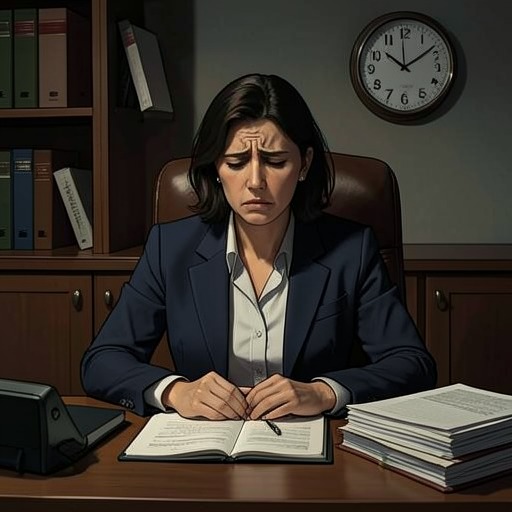
Rose’s composure has a visible limit. After watching the footage of Christian Habersaat’s suicide, she is dry-eyed and controlled, but tells Carl and Assad that she could not bear to watch because Christian looked exactly like her father. She says she does not want to discuss it even if she has disclosed it, then pushes her chair back and leaves. Carl warns Assad not to probe further. The scene presents the distress as personal and bounded: Rose names its source, but does not invite the team to turn it into an investigation.
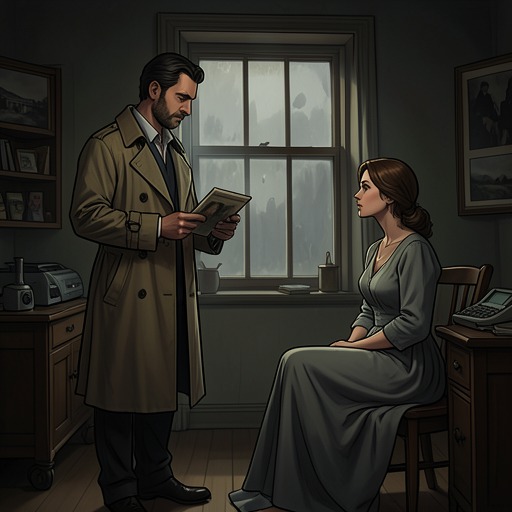
Her later condition is reported by her sister, not described directly by Rose. The sister says she found Rose in her bedroom after arriving for their usual Saturday tea. Rose did not recognize her and said she had done what she had to do and wanted out of it all. She had cut one wrist with scissors, identified herself as their other sister Vicky, and claimed that hypnosis had made her believe she was Rose; she also said the hypnosis had gone too deep and that the man responsible had described her as a cup that was already full. The report establishes a serious crisis, but does not verify Rose’s explanation or establish who hypnotized her. It leaves her fate and the relationship between this episode and her earlier distress unresolved. The contrast is stark: the investigator who can uncover what a hidden computer file conceals is, at the end of the supplied account, herself difficult for those closest to her to recognize.