Floretta Turnbull
The Hidden StaircaseFloretta Turnbull is Rosemary Turnbull’s twin sister and longtime resident of The Mansion, the sisters’ old stone house in Cliffwood. As unexplained noises and thefts turn their home into a source of fear, Floretta becomes the clearest measure of the mystery’s cost: she is distressed enough to contemplate leaving, yet remains a witness to the concealed route that made the crimes possible and a defender of the home Gombet nearly persuaded the sisters to surrender.
Identity and Home
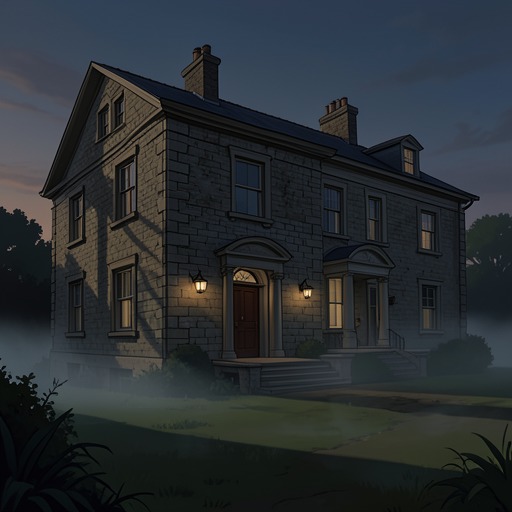
Floretta lives with Rosemary in The Mansion, a stone house built before the American Civil War. The sisters have lived there for thirty years without being disturbed until the recent run of unexplained events. Floretta describes the house’s history and its unsettling suitability for a ghost story with a nervous laugh; the old building is not merely a setting for the mystery, but the home whose safety and continuity are at stake.
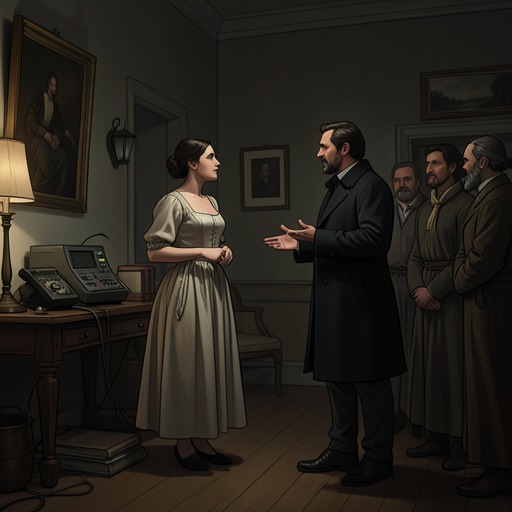
The disturbance first takes recognizable form in strange noises at night. For Floretta, the sounds are part of a worsening pattern rather than an isolated curiosity. Her fear becomes concrete when she discovers her diamond bar pin is missing. She has searched everywhere and is certain it is gone, and her distress is intense enough that Rosemary first suggests she may have misplaced it. When Floretta notices Nancy Drew, she tries to compose herself and addresses the newcomer stiffly, a brief effort at dignity amid a crisis she can no longer hide.
Fear and the Threat to the Sisters’ Home
The ongoing events wear Floretta down. When Nancy arrives at the house, Rosemary leads her to Floretta in a bedroom in the east wing. Floretta is propped up with cushions, her face white and haggard, while a breakfast tray sits almost untouched nearby. She is too upset to eat and says she cannot remain in the horrible place much longer. The neglected meal makes her fear visible in an ordinary domestic detail: the haunting scare has affected not just what the sisters believe, but their ability to inhabit everyday life at home.
Floretta’s alarm also unfolds in relation to her sister. Her absence from the house has left Rosemary alone when trouble occurs, prompting Floretta to protest that something terrible was bound to happen. Their shared home does not protect them from fear; instead, the apparent danger makes each sister acutely conscious of the other’s safety. Floretta’s fear is therefore both personal and familial, and her dread of remaining in The Mansion sits alongside her attachment to the life she and Rosemary have established there.
The Hidden Entrance and the Stolen Property
The discovery of a concealed panel changes Floretta’s understanding of the disturbances. When Nancy and the sisters emerge through a wall into a closet filled with garments, Floretta recognizes the room as her own. She then understands what happened to her silk dresses and diamond pin: their disappearance is connected to a secret entrance into her bedroom, not to some inexplicable force haunting the house. Rosemary identifies Nathan Gombet as the person who must have used the closet panel.
This recognition ties the frightening episodes to specific violations of Floretta’s private space. The missing dresses and pin were not simply valuables taken from the house; the concealed access explains how someone could enter her room. What had seemed supernatural is exposed as deliberate intrusion, and the old house’s hidden architecture supplies the physical means for the thefts. Floretta’s startled realization is a turning point: the mystery becomes intelligible, while the sisters’ sense of security has to be rebuilt on the knowledge that their home was penetrated from within.
Confrontation and Recovery
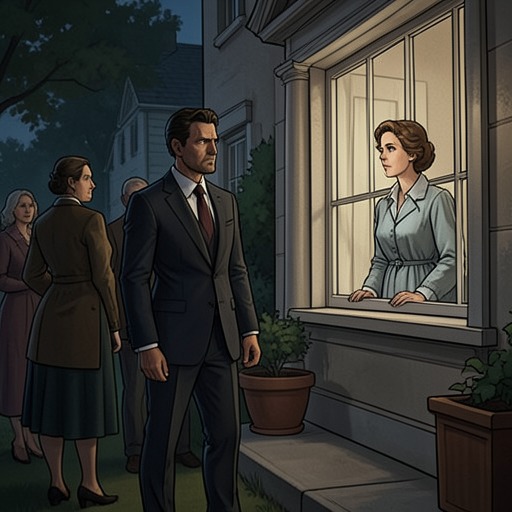
Floretta supports Nancy’s account when the sisters reach the sheriff, corroborating what Nancy has discovered. She and Rosemary later wait together in Nancy’s roadster while Nancy and the officers move against Gombet’s household. Their place in the investigation is not limited to being rescued or reassured: Floretta helps substantiate the case and ultimately identifies the property that was taken from her and Rosemary.
After Gombet is confronted, Floretta rejects the implication that his proposal to buy the sisters’ house was an innocent business offer. She stresses that he wanted to buy it at his own price. Her rebuke gives the attempted purchase its context: the offer came while fear and theft were making the sisters feel unable to stay. Rosemary states that, without Nancy’s intervention, they would have been forced to give up their home; Floretta’s anger makes clear that the proposed bargain was not acceptable simply because it was presented as a purchase.
Floretta also names two of the stolen objects, the silver urn and the diamond pin. Rosemary adds the pocketbook, a silver spoon, and Floretta’s silk dresses. When the sisters return to the bedroom, Rosemary finds the urn on the dresser, and Floretta investigates the closet and triumphantly brings out an armload of dresses. Nancy finds the tiny diamond pin in a bureau drawer. The recovery reverses the earlier losses item by item: the house’s familiar possessions return to the rooms from which they had vanished, and Floretta’s dresses are restored from the very closet that disclosed the secret access.
Gratitude and Narrative Role
Once the danger has passed, Rosemary offers Nancy the silver urn as a remembrance, and Floretta insists that Nancy accept it when she hesitates because the object is a valuable heirloom. Their gift expresses gratitude while also showing that the sisters’ relationship to the object has changed. The urn had been among the stolen possessions at the center of their distress; freely giving it to the person who helped recover their home’s security turns it into a sign of affection and remembrance instead.
Floretta’s arc moves from nervous explanation and acute fear to recognition, accusation, and generosity. She is not the detective who uncovers the whole scheme, but her losses and reactions give the investigation its human stakes: the mystery threatens her privacy, her treasured belongings, her bond with Rosemary, and the home they have occupied for thirty years. Her recognition of the bedroom and her insistence that Gombet’s offer was made at the sisters’ expense help connect the concealed architecture to the attempted dispossession. In the ending, the restored dresses and returned pin answer the thefts, while the gift of the urn marks the sisters’ ability to choose what they give rather than have their home and possessions taken from them.