Nathan Gombet's house
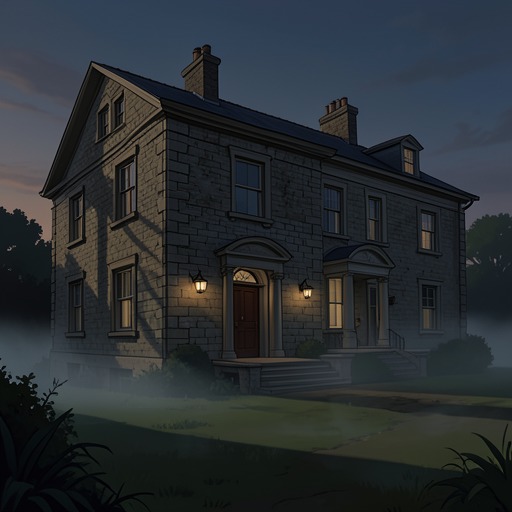
The Hidden StaircaseNathan Gombet's house is an old stone residence on the outskirts of Cliffwood, directly behind The Mansion and built close enough to it to be connected by a secret underground passage. At first it appears to be a separate, forbidding house; Nancy Drew's investigation reveals that its concealed rooms, cellar, and passage make it part of the same architectural puzzle as the Turnbull home. It is where Carson Drew is trapped, where stolen possessions are hidden, and where Nancy's knowledge of the secret route enables the police to enter when the front door yields nothing.
Setting and Shared History
When Carson Drew is driven to the outskirts of Cliffwood, the car reaches two large stone houses, and Nathan Gombet turns into one. The house is not remote from the Turnbull residence: at luncheon, Rosemary Turnbull tells Nancy that it stands directly behind The Mansion. The two buildings sit on different roads, but their closeness is deliberate. Floretta Turnbull explains that the house now owned by Gombet was originally built by a Turnbull; Rosemary adds that two brothers built the separate homes near one another because they were devoted to each other.
That history gives the neighboring houses more than a visual resemblance. Their shared architectural origin suggests a hidden connection, and Nancy uses the fact that they were built at approximately the same time to form a specific investigative hypothesis: a secret tunnel might link their cellars. The passage is not immediately obvious, however. On an earlier search of The Mansion's cellar, she failed to find an entrance. When she later searches Gombet's basement, the walls appear to be solid stone, and her light reveals no tunnel opening or trapdoor there either. The house therefore withholds its connection even from a systematic search, making the architectural clue a lead rather than an instant solution.
Rooms, Passage, and Discovery
Gombet's house becomes legible to Nancy through movement between its levels. After traveling underground from the house, she recognizes an old highboy she had seen while searching the Turnbull attic. That familiar piece of furniture tells her where she has arrived: she has crossed from Gombet's house to The Mansion, and the stairs she climbed have brought her up beside the attic. She concludes that the other flights of stairs she passed must lead to different portions of the old house. The recognition transforms a disorienting subterranean route into a map connecting the neighboring buildings.
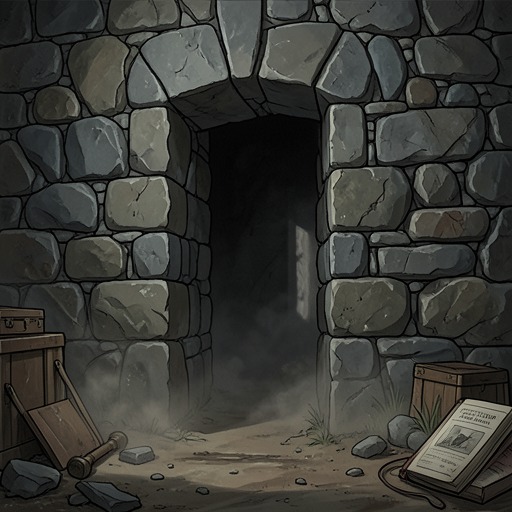
The route into Gombet's home ends in the bird room. Nancy leads the sheriff and his deputy down stone steps and through the tunnel, then warns them that they are inside the house and must be quiet. At the upper steps, she searches the wall for the mechanism that releases the hidden panel, directing the officers to look for a brass ring or tiny knob. Finding the ring, she pulls it hard; the panel opens, and Nancy emerges into a closet in the bird room. From there she checks that the room is clear, leads the men through its unlocked door, and takes them along the corridor toward the stairs and kitchen. The secret entrance is thus not merely a passage between properties: it delivers them into a specific interior room and lets them bypass the house's ordinary approach.
A Trap and a Stronghold
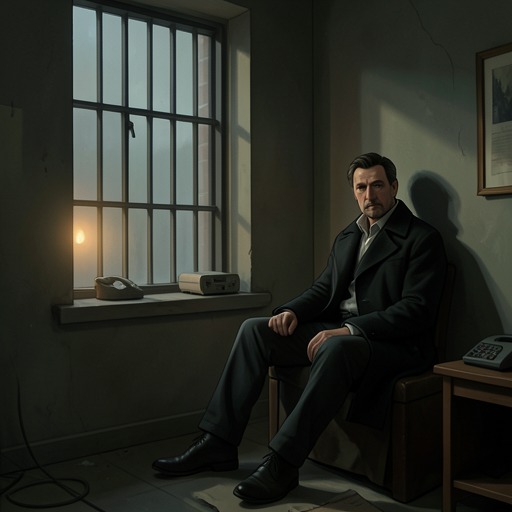
The house also serves as the site of Gombet's deception against Carson Drew. Gombet drives him there, leads him through the kitchen, and presents the next room as though Carson were going to see Nancy. Instead, Carson enters a darkened space with curtains drawn over the windows. As his eyes adjust, he realizes it is not a bedroom but a place with the appearance of a prison. Gombet is waiting in the doorway. He declares Carson his prisoner and says he intends to force him to terms over the property; then he slams the door and locks it with a key. The house's interior turns a seemingly ordinary visit into confinement, with a locked room and a corridor separating the captive from help.
The danger is not confined to Carson's room. During the later police approach, the sheriff's car races ahead of Nancy's and stops in front of the house. The sheriff orders his men to surround it, but at the back door he gets no answer; it is locked, and a look through the kitchen window suggests that nobody is home. Nancy's concern is that Gombet may escape or conceal the property stolen from The Mansion. Her knowledge of the tunnel supplies an alternative to the unsuccessful attempt to enter from outside.
Inside, the kitchen is guarded by the household servant, who has kept hold of a gun and threatens anyone who tries the basement door with buckshot. The threat makes the passage's concealed route especially consequential: the officers arrive through the bird-room closet rather than forcing their way through the guarded kitchen entrance. From there they move quietly toward the kitchen, then on toward the rooms where Carson is held. When Nancy sees her father, he is pale and haggard, bound to a chair, while Gombet bends over him and demands that he sign a paper. The house's rooms have arranged the crime as a series of barriers, but the secret route lets Nancy and the officers reach the captive.
Evidence, Recovery, and Significance
After the rescue, the house remains important as a repository of the stolen goods. Nancy hurries across the hall to a bedroom, followed by Rosemary and Floretta. When they open the door, they find the silver urn standing on the dresser. Rosemary rushes to reclaim it, relieved that Gombet had not tried to dispose of it; Floretta searches the closet and brings out an armload of dresses. These specific recoveries show that the house concealed not only Carson but also the Turnbull sisters' possessions.
The house's narrative significance rests on the contrast between its visible separation and its hidden connection. From the road, it is one of two large stone buildings; its locked doors and apparently solid basement walls encourage the impression of isolation. Yet the family history of the neighboring homes, Nancy's careful searches, the highboy in the attic, and the brass ring in the bird-room closet expose a route that joins them. The same building that lets Gombet imprison Carson and conceal stolen property also contains the means by which Nancy can reach him. Its secret passage converts architectural knowledge into practical evidence and turns a house that seemed closed against investigation into the entrance that makes the rescue possible.