The Turnbull Mansion haunting and thefts
The Hidden StaircaseThe Turnbull Mansion haunting and thefts are a manufactured campaign of intimidation disguised as a supernatural disturbance. Strange sounds and vanished possessions unsettle Rosemary Turnbull and Floretta Turnbull in their old home; Nancy Drew eventually connects the incidents to Nathan Gombet, whose interest in buying the property at a drastically low price gives the crimes a material purpose. The episode turns the language of a ghost story into a practical mystery of access, theft, and attempted coercion, with an underground passage linking the two houses at the heart of its explanation.
The Disturbances Begin
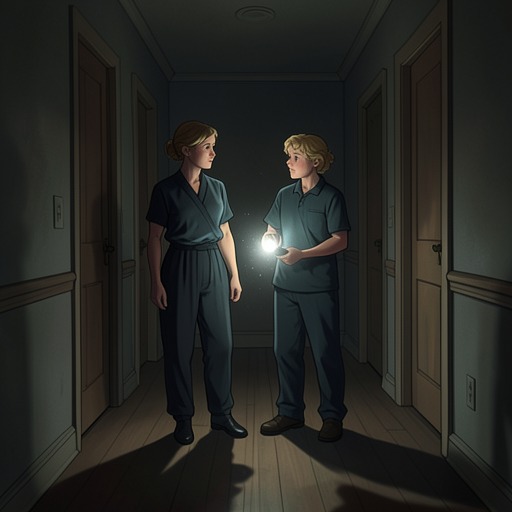
The crisis first reaches Nancy through Rosemary, who describes the house as haunted while making clear that she does not actually believe in ghosts. She and her twin sister Floretta have lived in the house for thirty years, and until the recent weeks they had not been disturbed. Now they hear unexplained noises at night. The sounds are not confined to the attic: Rosemary says they occur throughout the house. That detail broadens the sisters’ uncertainty. Rather than pointing toward one obvious source, the noises make the whole old residence seem vulnerable to intrusion.
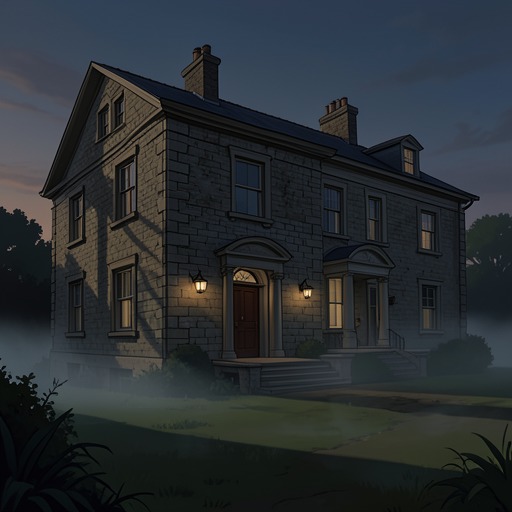
The house’s age helps make the haunting story plausible without proving it. Known as The Mansion, it was built before the American Civil War, and Rosemary herself recognizes how well its antiquity suits a ghost tale. The narrative initially lets the setting and the sisters’ unsettled experience carry the mystery: the building seems to offer a supernatural explanation, but Rosemary’s skepticism keeps that explanation in question. The disturbance is therefore both an event in the sisters’ home and a puzzle Nancy can investigate.
Noises and Missing Possessions
The threat moves from sound to loss. One night, Nancy hears a dull thud from the floor below, followed by a yell and then silence. The sequence supplies no visible cause, but it makes the disturbance feel immediate: a noise has become an apparent incident inside the house. Later, the discovery of the missing silver urn gives the sisters a concrete reason to suspect that someone has entered their home. Rosemary finds the space where the valued object should be empty and recognizes that it has been stolen.
Floretta’s report makes clear that the losses are not limited to one conspicuous possession. While the sisters are at breakfast, someone enters her room and takes three of her best black silk dresses. The contrast between the items matters: the stolen urn is a treasured object, while the dresses are useful personal belongings removed from a private room. Together, the thefts indicate repeated access to the home rather than a single unexplained disappearance. They also intensify the sisters’ alarm by showing that rooms and possessions they might expect to be secure are reachable by an intruder.
Nancy Identifies the Pattern
Nancy’s conclusion emerges from joining the incidents to Gombet’s circumstances. She already knows that he wants to buy the Turnbull property for a ridiculously low figure. That proposed purchase makes the frightening visits and thefts legible as pressure: if the sisters can be made afraid of remaining in the house, they may be more likely to leave or sell cheaply. Nancy recalls that Gombet has visited The Mansion frequently and concludes that he is responsible for frightening the sisters and stealing their valuables. What had appeared to be a supernatural disturbance becomes a deliberate scheme with a financial objective.
The physical explanation also turns on a concealed route between the houses. Nancy understands that a secret tunnel connects Gombet’s house with the Turnbull residence, accounting for how an intruder could reach the mansion. She imagines that the passage may date from before the American Civil War, when the Turnbull brothers were friendly and might have used it to travel between their houses. In her reconstruction, their later enmity led to its closure, and succeeding generations forgot it. The tunnel’s proposed original purpose and history are Nancy’s conjecture; its importance to the present mystery is that it supplies a hidden means of access.
The Households Connected
The events at Gombet’s house provide further evidence of a connection between him and the unnamed servant there. When Carson Drew arrives at the old stone house, Gombet leads him through the kitchen, where the servant is working. Gombet gives her a significant nod as he passes, and after the men enter another room she quietly locks the outside door. Later, Nancy finds the servant washing dishes in the kitchen while Gombet is away. During Nancy’s nighttime search, the servant comes to the cellar with a flashlight, saying she thought she heard something there. These details place her at the point where the route and the household intersect, though the narrative does not make her private motives independently clear at this stage.
The confrontation with the authorities sharpens the implication of cooperation. When the sheriff opens the kitchen door at Gombet’s house, he finds the servant holding a sawed-off shotgun, positioned to resist the officers’ entry. Nancy then questions her about Gombet and accuses her of being his partner in crime. The woman denies responsibility and presents herself as merely an employee. Her denial and the observable actions remain in tension: the nod and locked door, the watchful search of the cellar, and the armed obstruction all connect her to the defense of Gombet’s house, while Nancy’s accusation states the interpretation the investigation has reached.
Resolution and Narrative Function
The haunting and thefts matter because they convert a vulnerable domestic setting into evidence of a planned crime. The sisters’ long, undisturbed residence establishes a clear change: in recent weeks, noise, intrusion, and loss have replaced security. Nancy’s method is to compare that pattern with Gombet’s repeated visits and his interest in acquiring the property cheaply, then to test the suspicion against the hidden connection between the houses. The explanation does not depend on proving that the sisters imagined their fear; the incidents are real, but their apparent supernatural cause is false.
The narrative also makes the servant part of its suspense through a racialized portrayal that associates her appearance and phonetic speech with menace, then places her in the role of armed defender and suspected accomplice. That characterization shapes how the reader encounters the threat, while the concrete clues remain her actions in the kitchen, the cellar, and the confrontation with the sheriff. By the time Nancy identifies Gombet as the guilty party, the house’s old-fashioned ghost-story atmosphere has been reinterpreted as camouflage for human access and greed. The passage between the homes is thus more than a device for movement: it is the concealed structure that joins the sisters’ unsettling experiences to the plan against their property.