The built-in sofas
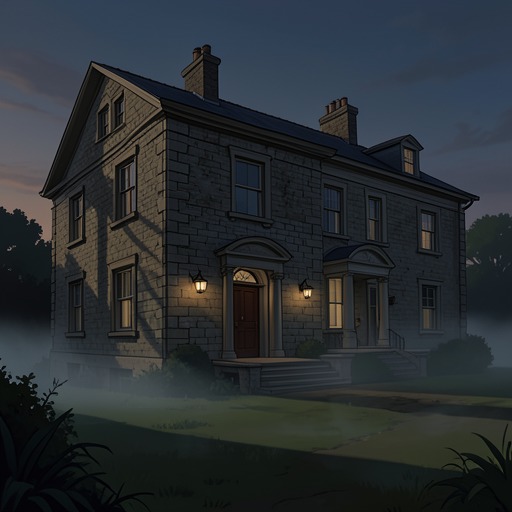
The Hidden StaircaseThe built-in sofas in The Mansion are both conspicuous fixtures and concealed entrances: their seats hide openings into a passage that emerges in the library. Their discovery gives Nancy Drew a physical explanation for how Nathan Gombet moved through the house and stole The silver urn. What the sisters had lived with for years as immovable furniture becomes evidence, linking the architecture of their rooms to the hidden route behind the thefts.
Design and Place in the House
The sofas are built into the house rather than movable furnishings. When Nancy Drew notices one after dinner, she remarks on its unusual construction; Rosemary Turnbull confirms that it is built in, and Floretta Turnbull explains that the idea belonged to their great-grandfather. Floretta adds that she never saw the point of the arrangement and would rather have had a sofa that could be moved. Her practical complaint gives the feature an initially mundane character: it is an old design choice that has persisted in the house, not an object the sisters regard as mysterious.
The furniture appears in at least two rooms relevant to Nancy’s investigation: the library and the drawing room. Their resemblance becomes important only after she discovers the hidden opening beneath the library sofa. Nancy then searches the drawing-room sofa and finds a similar aperture, large enough for a person to squeeze through. The repeated construction means the library opening is not an isolated defect or curious compartment; the paired sofas connect distinct rooms to the same concealed architectural system.
Discovery Beneath the Library Sofa
The sofas’ secret is disclosed through Nancy’s physical search of the passage. In one particularly narrow, low stretch, she has to remain stooped; when she straightens after several minutes, her head strikes the top of the passage. The cramped dimensions make the route an obstacle to be traversed, not simply a hidden space viewed from a distance. Nancy is also watching a candle that will not last much longer. With Rosemary Turnbull holding it and the sisters having used their remaining supply, time and visibility press on the investigation.
Nancy suspects that an opening is nearby. After recognizing the panel, she pushes upward against the obstruction; it gives way easily. She thrusts her head and shoulders through, looks around, and realizes that she has emerged through the seat of the library sofa. The concealed entrance is therefore located in the furniture itself, not in an obvious wall panel beside it. Nancy pulls herself up and helps Floretta and Rosemary through as well. Their emergence transforms the sofa from an ordinary-looking fixture into the visible endpoint of the passage, while the sisters’ surprise underscores that familiarity with the room had not revealed what lay beneath it.
The Matching Opening and the Theft
Once she has come through the library sofa, Nancy interprets the route in relation to an earlier clue: a broken step near the opening. She concludes that Nathan Gombet must have fallen there and cried out in alarm. This is Nancy’s reconstruction of the sound and the passage’s use, rather than an independently described sighting of Gombet falling. She then predicts that the drawing-room sofa may conceal another entrance. Acting on that idea, she removes the cushions and lifts the baseboards, finding an opening similar to the one in the library, just large enough for someone to squeeze through.
Floretta connects the discovery directly to the theft. She concludes that Nathan Gombet stole The silver urn by coming up through the library sofa. The hidden route thus supplies a concrete mechanism for his movement into the house and turns the sisters’ puzzling loss into an intelligible act. Nancy’s inference proceeds from the passage and its opening to the matching structure in another room; Floretta then states how that route explains the stolen object. Together, the two discoveries make the sofas evidence of access, not merely unusual furniture.
Narrative Significance
The sofas’ importance lies in the contrast between their domestic appearance and their function as concealed thresholds. Floretta’s earlier preference for movable furniture is an incidental complaint until the investigation reveals what the fixed construction hides. The feature that seemed pointless has made the openings part of the house’s ordinary rooms while keeping their purpose unnoticed. Even the sisters, who have lived there for years, had not discovered the route; their familiarity with the furniture did not amount to knowledge of its concealed structure.
The paired openings also clarify how the mystery can be solved through close attention to material details. Nancy first notices the sofa as an odd piece of furniture, then tests the suspected panel, emerges into the library, recalls the broken step, and checks the corresponding sofa in the drawing room. Each observation narrows the explanation until the hidden architecture accounts for Nathan Gombet’s access and the theft of The silver urn. The sofas are therefore not decorative background: their built-in form conceals the route, their openings expose it, and their discovery changes the house from a setting of unexplained incidents into a space whose layout can be read.