The failed police entry at Gombet’s house
The Hidden StaircaseThe failed police entry at Gombet’s house turns an arrest attempt into an armed standoff: the sheriff’s party reaches Nathan Gombet’s house expecting to secure it, only to be driven back by a servant with a sawed-off shotgun. The failure exposes how thoroughly Gombet’s home is being guarded and leaves Nancy Drew to find another route into the house. It also brings an earlier, easily missed sign of the servant’s role into sharper focus: she is not simply present in the household but acts to keep outsiders from entering.
Causes and Background
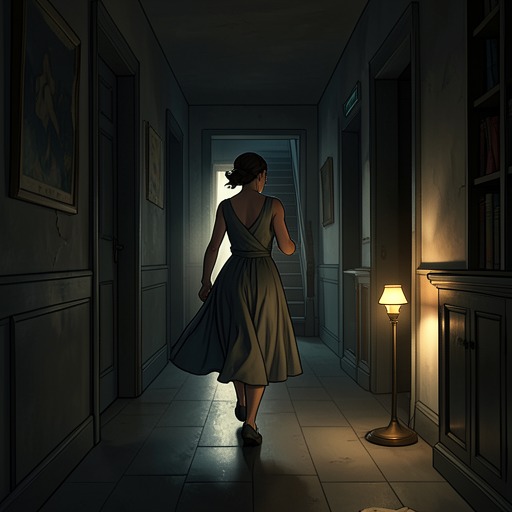
The police approach is part of Nancy’s effort to prevent Gombet from escaping or hiding the stolen property from Turnbull Mansion. She travels with the sheriff and his party toward the old stone house in Cliffwood. Nancy believes the sheriff may refuse to arrest Gombet unless the officers find evidence at the house, making speed and access important. She intends to approach cautiously, but the police car races ahead and stops in the driveway, sacrificing her preferred quiet approach for a direct arrival.
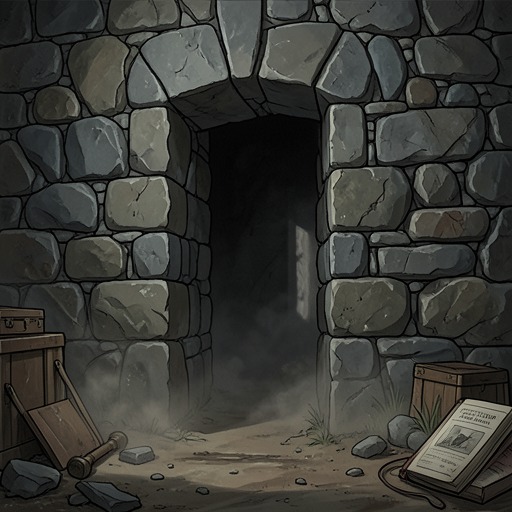
The house has already been associated with the servant’s discreet cooperation with Gombet. When Carson Drew was brought there, he hurried inside without noticing that Gombet nodded to the woman in the kitchen; once the two men had gone into the next room, she locked the outside door. Later, Nancy approached the house from behind and saw the same woman washing dishes in the kitchen. Nancy had hoped to find the house empty while Gombet was away, but the servant’s presence made her attempt dangerous. During Nancy’s earlier concealment in the cellar, she heard the woman search with a flashlight and mutter that she thought she had heard something below. These details make the police encounter a culmination of an established pattern: the servant notices, investigates, and controls access around the house.
The Police Approach
The sheriff orders his men to surround the house so that Gombet cannot get away. Floretta Turnbull, worried that there may be shooting, holds Nancy back when she tries to leave the roadster. From the car, Nancy and the others watch as the sheriff goes to the back door and knocks. He receives no answer, knocks again, tries the locked door, and peers through the kitchen window. Seeing no one, he concludes that the house is empty and turns away.
Nancy cannot accept that conclusion. She jumps from the roadster and runs toward the sheriff, prompting the party to look more closely at the kitchen. A deputy reports that someone is hiding there. The sheriff turns the doorknob; the latch clicks, and when he pushes the door open, he finds himself facing the muzzle of a sawed-off shotgun held by Gombet’s servant. What had looked like an empty house is in fact being actively defended from within.
The Armed Standoff
The servant advances with an angry expression and threatens to shoot if the sheriff does not leave. He retreats rather than reaching for his revolver, which remains in its holster. The servant slams the door and locks it again, restoring the barrier that the officers had just begun to penetrate. Her weapon and willingness to use it overturn the sheriff’s assumption that the police can simply enter and search the property.
The sheriff considers taking the house by storm and ramming the door, but one deputy points out that the woman could fire at them while they did so. The sheriff then considers shooting through the door. A deputy objects that they have no reason to kill her and that a stray shot could hit her. The exchange makes the immediate obstacle more than a locked entrance: any forceful entry risks turning an arrest into a shooting, including the possibility of harming the person who is obstructing them. The sheriff accepts the objection and asks whether anyone has another way to get inside. The entry has failed, and the officers remain outside without having reached Gombet.
Aftermath and Significance
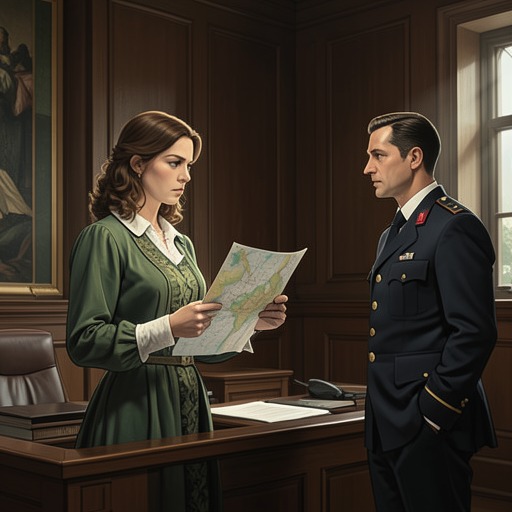
The standoff clarifies the servant’s importance to Gombet’s operation. Earlier, the narrative showed her locking an exterior door after Gombet brought Carson inside; here, she uses a firearm to prevent the sheriff from entering. Nancy later directly challenges her, accusing her of being not only Gombet’s servant but also his partner in crime. The woman denies the accusation and presents herself as a cook, but the armed confrontation has already shown that she is prepared to protect the house and resist the police. The accusation is Nancy’s, rather than a confession by the woman, but her conduct gives it immediate force.
The scene also shifts the practical initiative back to Nancy. The officers cannot safely batter down the entrance or fire through it, while the property and its occupants remain beyond their reach. The physical layout of Nathan Gombet’s house therefore matters to the investigation: its locked doors and defended kitchen frustrate a conventional police approach, even with the house surrounded. The failed entry creates the need for a different means of access and sets up Nancy’s role in leading the officers onward.
The episode’s suspense depends on a reversal of appearances. The sheriff reads the silence and the view through the kitchen window as signs that no one is home; the sudden shotgun proves that silence has concealed a guard, not an absence. The narrative also marks the servant through explicitly racialized description and dialect, associating her with threatening physicality and criminal complicity. That framing shapes the reader’s first impression of her before the armed confrontation confirms her role as a dangerous obstacle. Within the plot, however, the key consequence is concrete: the sheriff’s direct attempt to enter has been checked, and Nancy must find a way to continue the pursuit without exposing the officers to gunfire.