Bilbo Baggins
The HobbitBilbo Baggins, a well-to-do hobbit of the respectable Baggins family, is the central figure of J.R.R. Tolkien's The Hobbit. His journey from the comfort of his hobbit-hole, Bag-End, to the Lonely Mountain and back again transforms him from a timid, home-loving creature into a resourceful burglar, a leader of dwarves, and an elf-friend, fundamentally altering his identity and his place in the world. The story is a chronicle of how a Baggins had an adventure, found himself doing and saying altogether unexpected things, and in the process, lost the neighbors' respect but gained something far more valuable.
Identity and Background
Bilbo Baggins is the only son of the solid and comfortable Bungo Baggins and the famous Belladonna Took, one of the three remarkable daughters of the Old Took. This mixed heritage is the key to his character: he looks and behaves exactly like a second edition of his father, but he also inherited "something a bit queer" from the Took side, a latent adventurousness that only waits for a chance to come out. The Bagginses are a very respectable family, never having adventures or doing anything unexpected, while the Tooks are known for occasionally disappearing to have adventures, a fact the family hushes up. Bilbo lives in the luxurious hobbit-hole built by his father, a place of perfect comfort with panelled walls, tiled floors, and lots of pantries. He is about fifty years old, apparently settled down immovably, when the chance for adventure finally arrives.
Life and Plot Trajectory
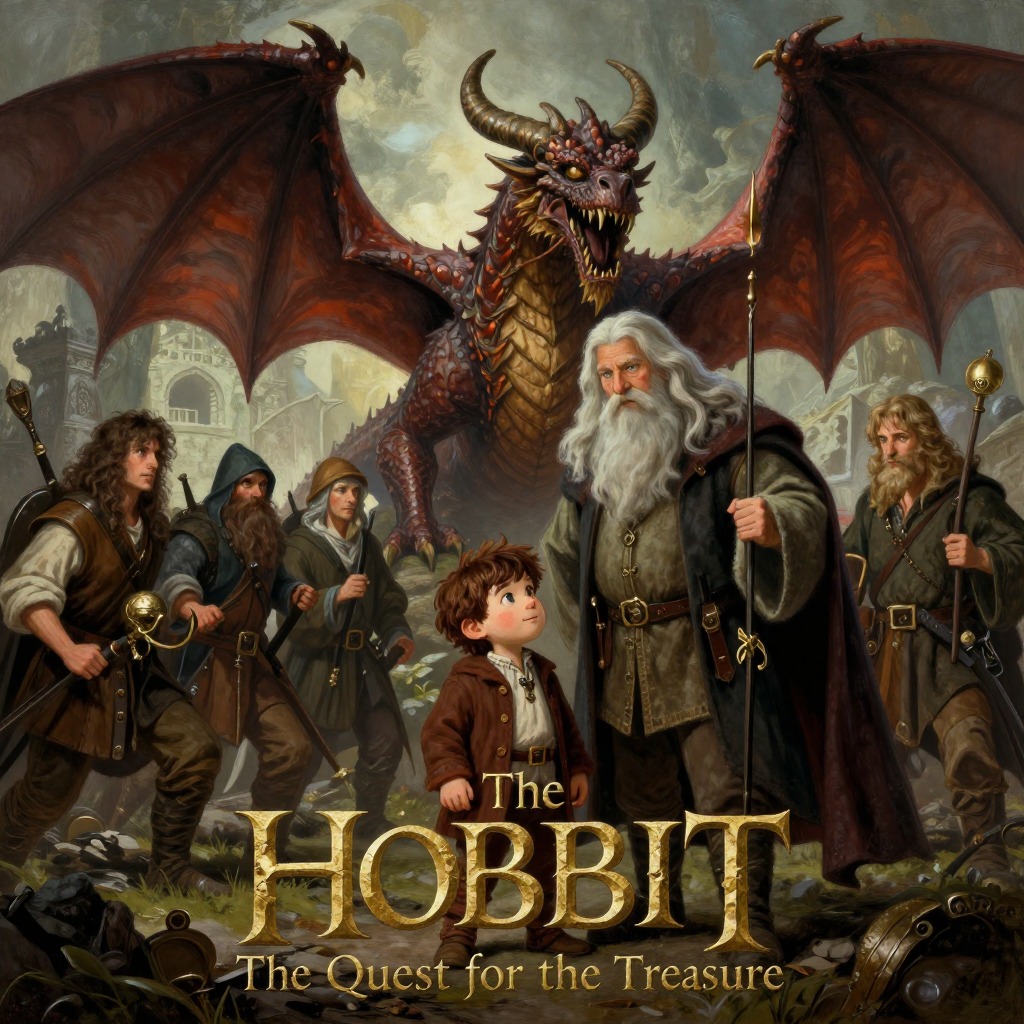
Bilbo's adventure begins with the arrival of the wizard Gandalf and a company of thirteen dwarves led by Thorin Oakenshield. Initially, Bilbo is flustered and unwilling, declaring that he has no use for adventures, which he calls "nasty disturbing uncomfortable things." However, the Tookish side within him is awakened by the dwarves' song of the lost treasure, and he eventually volunteers for the role of burglar, a decision he later regrets. His journey takes him through a series of escalating perils: a capture by trolls, a stay in the safe valley of Rivendell, a capture by goblins in the Misty Mountains, and a pivotal encounter with the creature Gollum deep underground. In the darkness, he finds a magic ring that grants invisibility, a discovery that proves to be a turning point in his career. He escapes the goblins, is rescued from wolves by eagles, and is hosted by the skin-changer Beorn. The company then ventures into the dark forest of Mirkwood, where Bilbo must rescue the dwarves from giant spiders and later engineer their escape from the dungeons of the Elvenking by hiding them in empty barrels. After reaching Lake-town, they finally find the secret door to the Lonely Mountain. Bilbo is sent inside to scout, where he has a tense conversation with the dragon Smaug, discovering a bare patch on the dragon's left breast. After Smaug's destruction of Lake-town and his death at the hands of Bard, Bilbo attempts to avert a war between the dwarves, men, and elves by secretly giving the Arkenstone, the Heart of the Mountain, to Bard and the Elvenking. This act of betrayal leads to his expulsion from Thorin's company, but the ensuing Battle of the Five Armies against the goblins and Wargs ultimately reconciles the free peoples. Thorin dies in the battle, and Bilbo, having taken only two small chests of gold and silver, returns home to find himself presumed dead and his belongings being auctioned off.
Key Actions and Objectives
Bilbo's primary objective, as the company's burglar, is to enter the Lonely Mountain and steal treasure from the dragon Smaug. His actions, however, extend far beyond this simple task. He repeatedly saves the dwarves from peril: he inadvertently causes the trolls to argue until dawn, he finds the key to their cave, and he discovers the elvish sword Sting. He escapes the goblins by using the ring and later leads the dwarves through the goblin tunnels. He rescues the dwarves from the spiders of Mirkwood by using the ring and his wits, and he orchestrates their escape from the Elvenking's halls by hiding them in barrels. His most significant independent action is his secret diplomacy with Bard and the Elvenking, giving them the Arkenstone to use as a bargaining chip to prevent war. This act, while seen as a betrayal by Thorin, demonstrates Bilbo's growth into a strategic thinker who values peace over treasure. He also discovers Smaug's weak spot, a bare patch on his left breast, a piece of information that proves crucial to the dragon's eventual death.
Relationships and Conflict
Bilbo's relationships are central to his development. He begins as a reluctant and somewhat despised member of Thorin and Company, with dwarves like Gloin expressing doubts about his abilities, calling him "more like a grocer than a burglar." Over time, through his courage and resourcefulness, he earns their respect, becoming the real leader of their adventure. His relationship with Thorin is particularly complex, evolving from grudging acceptance to genuine friendship, and then to bitter conflict over the Arkenstone, before a final, poignant reconciliation on Thorin's deathbed. His relationship with Gandalf is that of a mentor and a friend; Gandalf chooses him for the quest, believing there is more to him than anyone guesses, and guides him through his transformation. His encounter with Gollum is a defining moment of conflict and moral choice. Bilbo wins the riddle-game and has the chance to kill the miserable creature, but instead, a sudden understanding and pity mixed with horror wells up in his heart, and he leaps over Gollum, sparing his life. This act of mercy, though born of a moment's insight, is a key part of his character.
Change and Ending
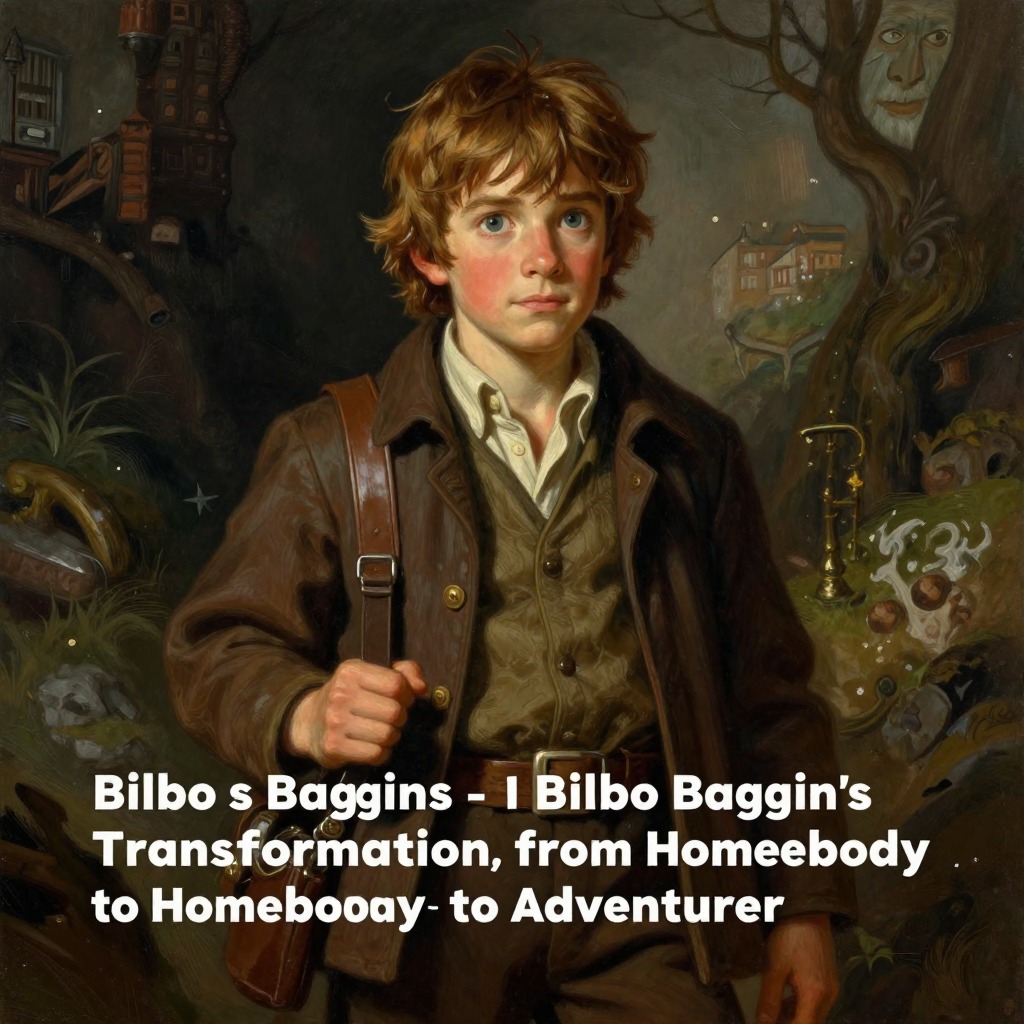
Bilbo undergoes a profound transformation. He begins as a creature of comfort, who values his hobbit-hole, his pantry, and his reputation above all else. By the end of his journey, he has become a seasoned adventurer, a leader, and a diplomat. He learns to value courage, friendship, and loyalty over material wealth, a lesson that is underscored when he refuses a vast treasure and takes only two small chests. He also learns the value of mercy, as seen in his treatment of Gollum. Upon returning to Bag-End, he finds he has lost his reputation for respectability, being held as "queer" by his neighbors. However, he is quite content with this, finding the sound of his kettle more musical than ever. He remains an elf-friend, enjoys the honor of dwarves and wizards, and lives happily to the end of his extraordinarily long days, writing poetry and his memoirs, which he thinks of calling "There and Back Again, a Hobbit's Holiday." His final act in the story is to hand Gandalf the tobacco-jar, a simple gesture that signifies his return to a life of comfort, but one now enriched by his experiences.
Narrative Role and Evaluation
Bilbo Baggins is the quintessential hero of the "reluctant adventurer" archetype. His journey follows the classic monomyth structure: he is called to adventure, refuses the call, crosses the threshold, undergoes a series of trials, and returns transformed. His perspective as a hobbit—a creature of the ordinary, comfortable world—provides a relatable and often humorous lens through which the epic events of the story are filtered. His growth from a timid homebody to a bold and clever burglar is the central arc of the novel. The narrative emphasizes that his success is due not to physical strength or martial prowess, but to his wits, his luck, and his innate decency. He is a "very fine person" but, as Gandalf reminds him, "only quite a little fellow in a wide world after all." His story is a testament to the idea that even the most ordinary individual can rise to extraordinary circumstances and make a significant difference.