Goblin-town
The HobbitGoblin-town is the sprawling, lightless subterranean domain of the goblins, carved deep into the roots of the Misty Mountains. It is a place of cruel captivity, echoing with the clatter of whips and the croaking songs of its inhabitants, and it serves as the setting for one of the most harrowing episodes in the dwarves' quest. The capture of Thorin and Company within its tunnels forces Bilbo Baggins into a desperate separation that leads directly to his discovery of the One Ring and his first solo test of courage.
Geography and Nature
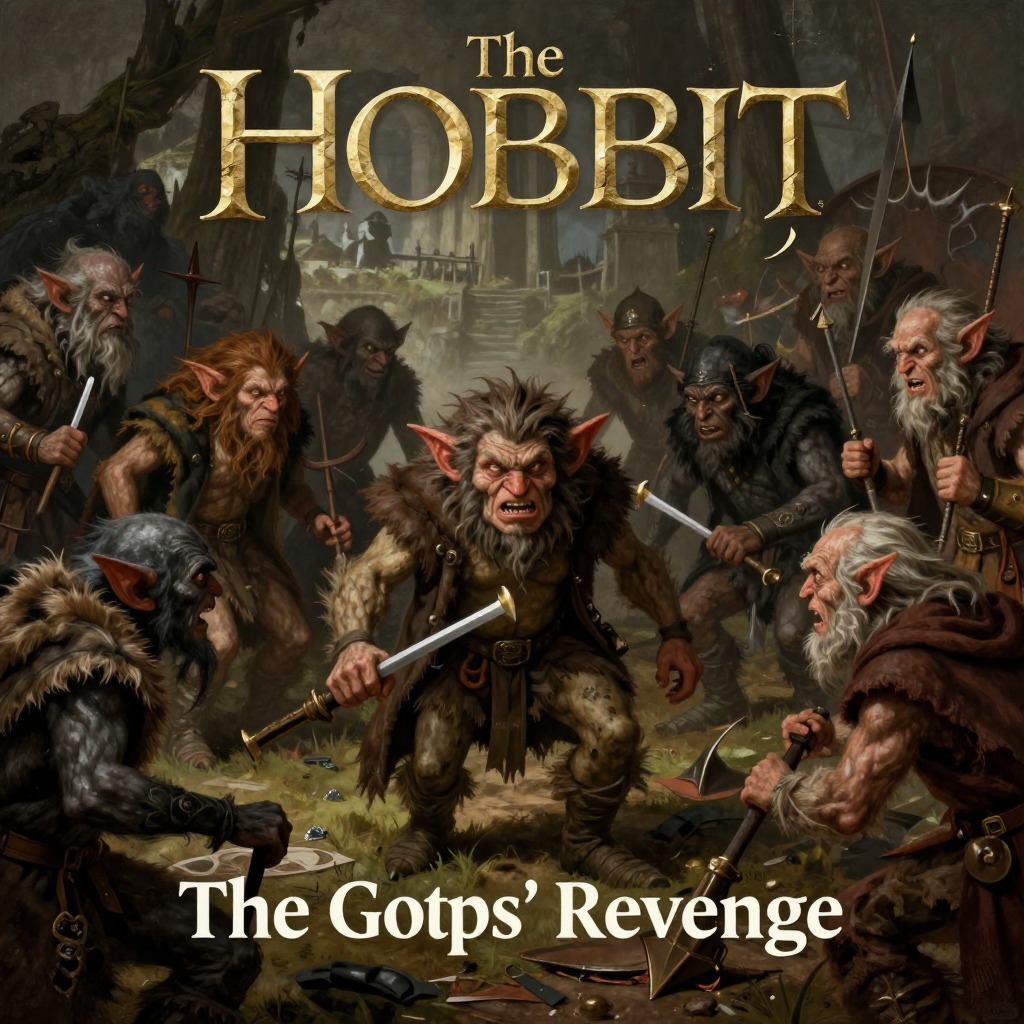
Goblin-town is not a single city but a tangled warren of passages, halls, and caverns, “crossed and tangled in all directions,” known intimately only to the goblins themselves. The air is “most horribly stuffy,” and the only light comes from red fires and torches that cast a baleful glow. The central cavern, where the Great Goblin holds court, is a vast space lit by a great fire and lined with torches, filled with hundreds of goblins who laugh, stamp, and clap as prisoners are driven in. The tunnels are not merely natural; they have been widened and joined by the goblins, and some passages lead to deep, dark lakes where ancient creatures like Gollum lurk. The realm extends so far that the dwarves, after their escape, find themselves “right down in the very mountain’s heart.”
Capture and Imprisonment
The company stumbles into Goblin-town when they take shelter from a thunderstorm in a cave that proves to be the goblins' “Front Porch.” A crack opens at the back of the cave, and “out jumped the goblins, big goblins, great ugly-looking goblins, lots of goblins,” who seize the dwarves and Bilbo. Only Gandalf escapes the initial ambush, killing several goblins with a flash of light before the crack closes. The prisoners are dragged through the dark passages, whipped and forced to run, while the goblins sing a terrifying song: “Clap! Snap! the black crack! / Grip, grab! Pinch, nab! / And down down to Goblin-town / You go, my lad!” They are brought before the Great Goblin, who sits on a large flat stone surrounded by armed guards. The goblins have a special grudge against Thorin's people, and when they recognize the sword Orcrist—which they call “Biter”—the Great Goblin flies into a rage and orders the prisoners taken “away to dark holes full of snakes.”
The Great Goblin's Death and the Escape
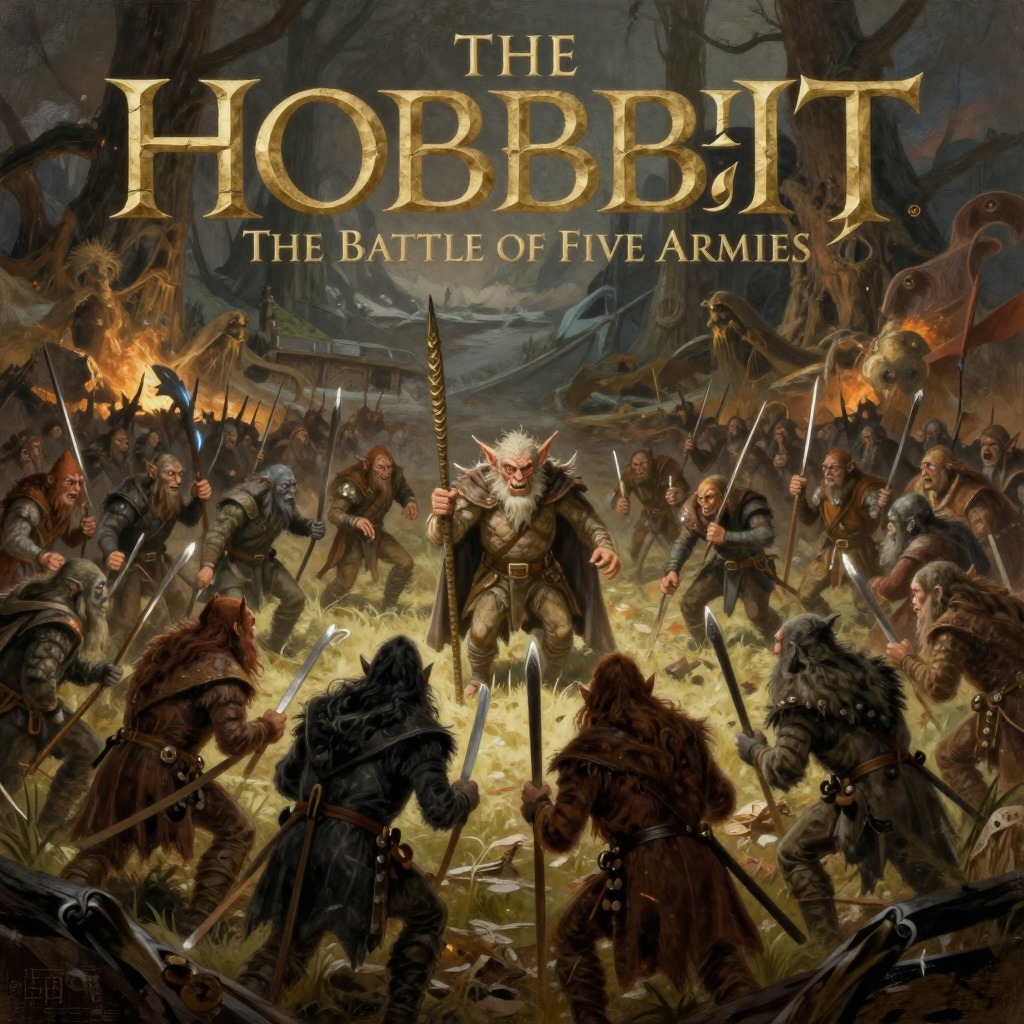
Just as the Great Goblin rushes at Thorin, Gandalf, who has followed the company unseen, extinguishes all the lights and sends a tower of blue smoke and piercing white sparks among the goblins. In the chaos, his sword Glamdring—called “Beater” by the goblins—flashes and kills the Great Goblin. The goblin soldiers flee in terror, and Gandalf leads the dwarves through the dark passages, cutting their chains with Glamdring. The goblins, however, quickly regroup and pursue, sending their “very quickest runners with the sharpest ears and eyes” after the fugitives. In the desperate flight, Dori, who is carrying Bilbo, is grabbed from behind, and the hobbit falls into the darkness, losing consciousness and becoming separated from the others. This separation leads Bilbo into the tunnels where he finds the Ring and encounters Gollum.
Narrative Significance
Goblin-town functions as a crucial threshold in the adventure, marking the point where the company loses its ponies, supplies, and—for a time—its wizard. It is the first major encounter with a concentrated force of evil that is not a single monster but an entire hostile civilization. The escape from Goblin-town, though successful, is a narrow and costly one, and it forces Bilbo into the solitary ordeal that transforms him from a reluctant tag-along into a resourceful and courageous figure. The realm's dark, oppressive architecture and the goblins' cruel songs create a lasting impression of a world utterly opposed to the comfort and light of the hobbit's home, reinforcing the stakes of the journey eastward.