Lord of the Eagles
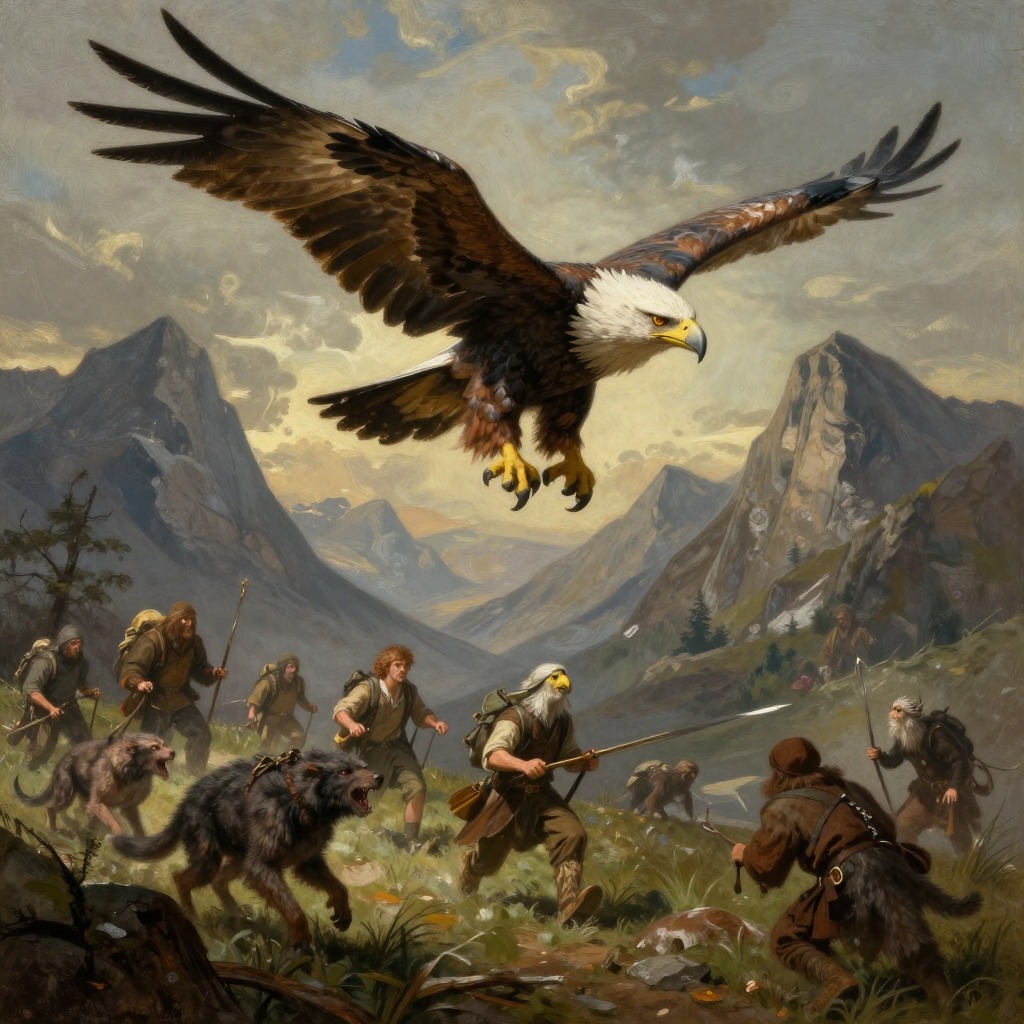
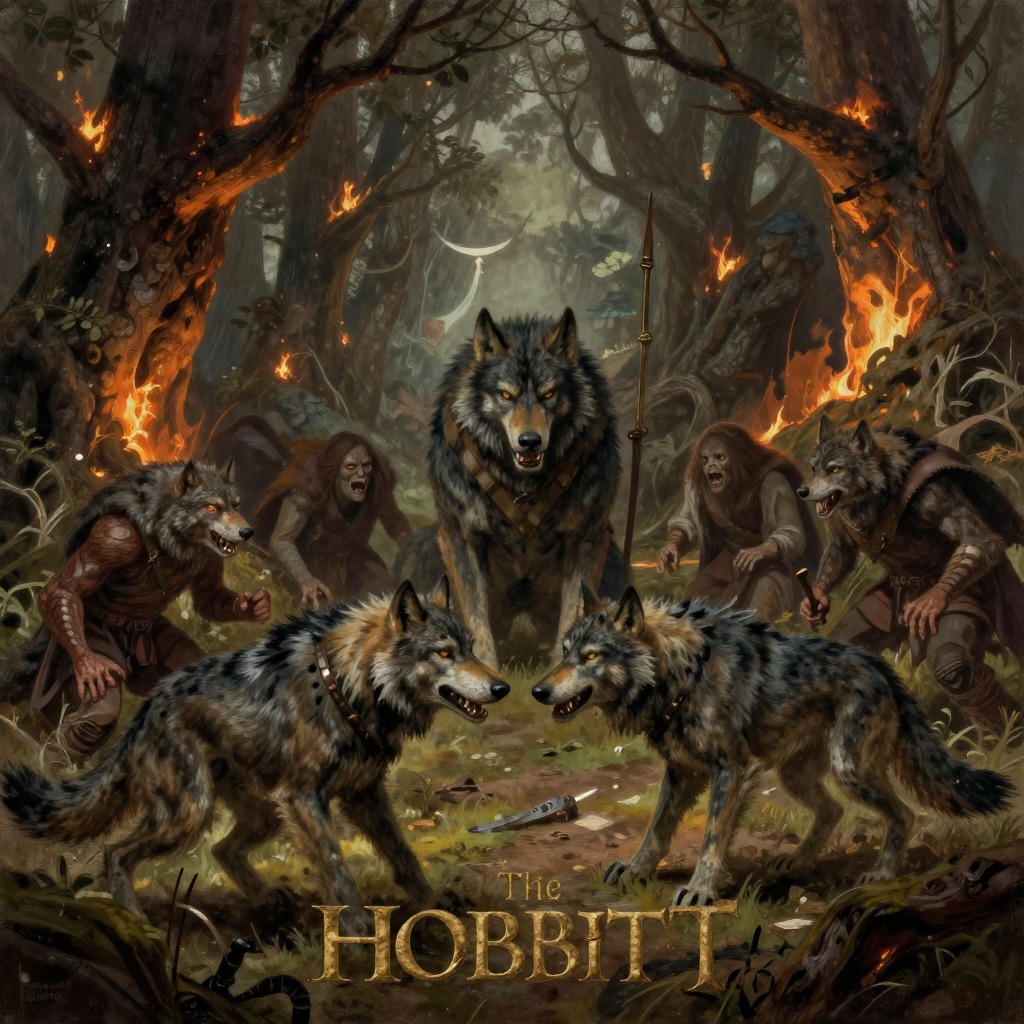
The HobbitThe Lord of the Eagles is the ancient and powerful ruler of the Great Eagles of the Misty Mountains, a race of proud, strong, and noble-hearted birds who do not love goblins nor fear them. He is first introduced sitting black in the moonlight on a lonely pinnacle of rock at the eastern edge of the mountains, his eyes so keen that they can look at the sun unblinking and see a rabbit moving on the ground a mile below even in the moonlight. When he hears the uproar of the Wargs in the forest and the glint of goblin spears, he is filled with curiosity and summons many eagles to him, circling down toward the ring of wolves and the meeting-place of the goblins.
Rescue from the Fire
At the critical moment when Gandalf is about to leap from his burning tree into the midst of the goblins, the Lord of the Eagles sweeps down from above, seizes the wizard in his talons, and carries him away. His eagles then swoop over the goblins and wolves, smiting them to the floor with the dark rush of their beating wings, tearing at goblin faces with their talons, and seizing the dwarves from the tree-tops. Bilbo Baggins is nearly left behind, but catches hold of Dori's legs as Dori is borne off, swinging in the air with his arms nearly breaking. The Lord of the Eagles carries the company to the Great Shelf, a wide shelf of rock on the mountain-side, where he speaks with Gandalf, whom he knows slightly and who once rendered him a service by healing him from an arrow-wound.
The Journey to the Carrock
The Lord of the Eagles refuses to take the dwarves anywhere near where men live, fearing they would be shot at with great bows of yew, but agrees to carry them far away and set them down well on their journey across the plains below. The next morning, fifteen great birds rise from the mountain's side, and the Lord of the Eagles himself carries Bilbo, who clings between his wings. They set the company down on the top of the great rock called the Carrock, and the Lord of the Eagles bids them farewell with the polite eagle saying, "Farewell! wherever you fare, till your eyries receive you at the journey's end!" Gandalf replies with the correct response: "May the wind under your wings bear you where the sun sails and the moon walks."
Later Glory and the Battle of Five Armies
In after days, the Lord of the Eagles becomes the King of All Birds and wears a golden crown, and his fifteen chieftains wear golden collars made of the gold that the dwarves give them. Bilbo never sees him again except high and far off in the Battle of Five Armies, where the eagles come down the wind, line after line, in such a host as must have gathered from all the eyries of the North. They dislodge the goblins from the mountain-slopes, casting them over precipices or driving them down shrieking among their foes, and help free the Lonely Mountain. Dain crowns their chief with gold and swears friendship with them forever. The Lord of the Eagles thus stands as a symbol of ancient, noble power that intervenes at the turning points of the tale, rewarding past kindness and upholding the cause against evil.