Roäc
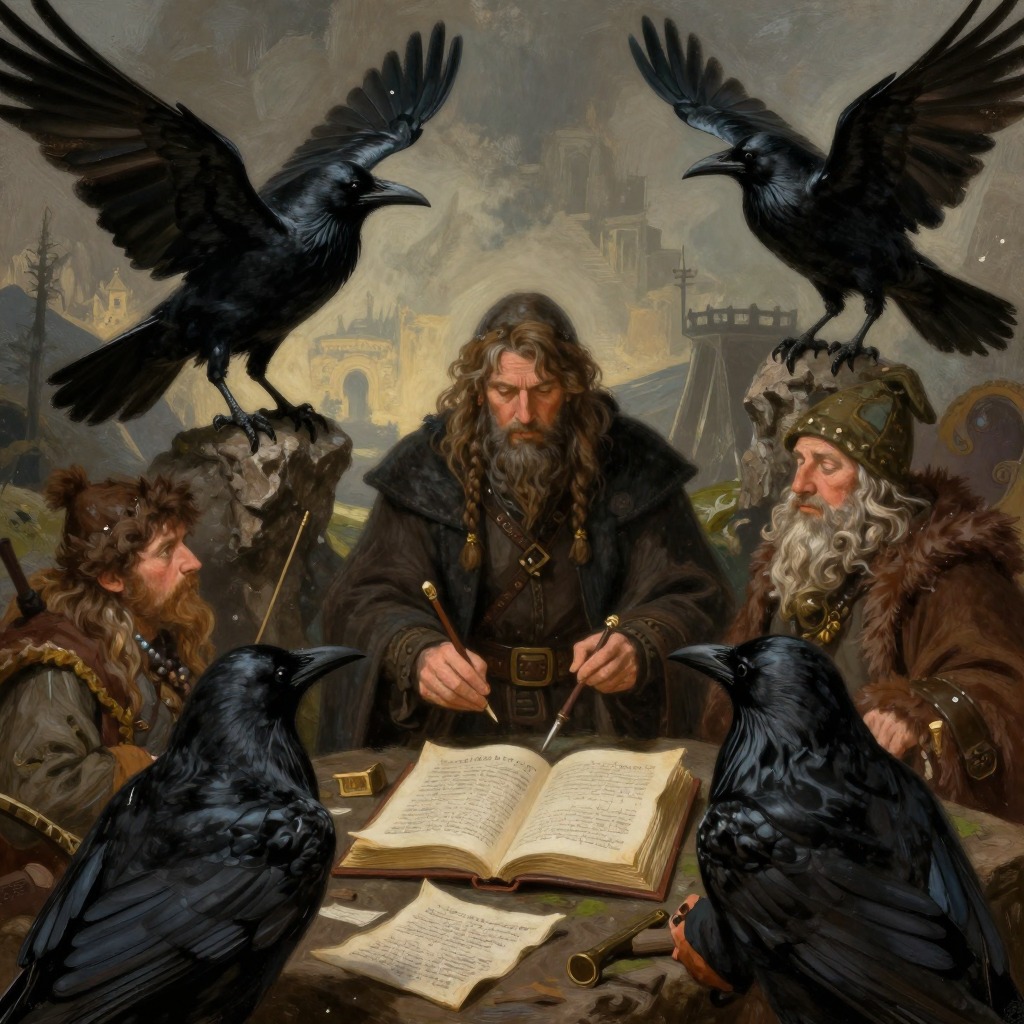
The HobbitRoäc son of Carc is the aged and nearly blind chief of the great ravens of the Lonely Mountain, a bird of immense years and inherited wisdom who serves as a crucial messenger between the dwarves and the wider world after Smaug's fall. He appears before Thorin Oakenshield and his company on Ravenhill, a height named for his own father's famous pair, to deliver tidings that transform the dwarves' situation from one of hidden survival to one of open confrontation.
Identity and Lineage
Roäc is the son of Carc, a wise and famous raven who lived on Ravenhill above the guard-chamber in the days of Thror's prosperity. He himself came out of the egg one hundred and fifty-three years before the events of the tale, making him a creature of extraordinary longevity even for his long-lived kind. He is the chief of the great ravens of the Mountain, a dwindled but still proud remnant of the ancient breed that once enjoyed great friendship with the people of Thror, carrying secret news and being rewarded with bright things they coveted to hide in their dwellings. His memory is long, and he hands on his wisdom to his children, embodying the continuity of the ravens' role as allies and informants to the dwarven kingdom.
The Message of Smaug's Death
Roäc arrives at Ravenhill in response to a call from the old thrush, who had witnessed Smaug's fall. He alights stiffly before Thorin and Balin, croaking in ordinary language that Bilbo Baggins can understand, and announces the great tidings: Smaug is dead, slain in battle with the men of Esgaroth three nights earlier at the rising of the moon. The news throws the dwarves into a frenzy of joy, as they believe the treasure is now theirs without fear. But Roäc immediately tempers their elation with a sobering report: the legend of Thror's wealth has spread far and wide, and a host of Elves is already on the march, while the homeless men of the Lake, blaming the dwarves for their ruin, also seek amends from the treasure. He warns that thirteen dwarves are a small remnant of the great folk of Durin, and advises Thorin not to trust the Master of Lake-town but rather Bard, the dragon-slayer of the line of Girion, whom he calls a grim man but true.
Counsel and the Summoning of Dain
Roäc does not merely deliver news; he offers strategic counsel, urging Thorin to seek peace among dwarves, men, and elves after the long desolation, though he warns it may cost dear in gold. When Thorin, in anger, rejects any thought of sharing the treasure and instead asks Roäc to send messengers to his kin in the mountains of the North, especially to his cousin Dain in the Iron Hills, Roäc responds with a measured neutrality. He says he will not judge whether the counsel is good or bad, but he will do what can be done. This response reflects the raven's ancient wisdom and his understanding of the stubbornness of dwarves, as well as his own commitment to the old bonds of service. He then flies off slowly to carry out the errand, setting in motion the arrival of Dain's five hundred grim dwarves that will ultimately lead to the Battle of Five Armies.
Narrative Role and Significance
Roäc functions as a pivotal herald and a voice of sober reality in the narrative. His arrival transforms the dwarves' hidden vigil into a public crisis, forcing them to confront the consequences of Smaug's death. He is the conduit through which the external world's reaction to the dragon's fall reaches the isolated company, and his counsel—though rejected by Thorin—frames the moral and political stakes of the coming siege. As the last representative of an ancient alliance between ravens and dwarves, Roäc embodies the theme of memory and loyalty across generations, and his brief but weighty appearance marks the transition from the adventure's quest phase to its climactic conflict over the treasure.