Smaug
The HobbitSmaug is the last great dragon of the North, a creature of immense greed, cunning, and destructive power, whose theft of the dwarves' treasure and subsequent reign of terror form the central conflict of the quest. His death at the hands of Bard the Bowman not only ends a centuries-old tyranny but also triggers a war over the hoard, ultimately reshaping the political landscape of the region. More than a mere monster, Smaug is a character of formidable intelligence and personality, whose conversation with Bilbo Baggins reveals both his vanity and his strategic mind, making him one of the most memorable antagonists in modern fantasy.
Origins and the Desolation of the Mountain
Smaug was "a most specially greedy, strong and wicked worm" who, in the days of Thorin's grandfather Thror, flew south from the North and descended upon the Lonely Mountain. The dwarves first heard of his coming as "a noise like a hurricane from the North," and saw him "settle on our mountain in a spout of flame." He destroyed the woods, routed the dwarves who rushed out of the great gate, and then crept through the Front Gate, routing out all the halls and taking all their wealth for himself. He later came by night to the town of Dale, carrying away people, especially maidens, to eat, until the town was ruined and all its people were dead or gone. For many years, he lay on the vast hoard within the Mountain, his very presence turning the surrounding lands into the Desolation of the Dragon, a barren and lifeless waste where only broken and blackened stumps remained of the once green and fair country.
The Hoard and the Dragon's Lair
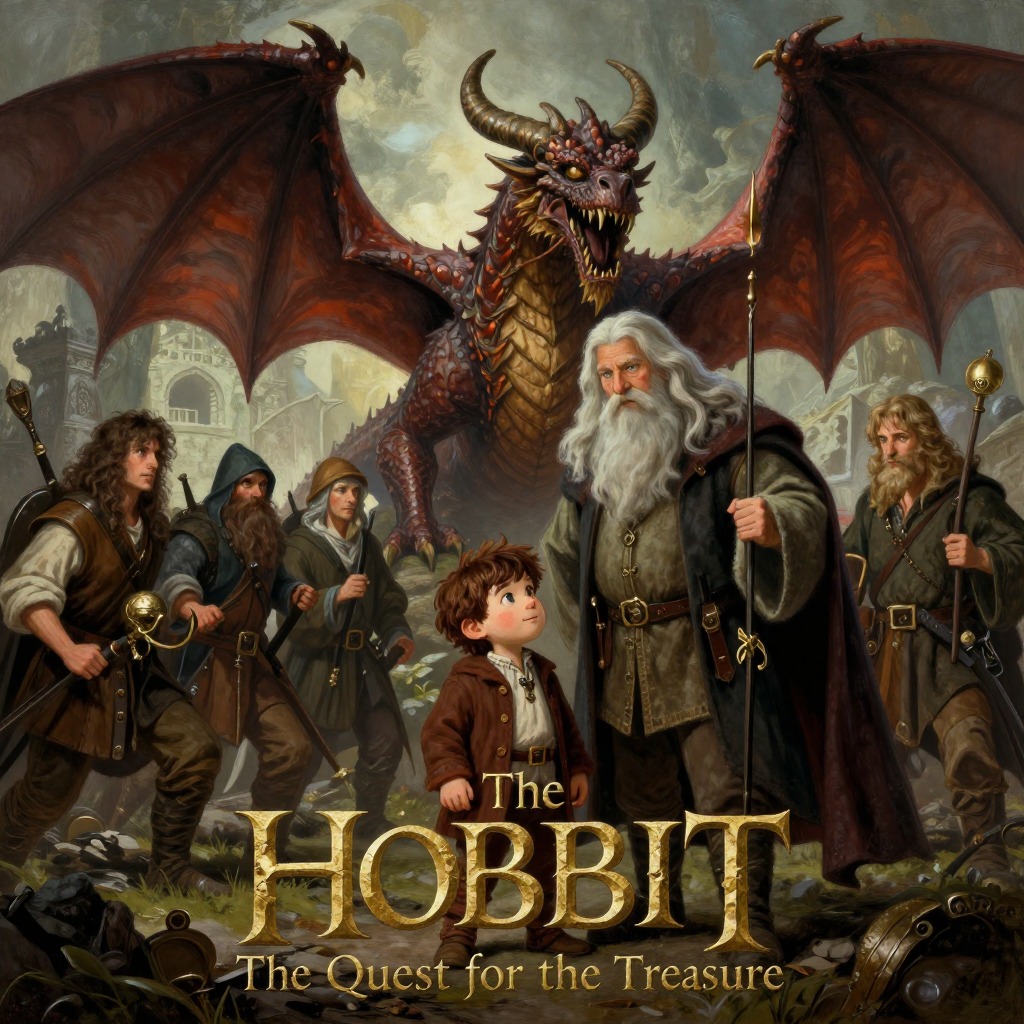
Smaug's lair was the great bottom-most cellar of the ancient dwarves, deep at the Mountain's root. There he lay on "countless piles of precious things, gold wrought and unwrought, gems and jewels, and silver red-stained in the ruddy light." His long lying on this costly bed had crusted his long pale belly with gems and fragments of gold. Behind him, on the walls, hung coats of mail, helms, axes, swords, and spears, along with great jars and vessels filled with untold wealth. The dragon himself was a vast red-golden creature, with wings folded like an immeasurable bat. When Bilbo Baggins first saw him, he was fast asleep, a thrumming coming from his jaws and nostrils, with wisps of smoke, his fires low in slumber. The sight of the treasure filled Bilbo's heart with "enchantment and with the desire of dwarves."
The Conversation with Bilbo and the Discovery of the Weakness
When Bilbo returned to the lair, Smaug was awake and waiting, having sensed the thief. He engaged Bilbo in a long, riddling conversation, a tactic to which no dragon can resist. Smaug was flattered by Bilbo's titles—"Smaug the Chiefest and Greatest of Calamities"—and was amused by the hobbit's evasive answers. He shrewdly deduced that Bilbo had help from the Lake-men, calling him "Barrel-rider," and attempted to sow distrust between Bilbo and the dwarves, suggesting they would betray him. However, Bilbo, while pretending to admire Smaug's diamond-encrusted underbelly, noticed a bare patch in the hollow of his left breast, "as bare as a snail out of its shell." This discovery, which Bilbo kept to himself, would prove fatal. As Bilbo fled, Smaug spouted terrific flames after him, and the hobbit learned a lesson he would later pass into a proverb: "Never laugh at live dragons."
The Destruction of Lake-town and Death
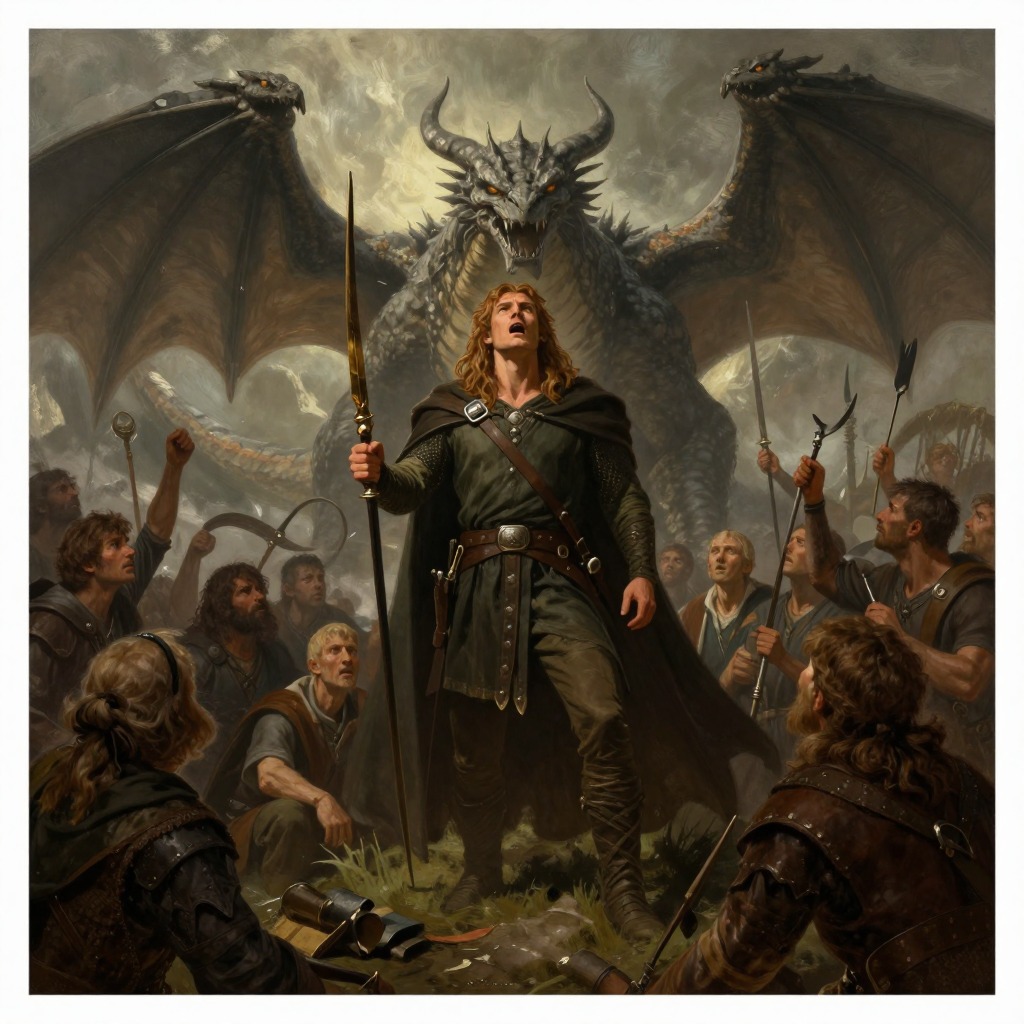
Enraged by the theft of a single two-handled cup, Smaug guessed that the Lake-men were behind the burglary and flew south to exact vengeance. He attacked the town of Esgaroth, setting its wooden houses ablaze with his fiery breath. The townspeople fought back with arrows, but none could pierce his scales. However, the old thrush, who had overheard Bilbo's revelation of the bare patch, flew to the archer Bard and told him the secret. As Smaug swooped low, his belly glittering in the moonlight, Bard drew his great yew bow and shot a black arrow straight into the hollow of the left breast. The arrow vanished into the dragon, and with a shriek that deafened men and split stone, Smaug shot into the air, turned over, and crashed down in ruin upon the town, destroying it. His death was the end of a long tyranny, but it also left the treasure unguarded, setting the stage for the Battle of the Five Armies.
Narrative Role and Significance
Smaug functions as the ultimate obstacle of the dwarves' quest, the embodiment of the greed and destruction that the treasure represents. His death is not the end of the story but the catalyst for the final conflict, as the lure of his hoard draws elves, men, and dwarves into a war. His character is a study in the psychology of power and possession: he is vain, cunning, and immensely proud, yet his greed is ultimately his undoing. The dragon-sickness, a lust for gold that corrupts those who come near the hoard, is a legacy he leaves behind, affecting even Thorin Oakenshield. Smaug's presence looms over the entire narrative, a force of nature as much as a character, and his defeat marks the true beginning of the adventure's end.