Smaug's Attack on Lake-town
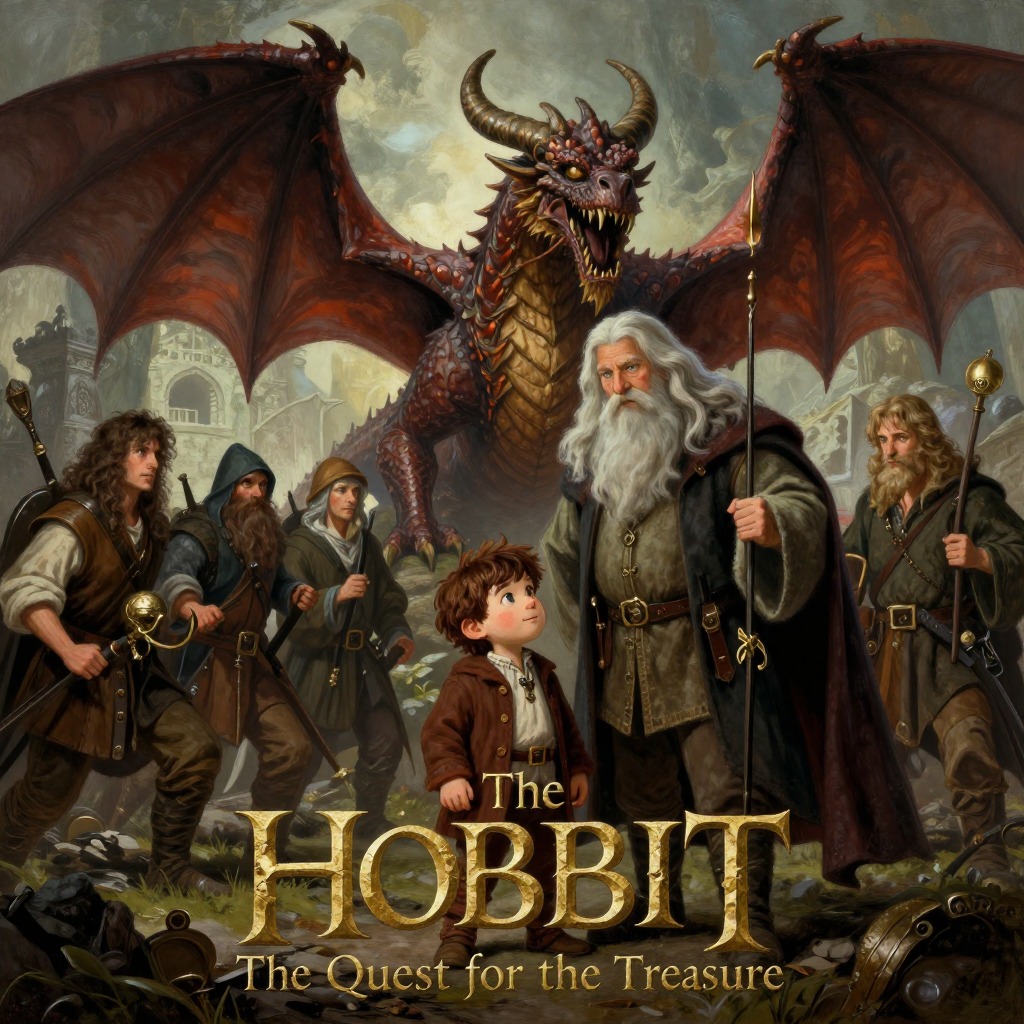
The HobbitSmaug's Attack on Lake-town is the catastrophic climax of the dragon's vengeance, in which he destroys the prosperous town of Esgaroth in a single night of fire and terror, only to be slain by Bard the Bowman, an act that reshapes the political and military landscape of the North.
Causes and Background
Two nights after the dwarves entered the Lonely Mountain, Smaug erupted from the Front Gate in a spout of green and scarlet flame, having discovered the theft of a golden cup and, through riddling conversation with Bilbo Baggins, deduced that the Lake-men had aided the burglars. The dragon's rage was absolute: he had not visited the lake in an age, but now he resolved to make the town pay for its complicity. The men of Esgaroth were mostly indoors, for a chill breeze blew from the black East, but a few watchmen on the quays saw a brief glow touch the distant peak of the Mountain and fade. Some spoke hopefully of the King under the Mountain forging gold; a grim-voiced man named Bard warned that it was the dragon's fire. When a great light appeared in the low hills and the northern end of the lake turned golden, the townsfolk at first cheered, believing the old songs were coming true. But Bard ran hotfoot to the Master, crying that the dragon was coming, and urged him to cut the bridges and arm every warrior. Warning trumpets sounded along the rocky shores, and the joy turned to dread.
What Happens
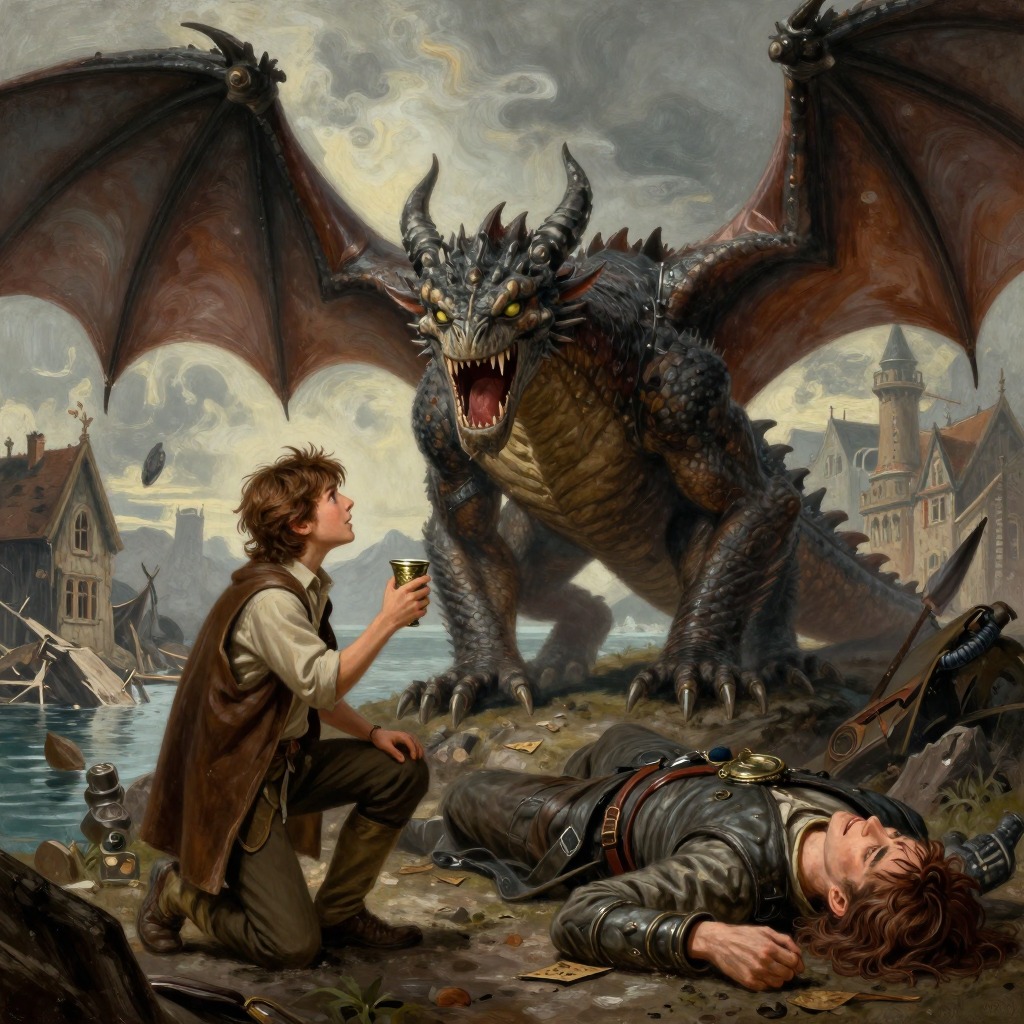
Smaug came with terrible speed, a spark of fire that grew ever huger and brighter. Every vessel in the town was filled with water, every warrior armed, and the bridge to the land was thrown down and destroyed before the roar of his approach grew loud and the lake rippled red beneath the beating of his wings. He swept towards the bridges and was foiled—the bridge was gone, and his enemies were on an island in deep, dark, cool water that would quench him if he plunged. Roaring, he swept back over the town. A hail of dark arrows leaped up and snapped on his scales and jewels, their shafts falling back kindled by his breath. No one had dared give battle to him for many an age; but Bard ran to and fro cheering on the archers and urging the Master to order them to fight to the last arrow. Fire leaped from the dragon's jaws. He circled high in the air, lighting all the lake, then swooped straight through the arrow-storm, reckless in his rage, seeking only to set the town ablaze. Fire leaped from thatched roofs and wooden beam-ends as he hurtled down and past and round again. A sweep of his tail crumbled the roof of the Great House. Flames unquenchable sprang high into the night. House after house sprang afire and fell. Men jumped into the water on every side; women and children were huddled into laden boats. The Master himself turned to his great gilded boat, hoping to row away in the confusion. Soon all the town would be deserted and burned down to the surface of the lake. That was the dragon's hope: he could have fine sport hunting them in boats, or they could starve; he would set all the shoreland woods ablaze and wither every field and pasture.
The Turning Point and the Slaying
But a company of archers held their ground among the burning houses, their captain Bard, a descendant in long line of Girion, Lord of Dale. He shot with a great yew bow till all his arrows but one were spent. The flames were near him; his companions were leaving him. Suddenly an old thrush fluttered to his shoulder and brought him news: the thrush told him of the bare patch in the hollow of Smaug's left breast, which Bilbo had discovered. Bard drew his bow-string to his ear. The dragon was circling back, flying low, and as he came the moon rose above the eastern shore and silvered his great wings. Bard spoke to his last black arrow, saved from his father and from of old, and prayed that if it ever came from the forges of the true king under the Mountain, it would go now and speed well. The dragon swooped lower than ever, and as he turned and dived down his belly glittered white with gems in the moon—but not in one place. The great bow twanged. The black arrow sped straight for the hollow by the left breast where the foreleg was flung wide. In it smote and vanished, barb, shaft and feather. With a shriek that deafened men, felled trees and split stone, Smaug shot spouting into the air, turned over and crashed down from on high in ruin. Full on the town he fell. His last throes splintered it to sparks and gledes. The lake roared in. A vast steam leaped up, white in the sudden dark under the moon. There was a hiss, a gushing whirl, and then silence. That was the end of Smaug and Esgaroth, but not of Bard.
Consequences and Aftermath
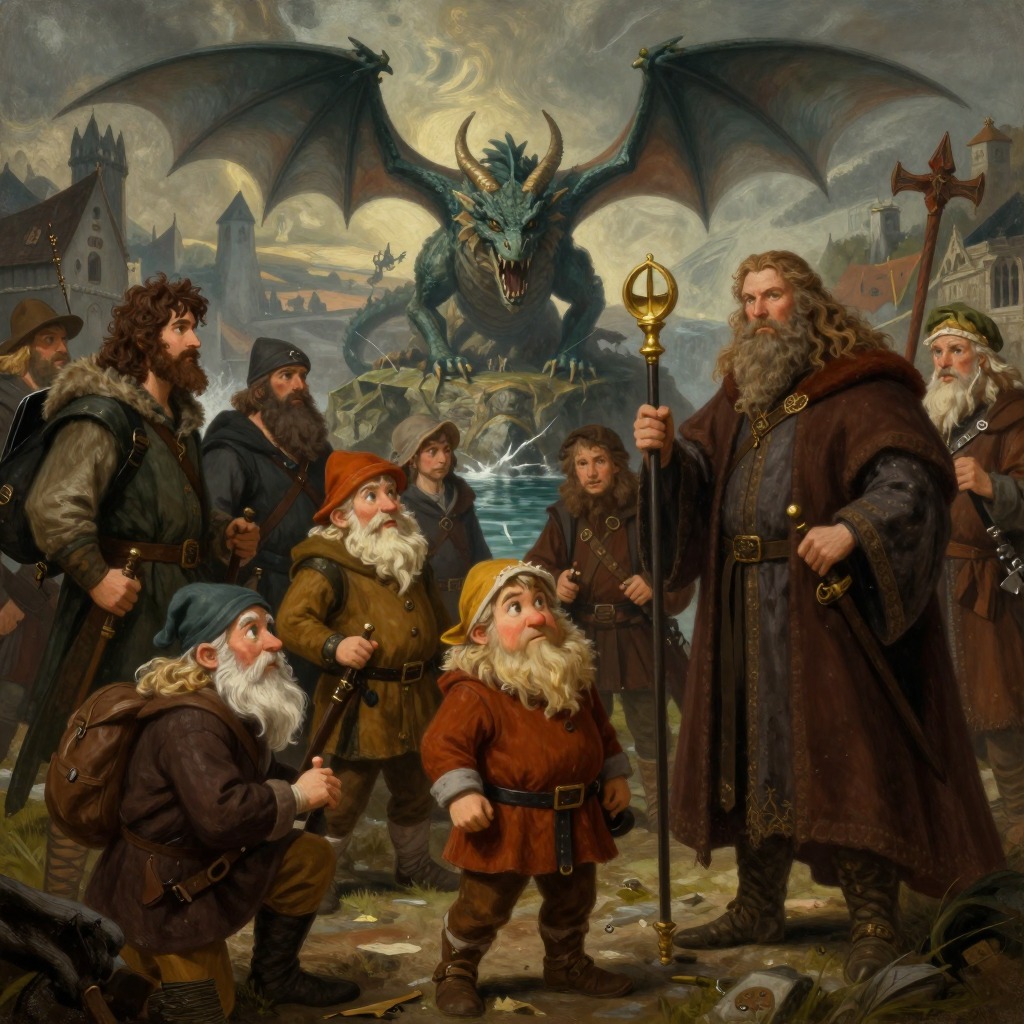
The waxing moon rose higher, the wind grew loud and cold, driving the white fog to the West. The many boats could be seen dotted dark on the surface of the lake, and down the wind came the voices of the people lamenting their lost town and goods. Three quarters of the people had escaped alive; their woods, fields, cattle, and most of their boats remained undamaged; and the dragon was dead. They gathered in mournful crowds on the western shores, shivering in the cold wind, and their first complaints were against the Master, who had left the town so soon. They praised the courage of Bard and his last mighty shot, and when Bard himself stepped from the shadows, drenched with water, they shouted "King Bard! King Bard!" The Master ground his chattering teeth and argued that Girion was lord of Dale, not king of Esgaroth, and that the wise would stay and rebuild. But the people cried "Up the Bowman, and down with Moneybags." The Master then turned their anger towards Thorin and his company, asking who had aroused the dragon and brought ruin. Bard, however, took the lead, ordering the camps and caring for the sick and wounded. He sent messengers up the river to ask the aid of the Elvenking, who was already marching with many spearmen and bowmen, having heard news of Smaug's death from the birds. The king turned his march and hastened down the river to the Long Lake, sending great store of goods ahead by water. Only five days after the death of the dragon, the elves came upon the shores and looked on the ruins. Plans were soon made: the Master remained behind with the women, children, and craftsmen to build a new town further north, while all the men of arms and most of the Elvenking's array marched north to the Mountain. In eleven days from the ruin of the town, the head of their host passed the rock-gates at the end of the lake and came into the desolate lands, setting the stage for the siege of the Mountain and the Battle of Five Armies.