Thorin's Death
The HobbitThorin Oakenshield's death is the tragic culmination of his quest to reclaim the treasure of his forefathers, a moment that transforms him from a figure consumed by dragon-sickness into a king who dies reconciled with his friends and at peace with his fate. Wounded with many wounds in the Battle of Five Armies, he lies in a tent in Dale, his rent armour and notched axe cast upon the floor, as Bilbo Baggins is brought to his side by Gandalf. His final words to the hobbit are a farewell that acknowledges their shared peril and repudiates his own harsh actions at the Gate, marking the end of both his life and the central conflict of the adventure.
Death and Reconciliation
Thorin's deathbed scene is one of profound reconciliation. As Bilbo kneels beside him, Thorin speaks: "Farewell, good thief," he says, declaring that he goes now to the halls of waiting to sit beside his fathers until the world is renewed. He explicitly wishes to part in friendship from Bilbo, taking back his words and deeds at the Gate—a direct reference to his furious rejection of the hobbit after the Arkenstone was revealed. Bilbo, filled with sorrow, replies that this is a bitter adventure if it must end so, and that no mountain of gold can amend it, yet he is glad to have shared in Thorin's perils. Thorin's final assessment of Bilbo is generous: he tells the hobbit there is more in him of good than he knows, blending some courage and some wisdom, and expresses a wish that more people valued food and cheer and song above hoarded gold, for it would be a merrier world. With that, he bids farewell and dies.
Aftermath and Burial
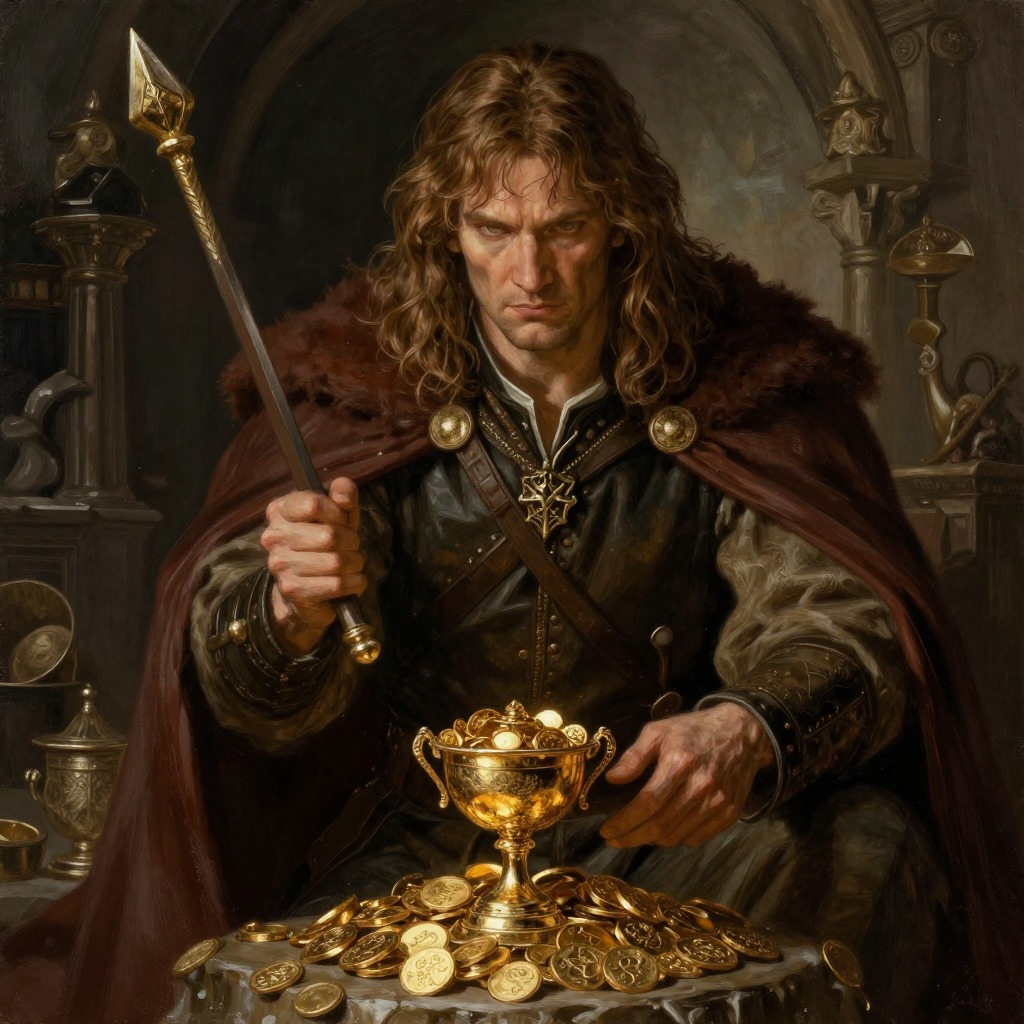
After the battle, Thorin is buried deep beneath the Mountain. Bard lays the Arkenstone upon his breast, saying, "There let it lie till the Mountain falls! May it bring good fortune to all his folk that dwell here after!" Upon his tomb, the Elvenking lays Orcrist, the elvish sword that had been taken from Thorin during his captivity in the Wood-elves' halls. It is said in songs that the sword gleamed ever in the dark if foes approached, ensuring the fortress of the dwarves could not be taken by surprise. Dain son of Nain takes up his abode as the new King under the Mountain, and in time many other dwarves gather to his throne in the ancient halls. Of Thorin's twelve companions, ten remain; Fili and Kili, his sister-sons, have fallen defending him with shield and body, for he was their mother's elder brother.
Thematic Significance
Thorin's death is the emotional and moral climax of the quest, transforming the adventure from a simple treasure hunt into a story about the costs of greed and the value of friendship. His dragon-sickness, which had made him refuse a just share to Bard and the Elves and denounce Bilbo as a traitor, is finally purged in his last moments. His dying wish—that more people valued food and cheer and song above hoarded gold—directly repudiates the lust for treasure that had driven him and nearly destroyed his company. The burial of the Arkenstone with him and the placement of Orcrist on his tomb symbolize the end of the old feud and the beginning of a new era of peace among dwarves, men, and elves. Bilbo, who weeps until his eyes are red and his voice is hoarse, later reflects that he is glad they parted in kindness, though he wishes Thorin were still living. The death of Thorin Oakenshield thus closes the heroic age of the quest and leaves a legacy of reconciliation that shapes the future of the North.