What have I got in my pocket?
The HobbitThe question "What have I got in my pocket?" is the desperate, improvisational riddle that Bilbo Baggins blurts out during his life-or-death riddle-game with Gollum in the dark tunnels beneath the Misty Mountains. This single, unplanned question, which breaks the ancient rules of the contest, saves Bilbo from being eaten, wins him the way out of the goblin realm, and inadvertently reveals the existence of the magic Ring of Invisibility, a discovery that transforms his character and becomes the pivotal secret of his entire adventure.
Origin and Context
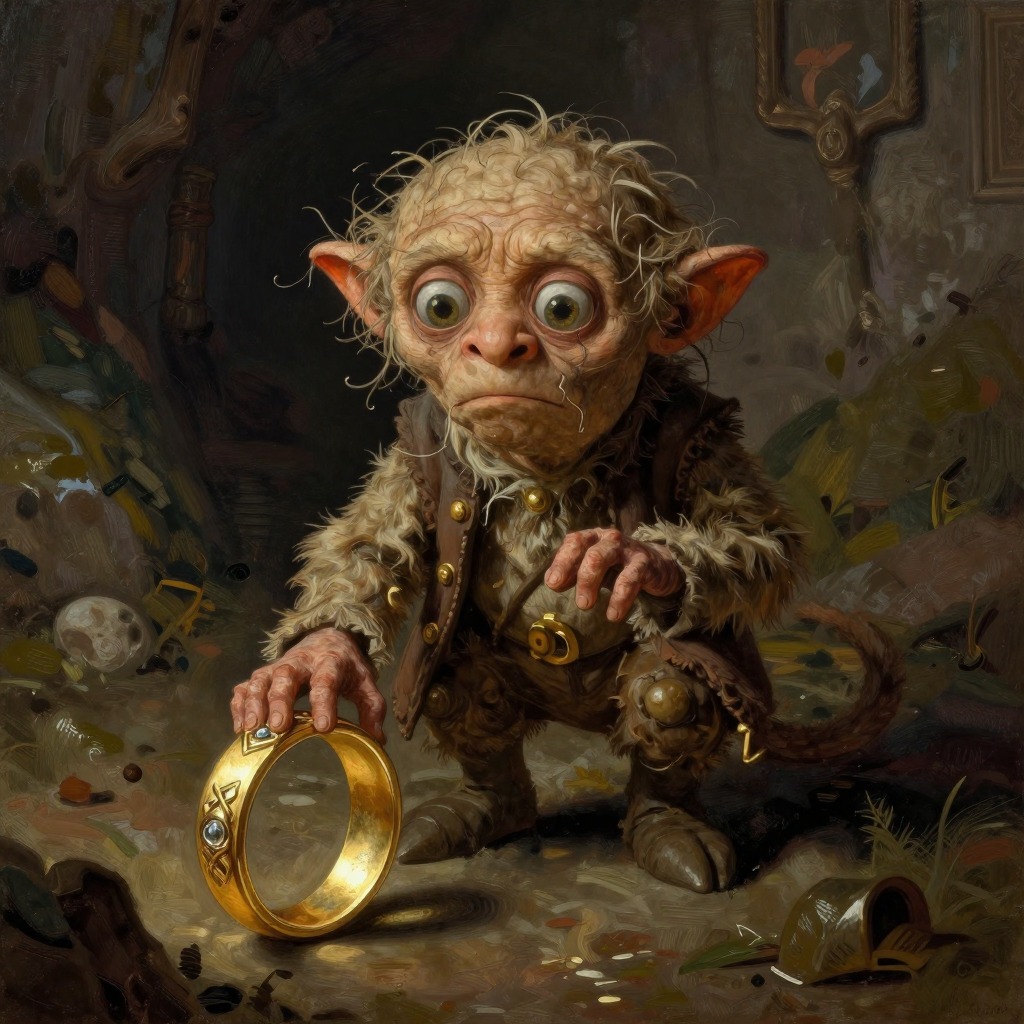
The question arises at the climax of the riddle-game, a contest Bilbo enters with the creature Gollum deep under the mountain. Gollum, who lives on a slimy island in a cold, dark lake, has proposed the game: if Bilbo answers a riddle, Gollum will show him the way out; if Gollum answers, he will eat the hobbit. After several exchanges, Bilbo finds himself unable to think of a new riddle. With Gollum sitting beside him, pawing and poking him in the dark, Bilbo's mind goes blank. In his desperation, he slaps himself, pinches himself, and grips his little sword. Then, feeling in his pocket with his other hand, he encounters the cold metal ring he had picked up in the passage and forgotten about. Without any premeditation, he speaks the words aloud: "What have I got in my pocket?" He is talking to himself, but Gollum, who has been isolated for ages and whose only social interaction has been through such games, immediately interprets it as a riddle.
The Riddle-Game and Its Rules
The riddle-game is described as "sacred and of immense antiquity," and even wicked creatures are afraid to cheat at it. Gollum himself sets the terms: if Bilbo asks a riddle Gollum cannot answer, Gollum must show him the way out; if Gollum asks one Bilbo cannot answer, Gollum will eat him. The game has proceeded through several traditional riddles—about mountains, teeth, wind, the sun on daisies, darkness, eggs, fish, and time—before Bilbo's mind fails him. When Bilbo asks his pocket question, Gollum immediately protests: "It isn't fair, my precious, is it, to ask us what it's got in its nassty little pocketses?" He insists on three guesses, a concession Bilbo grants. Gollum guesses "Handses!" (wrong, as Bilbo has just removed his hand), "Knife!" (wrong, as Bilbo lost his knife earlier), and finally, in a desperate double-guess, "String, or nothing!" Both are wrong. Bilbo, very much relieved, declares the game won. Though the question is not a genuine riddle according to ancient laws, Gollum does not immediately attack, bound by the sacredness of the contest.
Consequences and Revelation
The immediate consequence is that Bilbo wins the right to be shown the way out. However, Gollum, now angry and hungry, does not intend to honor the promise. He goes to his island to fetch his "birthday-present," a golden ring that makes its wearer invisible, planning to use it to murder Bilbo. But the ring is missing—Bilbo had found it in the tunnel and put it in his pocket. Gollum's frantic search and his anguished cries of "Losst it is, my precious, lost, lost!" alert Bilbo. When Gollum returns, mad with rage and suspicion, he demands to know what Bilbo has in his pocket. Bilbo, now realizing the ring's power, refuses to answer. As Gollum attacks, Bilbo accidentally slips the ring onto his finger and becomes invisible, allowing him to escape. The question thus directly leads to Bilbo's discovery of the ring's power, his escape from Gollum, and his eventual reunion with the dwarves.
Thematic Significance and Legacy
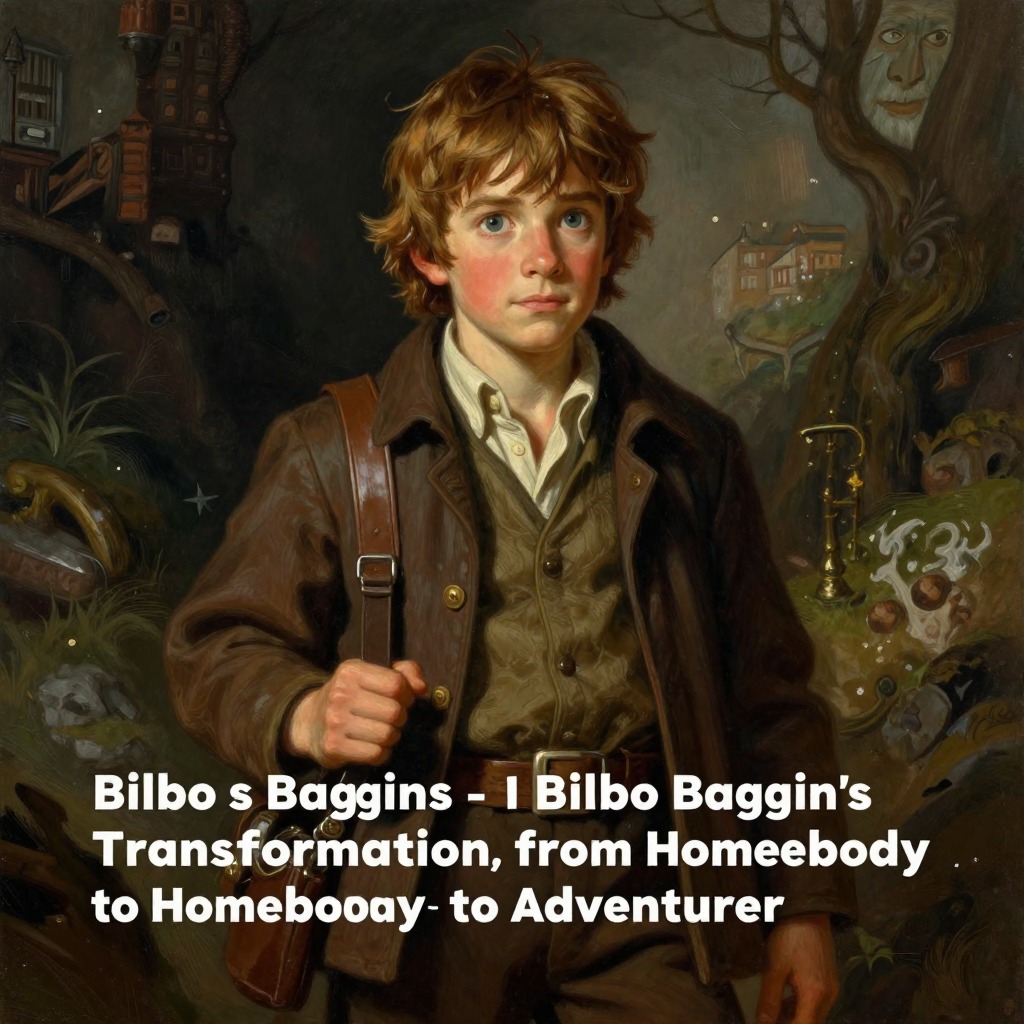
The question "What have I got in my pocket?" is a turning point in Bilbo's character arc. It is a moment of pure, unplanned resourcefulness that springs from his Tookish side—the adventurous, unexpected part of his nature that had been dormant. The question itself is a gamble, a break from the structured game, and it works because it is so personal and unpredictable. It also marks the beginning of Bilbo's secret: he does not tell the dwarves about the ring when he rejoins them, saying only that he "crept along, you know—very carefully and quietly." This secret, born from the pocket riddle, becomes a defining element of his character, a tool he uses later to rescue the dwarves from spiders and to navigate the Elvenking's halls. The question, and the ring it revealed, are the foundation of Bilbo's transformation from a comfort-loving hobbit into a resourceful burglar and, eventually, an elf-friend. The phrase itself becomes a private touchstone, a reminder of the moment when luck and quick thinking saved his life and changed the course of his adventure.