Henry Angkatell
The HollowHenry Angkatell is the distinguished patriarchal figure at the centre of The Hollow’s household order. A former Governor of the Hollowene Islands, he combines public authority with private restraint: he is an able administrator, a long-established firearms enthusiast, and Lucy Angkatell’s husband. His significance lies in the contrast between the competence expected of him and the disorder that Lucy’s personality, the family’s history, and the investigation repeatedly bring into his home.
Identity and Household Authority
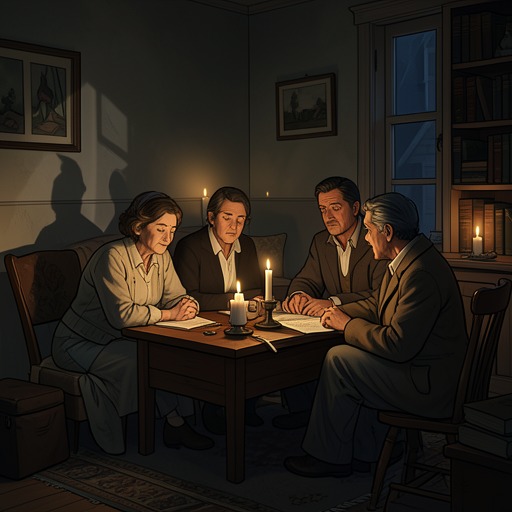
Henry’s authority is established through small but telling domestic details. When Lucy Angkatell returns to her room after deciding to make tea for Midge Hardcastle, she tries the handle of Henry’s door, but he has locked it against interruption because he values his morning sleep. The gesture presents him as affectionate but firm about the boundaries of his private routine, while also showing that Lucy understands his habits well enough to anticipate them. Their marriage is therefore not depicted as ceremonially distant: it has the familiarity of a long partnership, even when Lucy’s impulses outrun his preference for order.
His public identity reinforces that domestic position. Inspector Grange sees him as a good-looking, distinguished former colonial governor, the sort of superior under whom he would prefer to serve. This assessment separates Henry from the inspector’s current chief constable, whom Grange regards as fussy and socially self-important. Henry thus embodies an older ideal of authority: experienced, self-possessed, and commanding without the need for theatrical display. His status is not merely inherited from the Angkatell family; it is supported by a career associated with administration and government.
Character and Control
Henry’s private judgment of Lucy is more anxious than his outward manner suggests. He tells Midge Hardcastle that he sometimes worries about Lucy because she does not realize that there are things she cannot do. In his view, Lucy has always escaped the consequences of her actions. She has flouted the traditions of Government House, disregarded precedence at dinner parties, placed deadly enemies beside one another at table, and created trouble over the Colour question, yet never produced the diplomatic catastrophe that her behaviour might have caused. Instead, her smile and apparent helplessness have won over both guests and servants.
Midge recognizes the same phenomenon as charm or magnetism, but Henry’s account gives it a more institutional dimension. Lucy’s personal appeal repeatedly overrides rules that other people would be expected to obey. Henry understands that this is not simply eccentricity: it is a form of social power. His worry arises because the household’s indulgence has taught Lucy that consequences can be evaded, and because the habits that once worked in Government House may be less safe in a setting where violence and criminal investigation have entered the family circle.
The contrast between Henry and Lucy is consequently central to their marriage. Lucy improvises, charms, and moves across boundaries; Henry catalogues, administers, and tries to keep boundaries intelligible. Yet he is not an external critic of her world. He benefits from the same family privilege and remains emotionally attached to the order she personifies, even while seeing how precarious it is.
Firearms and the Murder Investigation
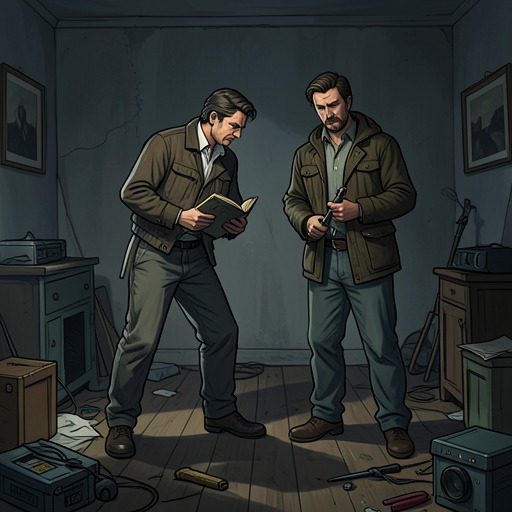
Henry’s hobby gives the household’s firearms an unusually concrete connection to him. When Henrietta Savernake and the others hear shots from the walled kitchen garden, the apparent massacre proves to be Henry and Edward Angkatell discussing firearms by firing several revolvers at target cards. Henry has a substantial collection, and he treats the weapons as objects of technical interest rather than immediate instruments of violence. The scene’s almost playful target practice becomes sharply ironic once a revolver is connected with John Christow’s murder.
Inspector Grange later places the revolver on Henry’s desk and asks whether he recognizes it. Henry hesitates before taking it, asking whether he may handle it, a moment that makes the ordinary possession of firearms suddenly subject to criminal procedure. Grange establishes that the weapon belongs to Henry’s collection, and Henry explains that firearms have been his hobby for many years. When questioned about its condition, he states that the revolver was certainly not loaded when he put it away. His answers do not remove the weapon from suspicion; instead, they show how the investigation converts a private collection into a chain of possible responsibility.
The inquiry also tests Henry’s preference for orderly administration. When Grange asks him to check the collection and confirms that it is catalogued and indexed, Henry replies that he has already identified the revolver as part of it. He is therefore able to supply the kind of systematic knowledge the investigation requires, but that competence cannot restore the uncomplicated world in which the guns were merely a hobby. The collection becomes evidence, and the administrator becomes someone whose habits must be examined.
Family Continuity and Social Order
Henry’s concern extends beyond the immediate crisis to Ainswick, the family estate and a visible emblem of Angkatell continuity. In a private conversation, Lucy tells him that she has been dreadfully worried about Ainswick. She fears that Edward Angkatell and David Angkatell are the last of the Angkatells, that David will never marry, and that the estate will eventually pass to him only for the family line to die out. Henry understands at once that Ainswick is the subject of her anxiety, and he observes that she has always cared too much about it, perhaps caring for little else.
This exchange reveals that Henry’s marriage is bound to a larger inheritance structure. Ainswick is not simply a residence; it represents the survival of a name, a family, and a form of landed social identity. Lucy’s fear of extinction gives emotional force to the administrative world Henry inhabits. His role is not only to manage present affairs but also to stand beside a wife who experiences the family’s future as a crisis of succession. The concern is especially pointed because the household’s apparent abundance conceals its fragility: there may be property, servants, and connections, but the continuity of the Angkatell line is uncertain.
Henry also occupies an intermediary position between the family and modern authority. During the investigation, Gudgeon hesitates after Lucy dismisses him, glancing first toward Henry and then toward Inspector Grange. Grange considers stopping him but allows him to leave. The moment shows that Henry’s presence still carries weight within the household, even when formal police authority is present. It also exposes the overlapping jurisdictions at The Hollow: servants answer to the family, while the family is increasingly answerable to the law.
Change and Narrative Function
Henry does not undergo a dramatic transformation, but the meaning of his established qualities changes as events progress. His locked bedroom door, his firearms collection, his administrative habits, and his concern for Ainswick initially belong to the ordinary texture of a privileged household. After John Christow’s death, each becomes part of a more troubling structure. The private door suggests the limits of access; the collection supplies a possible source of the murder weapon; the catalogue becomes relevant to police scrutiny; and the estate becomes a symbol of continuity threatened by violence and secrecy.
At the end of the supplied trajectory, Henry returns to The Hollow with Lucy. Gudgeon comes out to open the car door, and Lucy tells him that everything went off satisfactorily, asking him to inform Mrs. Medway and the other servants that she and Henry appreciate the loyalty they have shown. Gudgeon replies that they have been deeply concerned for her. Henry’s presence behind Lucy gives the statement a quiet institutional endorsement. The household has been strained by suspicion and danger, yet the return to The Hollow is accompanied by an effort to restore service, loyalty, and domestic ceremony.
Henry’s narrative role is therefore that of a stabilizing authority whose stability is never entirely secure. He recognizes Lucy’s capacity to evade ordinary limits, possesses the technical knowledge that links him to the weapon at the centre of the investigation, and worries about the family’s long-term survival. Through him, The Hollow’s patriarchal and imperial order appears both capable and vulnerable: it can administer, classify, and preserve appearances, but it cannot prevent private disorder from becoming public consequence.