John Christow–Veronica Cray engagement
The HollowThe John Christow–Veronica Cray engagement was a formative failed romance whose consequences reach across the entire narrative. John Christow once loved Veronica Cray with such intensity that marriage seemed possible, but he finally judged that she would absorb his identity and dictate the shape of his future. He broke off their engagement, endured the pain of doing so, returned to London, and eventually married Gerda Christow. Fifteen years later, Veronica’s return converts that apparently settled decision into a live conflict: the past is not merely remembered but physically re-enters John’s present, carrying the same demand for possession that had first driven him away.
Origin and Conflict
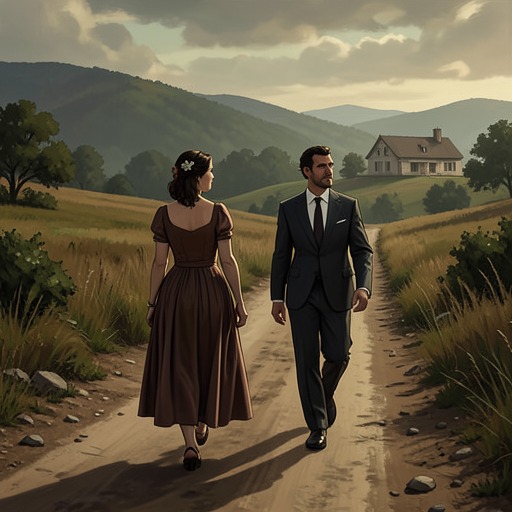
The relationship belonged to John Christow’s young adulthood, when he was twenty-four and, by his own later recollection, desperately in love with Veronica Cray. The memory is attached to San Miguel: the Mediterranean’s deep blue, palms, cactus, prickly pear, hot Summer dust, and the cooling water after the beach. That landscape becomes the sensory form of the old attachment. John had not thought about San Miguel for years and believed the entire episode belonged to a completed chapter, yet the return of its imagery shows that the relationship had been suppressed rather than erased.
John’s account of the engagement is not that love was absent, but that the relationship threatened his freedom. He regarded Veronica as a complete egoist who seized what she wanted and expected him to travel as an appendage to her life. When she received a Hollywood offer, she assumed that he would marry her and accompany her. John instead defended the value of his medical work, including research connected with Pratt’s disease, and proposed that Veronica refuse Hollywood, marry him, and settle with him in London. Her response was equally firm: she would go to Hollywood, she loved him, and he must marry her and come too. The disagreement therefore exposed incompatible definitions of love. John wanted a shared life that preserved his vocation and autonomy; Veronica wanted a union organized around her own trajectory, with John carried along by it.
The Broken Engagement
John concluded that only one course remained and wrote to Veronica breaking off the engagement. From a conventional social viewpoint, he had jilted her, and he knew that the decision caused him considerable suffering. Nevertheless, he remained convinced that it was wise. His self-justification is central to the relation’s later power: he does not remember himself as someone who stopped loving Veronica, but as someone who escaped a love that would have swallowed him body and soul. The break is therefore both an act of self-preservation and a wound that neither party has fully relinquished.
After returning to London, John began work with Radley and, a year later, married Gerda, who was unlike Veronica in every possible way. The contrast is not incidental. Gerda’s submissiveness, patience, selflessness, and willingness to subordinate her wishes to his offered the domestic conditions that Veronica had threatened to overturn. Yet John’s later irritability toward Gerda reveals the cost of choosing safety through opposition. He is angered by precisely those virtues that make her noncompetitive and accommodating, while the former engagement continues to represent a more dangerous but more charged version of intimacy.
The Past Returns
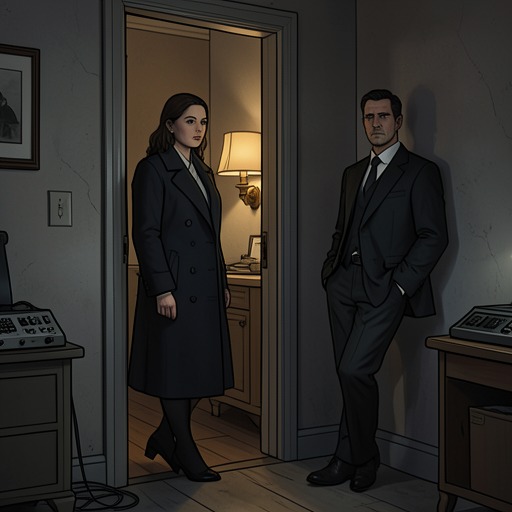
Veronica’s reappearance at The Hollow makes the old engagement an active plot mechanism rather than background biography. She has returned to England after fifteen years, and she explains that she took a place near the Angkatells because she discovered that John often spent weekends with them. Her arrival is therefore connected directly to the earlier relationship and deliberately positioned within John’s existing domestic and social world. She tells him that she has been thinking about him since her return and treats their past bond as an unfinished claim.
John initially tries to maintain the distance created by his earlier decision. He recognizes, however, that the scene at the pool has reawakened the old attachment. When Veronica points to the leaf-strewn water and evokes the Mediterranean, John understands that the blue sea, mimosa, and hot dust have remained with him throughout the fifteen-year separation. He experiences himself again as the young man desperately in love, but this time he believes he will not run away. The moment reverses the logic of the original engagement: the former escape appears ready to become a return.
That possibility collapses when Veronica discovers that John is refusing her because of another woman, Henrietta Savernake. She rejects the idea that his wife and children are the decisive obstacle and identifies Henrietta as the rival who has turned him down. Veronica insists that John belongs to her and always has. John answers with a colder assessment of her character, describing a lack of generosity beneath her impulse to seize and grasp. Her response is a direct threat: because he rejected her fifteen years earlier and has rejected her again, she will make him sorry. The broken engagement thus becomes the immediate emotional prehistory of her hostility.
Meaning in John Christow’s Life
The engagement helps clarify why John’s relationships cannot be reduced to a simple opposition between a good marriage and a bad affair. John’s attraction to Veronica was powerful, embodied, and linked to adventure, travel, and the sensory freedom of San Miguel. His marriage to Gerda represented a radically different domestic arrangement, but his impatience with Gerda’s virtues indicates that the qualities he selected for stability did not satisfy every part of his nature. Henrietta Savernake occupies yet another position: John wants her independence and rectitude, even while those qualities provoke anger because they resist his control. The old engagement therefore provides the pattern against which his later attachments are measured.
Henrietta’s later explanation to Hercule Poirot also corrects the sensational version of John’s emotional history. She fears that newspapers will reduce him to a doctor’s love life involving Gerda, herself, and Veronica, whereas his deepest excitement lay in his work. In that account, Mrs. Crabtree—not any romantic partner—would have been the woman most present in his mind if he had been asked to name one. John’s medical vocation remains the stable center that Veronica once challenged, and it explains why the Hollywood-versus-London dispute mattered so much. The engagement was not simply broken by fickleness; it was broken because John understood his work as part of the life he refused to surrender.
At the same time, Henrietta admits that her affair with John interfered with his concentration and that he tried to keep it light and easy because he did not want to love anyone too deeply. This makes the earlier engagement an echo within a broader pattern: John repeatedly seeks intimacy while resisting the loss of self that intimacy might demand. Veronica’s possessive claim is the most explicit form of that threat, but John’s subsequent marriage and affair do not eliminate the underlying conflict.
Later Consequences
The engagement’s most dangerous consequence is its transformation into a present-tense struggle at The Hollow. Veronica’s return reactivates John’s memories, tests his decision to remain with Gerda and his work, and provokes the threat that precedes his death. Her claim that he has always belonged to her collides with John’s insistence that he escaped her precisely in order to live his own life. The relationship’s unresolved structure—love opposed to autonomy, memory opposed to the present, possession opposed to independent purpose—therefore becomes one of the forces surrounding John Christow’s murder.
Its final significance is not that Veronica was secretly the only woman John loved. The evidence instead presents the engagement as the original model of a love too forceful to coexist peacefully with John’s chosen identity. Fifteen years later, the old attraction can still be summoned by a landscape and a phrase, but its return brings no reconciliation. What survives is the conflict that ended the engagement: Veronica wants John as an extension of herself, while John insists, however imperfectly, on a life defined by his own work and choices.