
Sister M.E. and Mayinga: Care in the Outbreak
The Hot ZoneThis thread follows the fatal care relationship in which Mayinga N. tends Sister M.E., becomes ill herself, and is later cared for by another physician during the outbreak alert in Kinshasa.
increasing Bearing strength in each event
 decreasing
Bearing strength in each eventdecreasingThe Nurse and Nun
Care Amid an Unknown Disease
A Patient at Ngaliema
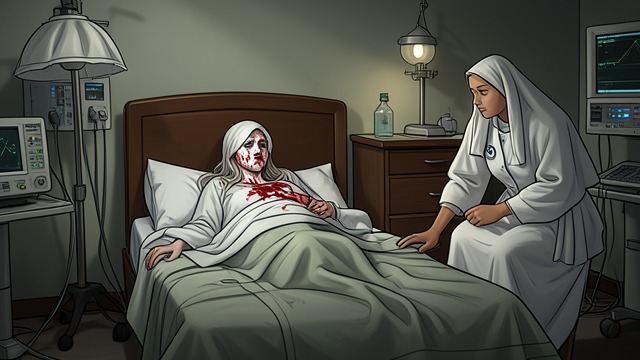
After Sister M.E. is brought from the outbreak region to Ngaliema Hospital, she is placed in a private room for treatment. The disease has not yet been identified, and the clinicians face a rapidly worsening illness with few effective options.
Mayinga N., a young nurse at the hospital, cares for Sister M.E. as she approaches death. In the crowded, frightening conditions of an emerging epidemic, nursing care requires close contact with a patient whose illness remains poorly understood.
Exposure Through Care
The text leaves uncertain precisely how Mayinga acquires the infection. She may have been splattered with blood or black vomit while caring for the dying nun, but the contact is part of the danger faced by medical workers in the outbreak.
Their connection is therefore both compassionate and perilous. The routine closeness required by care places Mayinga near the very fluids through which the disease may pass, turning an act of service into a possible route of infection.
A Death at the Bedside
Witness to a Fatal Illness
The Last Stage
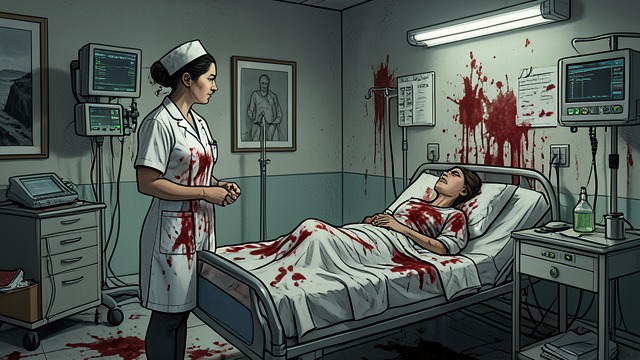
Sister M.E.’s condition worsens into terminal shock and convulsions. Her physicians attempt to learn what is killing her, while the hospital room becomes contaminated with blood and the staff struggle to understand the scope of the threat.
Mayinga is among those who care for her during this decline. The book does not present her as detached from the patient’s suffering; her nursing work takes place at close range, within a room where the disease’s violence is impossible to ignore.
The Human Cost of Contact
Sister M.E. dies, leaving her caregivers with both grief and a possible exposure. The room’s bloodstained condition becomes an emblem of how an epidemic can overtake the very setting meant to provide refuge.
For Mayinga, the bedside encounter precedes her own illness. The care relationship carries a tragic asymmetry: one woman dies while the other continues to work, unaware that she may already be entering the same sequence of disease.
Illness and Denial
A Nurse Facing Her Own Symptoms
Leaving the Hospital
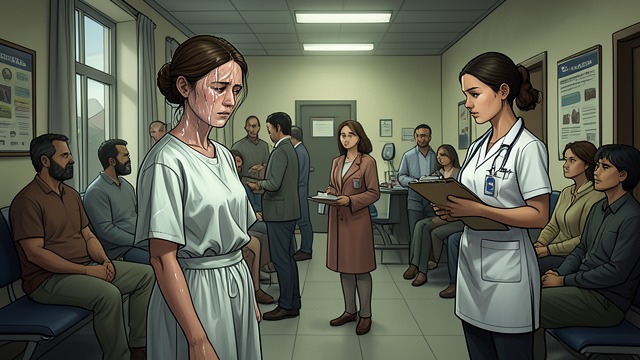
After developing headache and fatigue, Mayinga leaves her hospital post and spends time trying to arrange travel papers. She fears that becoming visibly ill could prevent her from going abroad, and she appears unable, at first, to accept that she may have contracted the disease she has seen at work.
Her movement through Kinshasa takes her to crowded hospital waiting rooms while her condition worsens. The sequence is driven by fear and denial rather than indifference: she seeks help, but cannot bring herself to return immediately to the place associated with the outbreak.
From Caregiver to Patient
Mayinga eventually returns to Ngaliema Hospital and asks to be admitted. The nurse who had cared for Sister M.E. is now confined to a private room, lethargic and visibly ill.
The role reversal sharpens the emotional force of their earlier connection. Mayinga has moved from attending a dying patient to depending on others for care, while the uncertainty that surrounded Sister M.E.’s illness now surrounds her own.
Isaacson’s Care
Care Without a Cure
Face-to-Face Treatment
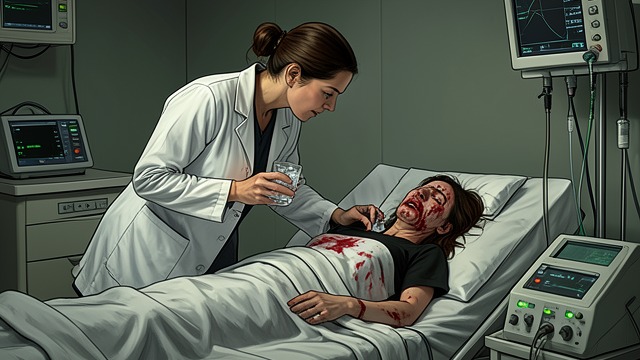
Margaretha Isaacson cares for Mayinga in the isolation room. She initially wears a gas mask but finds the tropical heat increasingly difficult to bear; thinking of her children, she removes it and treats Mayinga face-to-face.
Isaacson gives ice cubes to ease Mayinga’s throat and Valium to reduce her apprehension. When Mayinga says she knows she is dying, Isaacson tells her that she will not die, offering reassurance even though the physician has no effective treatment to promise.
A Personal Commitment
The care is intimate precisely because it cannot alter the disease’s course. Mayinga remains conscious and despondent as bleeding continues, while Isaacson stays with her and tries to relieve pain and fear.
Mayinga dies after her heart develops a fatal rhythm. Isaacson then takes on the practical burden of cleaning contaminated rooms, extending her care from the patient to the dangerous aftermath left behind. Her actions show how professional compassion persists even when medicine cannot save the person being treated.
A Private Death Becomes Public Fear

The Reach of a Care Relationship
Concern Beyond the Ward
Mayinga’s death raises questions about the people she encountered while seeking care across Kinshasa. Officials fear that her movements could have carried the disease into crowded public spaces, and medical teams identify and monitor people who had face-to-face contact with her.
The fear is not evidence that every encounter caused infection. Rather, it reflects the uncertainty created when a caregiver becomes ill and moves through the city before the disease is recognized.
From Individual Loss to Outbreak Response
The nun’s earlier illness and Mayinga’s later death become linked in the wider history of the outbreak: care at the bedside may have been part of the chain connecting one patient to another. Their relationship exposes the vulnerability of medical staff who serve without knowing the nature of the threat.
The alert ends without a citywide chain of cases, but it leaves a lasting account of compassion under uncertainty. Mayinga’s path from caregiver to patient and Isaacson’s commitment to her reveal how personal bonds persist inside institutional efforts to contain an epidemic.
October 1976, during the Zaire outbreak at Ngaliema Hospital
October 1976, as Sister M.E. enters the terminal phase
October 12–13, 1976, during Mayinga’s illness in Kinshasa
Mid-October 1976, during Mayinga’s final illness
After Mayinga’s death, October 1976
