Charles Monet's Marburg virus infection and death
The Hot ZoneCharles Monet's Marburg virus infection and death turns a New Year's visit to Kitum Cave into a still-unresolved account of viral emergence. After spending the day at the cave on Mount Elgon, Monet returned to his work near Kisumu; within days he was gravely ill, and on January 15, 1980, he died at Nairobi Hospital. The book places his individual journey against a widening network of ecological change, medical uncertainty, and air travel, while leaving the exact moment and route of infection unproven.
The cave and the uncertain exposure
On New Year's Day, Monet and his companion drove up Mount Elgon, parked in a small valley below Kitum Cave, and followed elephant trails toward its entrance. They spent the day there. The cave was part of an active habitat: elephants entered at night to obtain salts and minerals by gouging rock from the walls, while bats occupied the ceiling and deeper recesses. The visitors walked inside with a flashlight, across elephant dung and shelves coated in bat guano. These details make the cave a vivid possible point of contact between people, animals, and an unfamiliar agent, but the account does not establish that Monet touched an infected animal, guano, or any other specific source.
Mount Elgon is presented not as an isolated wilderness untouched by people, but as a forested biological island surrounded by human settlement. Villages ring its slopes, where volcanic soil supports crops; that ring is steadily pressing toward the forest. Trees are cut for firewood and grazing land, and elephants are disappearing. This ecological setting supplies context for the book's larger concern with viruses emerging where human activity meets wild habitat. It does not, by itself, prove how Monet became infected.
After the visit, Monet returned to his job at a sugar factory's pump house and walked to work across burned cane fields. The narrative describes an agent replicating inside him while his ordinary routine continued. The contrast is central to the case: an apparently uneventful return from the mountain preceded a sudden illness, with no visible sign that the exposure had occurred.
Illness and journey to Nairobi
On January 8, seven days after the cave visit, Monet developed a throbbing headache behind his eyes. He stayed home in bed. The pain worsened, his back began to ache, and aspirin brought no relief. A temporary housekeeper tried to care for him, but she did not know what to do. By the third day he was nauseated, feverish, and vomiting; he also became markedly passive and withdrawn. His colleagues eventually went to his bungalow, found him seriously unwell, and arranged for a coworker to take him to a private hospital in Kisumu, on the shore of Lake Victoria.
Doctors there could not identify the cause. They treated the illness as a possible bacterial infection with antibiotics, which had no effect, and advised that he go to Nairobi Hospital. With the telephone system unreliable and no useful way to arrange a consultation in advance, Monet was sent by taxi to the airport. Though he could still walk, he was no longer able to drive. He boarded a Kenya Airways commuter flight to Nairobi.
That flight gives the illness a scale beyond the hospital or the mountain. The aircraft carried Monet from the Lake Victoria region toward the capital, while the book sets the journey within an international web of routes linking cities across the world. It argues that a rainforest virus carried by an infected traveler could move rapidly through that network. The account does not establish that Monet infected anyone during the flight; rather, the journey makes visible the possibility that a local exposure and a global means of transport could become parts of the same chain of risk.
Collapse and death
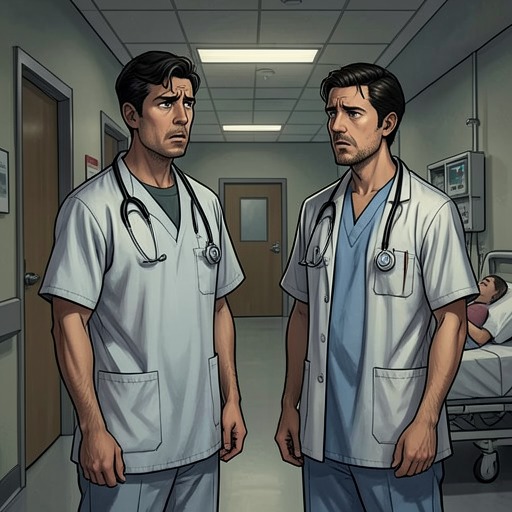
At Nairobi Hospital, Monet waited in the casualty department. He then entered the final phase of the illness and collapsed. Staff moved him to intensive care, where the young physician Shem Musoke found him in critical condition, with severe bleeding and difficulty breathing. Musoke tried to clear Monet's airway and restore his breathing. During the emergency, he was exposed to Monet's blood and vomit; the account later links this encounter to the infection Musoke himself suffered.
A transfusion could not be given successfully: attempts to place a needle failed as the veins broke down and blood escaped from the puncture sites. Monet remained unconscious and continued to deteriorate. He died in intensive care in the early hours of the morning. The clinicians had no diagnosis that could explain what they had seen. An autopsy found extensive damage to his liver and kidneys, but the variety of catastrophic failures made it impossible to assign a single cause of death. The case was recorded as fulminating liver failure, a description of the fatal damage rather than an identification of its agent. His remains were placed in a waterproof bag and, according to one account, buried locally; years later, the location of the grave could not be recalled.
The hospital episode also shows how exposure could pass through ordinary emergency care. Musoke worked close to Monet while trying to save him, without anticipating a rare and dangerous virus. Later, an American researcher called David Silverstein at two in the morning to report that South African investigators had detected Marburg virus in Musoke's blood. Silverstein had not previously heard of the agent. He went to the hospital before dawn to consult a medical textbook, finding only a brief account of the 1967 outbreak associated with Behring Works and imported African green monkeys. This later identification placed the Nairobi cases within a history of animal-to-human emergence, but it did not reveal the precise source of Monet's infection at Kitum Cave.
Significance and limits of the case
Monet's illness is narrated through a chain of places and transitions: the forested slopes of Mount Elgon, Kitum Cave, his home and workplace near Kisumu, the commuter flight, and the intensive care unit in Nairobi. Each location changes the scale of the story. At the cave, the source remains conjectural; in the hospital, the consequences become undeniable; in the airplane, the possibility of movement beyond the original setting becomes part of the reader's understanding of infectious risk.
The book also frames hot viruses as predators, comparing their quiet period of apparent invisibility with the suddenness of an attack. That language gives the illness a dramatic, almost intentional force, even as the medical record remains uncertain about the original exposure and the precise mechanism of Monet's death. The metaphor is part of the narrative's way of making an invisible process legible, not proof that the virus acts with purpose.
Finally, the case contributes to a broader argument about ecological disturbance and emerging disease. The book connects forest loss, human settlement, wildlife contact, and the trade in primates to opportunities for viruses to cross species. It also marks the limits of that argument: the relationship between environmental change and particular outbreaks may be suggestive without establishing a specific transmission route. Monet's death gives that uncertainty a human chronology—a cave visit, a week of apparent normality, an illness, a flight, and a fatal outcome—while leaving the original point of infection unanswered.