Jerry Jaax’s bereavement and grief
The Hot ZoneJerry Jaax’s bereavement begins with the violent, unsolved murder of his younger brother John on October 4, 1989, and deepens into a grief that resists both explanation and consolation. As Jerry struggles with the loss, the book places his private crisis beside the emerging Ebola emergency in Virginia: the work does not erase his mourning, but keeps arriving within it.
The murder and the brothers
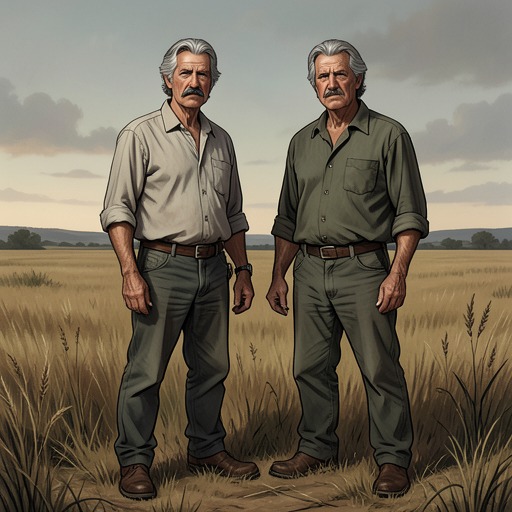
John Jaax lived in Kansas City with his wife and two young children. He was a prominent businessman and banker, and partnered in a company that manufactured plastic for credit cards. He and Jerry had grown up together on a Kansas farm, attended Kansas State, and were described as exceptionally close. They resembled one another in height, prematurely gray hair, features, bearing, and voice; John’s mustache was their most noticeable difference.
On the evening of October 4, John expected to meet his wife at a parent-teacher meeting after work. When she did not find him there, she went to the factory. The machines were silent and the premises deserted. She climbed to his office, which overlooked the factory floor, and found that he had been shot. The date coincided with the arrival of a shipment of monkeys at the Reston monkey house, joining two events that would pull Jerry’s family life and military work into the same unfolding crisis.
The murder investigation offered no resolution. Reed Buente, the Kansas City homicide investigator, had known and admired John from his earlier work as a security guard at the bank John had led. He was determined to solve the case, but physical clues were scarce. Investigators considered John’s business partner, John Weaver, a suspect because of difficulties between the two men; Weaver had an alibi. He later died of a heart attack, and the case remained open. Buente told Jerry that a killing could be arranged cheaply, a remark that made the apparent accessibility of revenge harder to ignore.
Grief and the temptation of revenge
The murder left Jerry, in the narrative’s account, paralyzed by grief. Rather than bringing relief, the passage of time seemed to open the wound further. Nancy Jaax began to think that Jerry might be clinically depressed. He told her that his life felt over and that it could never be the same; he could not reconcile John’s death with his belief that his brother had no enemy.
At the funeral in Kansas City, their children, Jaime and Jason, looked into the coffin and remarked on how much John resembled their father. Their observation made the brothers’ physical likeness suddenly intimate and painful: the resemblance that had marked their closeness now made the loss harder to separate from Jerry’s own image. During October and November, Jerry called Kansas City Homicide nearly every day, but the investigator could not break the case. His calls registered both his attachment to John and his continuing hope that the unanswered questions might yield to persistence.
That hope became entangled with a dangerous impulse. Jerry considered buying a gun and going to Kansas City to kill John’s business partner. He also confronted the possibility that Weaver might not have been responsible. If Jerry acted on suspicion and killed an innocent man, he would go to prison and leave his own children without him. The thought of revenge therefore turned back on itself: his desire to answer one family’s loss could create another, without bringing certainty or justice.
A second crisis enters the household
When Nancy came home with news of Ebola in a monkey colony in Virginia, Jerry was already thinking about John. She told him the information was restricted and explained that she expected to visit the monkey house with C. J. Peters to examine tissue. They drove north toward Thurmont along the foot of Catoctin Mountain, discussing an operation whose scale and demands were not yet clear. The new emergency did not displace Jerry’s grief; it entered a household where the loss was already present.
Their ordinary responsibilities continued around the impending work. At home, Jason was doing homework, while Jaime was away at gymnastics. Nancy warmed homemade stew, put it in a Thermos, collected Jaime, and gave her dinner in the car. Later, Jerry remained awake reading military history. The narrative connects his inability to sleep with the murder: he kept returning in thought to John and to the office where he had died. Even the water bed’s small movement could not interrupt that recurrence.
On another evening, with Nancy working late in the laboratory, Jerry took Jason to collect Jaime and brought the children to McDonald’s. He explained that their parents would leave early for a civilian facility where sick monkeys posed an emergency, and that people might become ill. He tried to make the danger sound manageable, describing the work as more exciting than dangerous. The children said little. Back home, they wanted to wait for Nancy; Jerry let them sleep beside him while he waited too. The television news showed a reporter outside the monkey house, joining the local emergency to reports of deaths in Africa.
Loss without closure
Nancy returned around one in the morning, after showering and washing her hair on her way out of the laboratory. She tended to the household animals and found the children asleep beside Jerry. After they had settled into their own beds, she told him she feared the virus might spread beyond a single room. Jerry then told her that her father was failing and might soon die. Nancy felt torn between going to Kansas and continuing the operation, and decided to take the chance that her father would live longer.
The two family crises remain unresolved in different ways: John’s killer is not identified, and Nancy’s father is near death while the monkey emergency continues. Jerry’s grief has no settled ending in these episodes. It returns through unanswered calls, the resemblance between brothers, and sleepless recollection, even as he remains present with his children and shares Nancy’s work. By setting bereavement beside an emergency that demands attention, the narrative shows how duty and family life proceed without making loss disappear.