John Jaax
The Hot ZoneJohn Jaax was a Kansas City banker and businessman, and the younger brother whose violent, unsolved killing leaves Jerry Jaax in prolonged grief. Introduced on the same day that a shipment of monkeys reached the Reston monkey house, John’s death joins an intimate family tragedy to the book’s unfolding account of a disease emergency, without suggesting any connection between the two.
Identity and Background
John lived in Kansas City with his wife and their two young children. He was a prominent businessman and banker, and a partner in a company that manufactured plastic for credit cards. His professional life was established enough that a former security guard who later investigated his murder had once worked for him when John was president of the Bank of Kansas City.
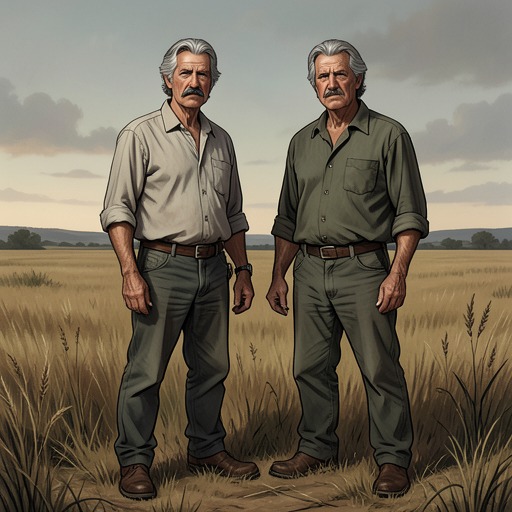
John and Jerry had grown up together on a Kansas farm and both attended Kansas State. John was a couple of years younger than his brother. The account emphasizes how strongly they resembled one another: both were tall, prematurely gray, sharp-eyed, and calm in manner, with similar voices. The notable difference was John’s mustache. The resemblance later takes on painful force at his funeral, when Jerry’s children, Jaime and Jason, remarked on how much their father and uncle looked alike.
The Evening of October 4
John and his wife planned to attend a parent-teacher meeting at their children’s school on the evening of October 4. Near the end of the workday, he called her from the manufacturing plant to say he would be working late. She was away from home, so he left a message explaining that he would go directly from the office to the meeting and meet her there. He never arrived.
When his wife became worried, she drove to the factory. It was deserted, and the machines were silent. She crossed the factory floor, climbed the stairs to John’s office overlooking the plant, and found the door partly open. John had been shot repeatedly. The account gives no resolution to the question of who killed him or why; it presents the discovery as the beginning of a case that would remain unresolved.
An Unsolved Investigation
The Kansas City Homicide officer assigned to the case, Reed Buente, had known and admired John. Before becoming an investigator, Buente had worked as a security guard at the bank when John was its president. He was determined to identify those responsible and bring them to trial, but the investigation yielded few physical clues and no decisive breakthrough.
John had been experiencing difficulties with his business partner, John Weaver, so investigators considered Weaver a suspect. Weaver had an alibi, however, and the case grew harder to solve. The account reports that Weaver later died of a heart attack and that the murder case remained open. It supplies no answer that would turn suspicion into proof, leaving the loss distinct from the uncertainty surrounding responsibility for it.
Jerry’s Grief and the Family’s Loss
John’s death profoundly altered Jerry’s life. Nancy Jaax began to think that Jerry was clinically depressed. He told her that his life felt over and that it could never be the same; he could not reconcile the killing with his belief that John had no enemies. The account describes time not as a remedy but as something that deepened the injury of bereavement.
During October and November, Jerry called Kansas City Homicide nearly every day, hoping the investigation would advance. As it stalled, he considered going to Kansas City with a gun and killing John’s business partner. He also recognized that Weaver might not have been responsible and that acting on suspicion could mean killing an innocent man. The thought of what such an act would mean for his children helped restrain him. His grief therefore appears not only as anguish but as a perilous pressure toward retaliation, checked by doubt and his responsibility to his family.
Narrative Significance
John’s role in the account is defined by both a full, specific life and the abrupt absence left by his murder. His work, marriage, children, shared upbringing with Jerry, and near-likeness to his brother make the loss personal before the investigation’s uncertainty can reduce it to a case. The children’s recognition of the brothers’ resemblance at the funeral condenses that closeness into a single family observation.
The date of John’s death also establishes a stark contrast in the narrative. On October 4, the Reston monkey shipment arrived; on that same day, an unrelated killing changed Jerry’s family life. The juxtaposition places scientific crisis beside private catastrophe, while the account keeps their circumstances separate. John’s death has no known resolution in the evidence presented: the investigation remains open, and Jerry is left with grief, unanswered questions, and the knowledge that suspicion alone cannot justify taking another life.