John Jaax murder case
The Hot ZoneJohn Jaax murder case is the account of an unsolved killing that abruptly transformed Jerry Jaax’s family life. On October 4, John was shot in his office at the manufacturing plant where he was a partner; his wife found him after he failed to arrive at a school meeting. The case produced no resolution, while its consequences continued in Jerry’s grief, his repeated appeals to investigators, and his anguished consideration of taking revenge himself.
John Jaax and the day of the murder
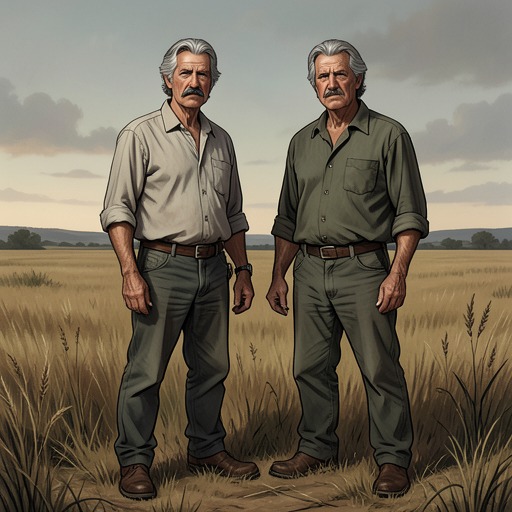
John Jaax was a prominent Kansas City businessman and banker, a partner in a company that manufactured plastic for credit cards, and the younger brother of Jerry Jaax. The brothers had grown up on a Kansas farm and attended Kansas State. They were close, looked much alike, and even sounded alike: both were tall, prematurely gray, sharp-eyed, and calm in manner. John’s mustache was the chief visible difference between them. He lived in Kansas City with his wife and their two young children.
The killing took place on October 4, the same day a shipment of monkeys arrived at the Reston Primate Quarantine Unit. The book sets the two events alongside each other as separate developments in the larger narrative: the shipment would lead into the deaths of monkeys at Reston, while John’s murder would change Jerry’s life. The evidence establishes this coincidence of date, not a connection between the events.
John and his wife planned to attend a parent-teacher meeting at their children’s school that evening. Near the end of the workday, he called her from the manufacturing plant to say that he would be working late. Because she was away from home, he left a message explaining that he would go directly from the office to the meeting and see her there. When he did not appear, she became worried and drove to the factory.
The plant was deserted, and its machines were silent. John’s office overlooked the factory floor from a balcony at the top of a staircase. His wife walked across the floor, climbed the stairs, and found the office door partly open. Inside, she discovered that John had been shot repeatedly. The account identifies the killing as violent but offers no resolution at the scene: the discovery begins a murder investigation, not an explanation of who was responsible.
An investigation without an answer
The Kansas City Homicide officer assigned to the case was Reed Buente. He had known John from an earlier job as a security guard at the Bank of Kansas City, where John had been president, and admired him. Buente was determined to identify the killer or killers and bring them to trial, but the investigation found few physical clues and made no decisive progress.
John’s business partner, John Weaver, came under suspicion because the two men had been experiencing difficulties in their plastic business. But Weaver had an alibi. A later account reports that Buente confirmed this and that Weaver subsequently died of a heart attack. The case remained open; the suspicion surrounding a business dispute never became a solved account of John’s death.
Buente described to Jerry how readily and cheaply someone could arrange a killing. That observation offered no investigative breakthrough, but it made the violence feel less remote: a murder could be both deliberate and difficult to trace. As the weeks passed without a break in the case, even the investigator became discouraged. Jerry, meanwhile, called Kansas City Homicide nearly every day during October and November, seeking movement where none had come.
Grief and the possibility of revenge
The murder left Jerry in a state of grief that the narrative presents as worsening rather than easing with time. Nancy Jaax began to think that he was clinically depressed. Jerry told her that his life felt over and would never be the same, and that he could not comprehend John having an enemy. These statements locate the loss not simply in the death of a brother, but in the collapse of Jerry’s sense of how well he had known John and the life they shared.
At the funeral in Kansas City, Jerry and Nancy’s children, Jaime and Jason, looked into the coffin and remarked on how much their father resembled John lying there. The observation gives the brothers’ resemblance a painful new meaning: a likeness that had once been an ordinary fact of their closeness now confronted the family at the funeral. The account does not turn the children’s words into an explanation of the murder; it shows how the loss entered the family’s immediate experience.
Jerry began to think about getting a gun and going to Kansas City to kill John’s business partner. The thought arose amid grief and unresolved suspicion, but the narrative also records the reasoning that checked it. Jerry considered that he would go to jail and leave his own children to bear the consequences. More decisively, he recognized that Weaver might not have been behind the murder: killing him could mean taking an innocent man’s life. Jerry did not act on the idea in the evidence presented. His imagined retaliation instead exposes the pressure of an unsolved crime and the moral consequences that remain when grief has no answer to attach itself to.
An unresolved case and its continuing weight
The case ends without identification of the killer or killers. Weaver’s position as a suspect, his alibi, the lack of physical clues, and Buente’s inability to break the investigation leave the central question unsettled. No evidence presented here establishes who murdered John or why. That unresolved status is essential to the event: it prevents Jerry’s grief from being converted into certainty and makes his restraint consequential, because he understands that suspicion is not proof.
The murder’s significance in the narrative therefore extends beyond the investigation’s failure. John’s absence reshapes Jerry’s life, intensifies his daily attention to the case, and brings him close to an act that could have created another bereaved family. The chronology also places this private catastrophe on the same October day as the arrival of the monkeys at Reston, joining two strands of the account without claiming that one caused the other. John’s murder remains unsolved; its lasting consequence in the evidence is the grief and danger it leaves behind.