Baker Street in London
The Hound of the BaskervillesBaker Street in London serves as the London base of Sherlock Holmes and Dr. Watson, and as the place where the inquiry into the threat surrounding Sir Henry Baskerville begins to take shape. Its importance lies not in a single dramatic revelation but in the contrast between the close, smoke-filled rooms where Holmes thinks and the streets outside, where he watches for signs that the investigation itself is being watched.
Setting and Domestic Routine
Baker Street is the point to which Dr. Watson returns after leaving Holmes alone to concentrate. Holmes asks him to stay away until evening, explaining that solitude is necessary while he weighs the evidence, tests alternative theories, and decides which details matter. Watson spends the day at his club and returns at nearly nine o’clock.
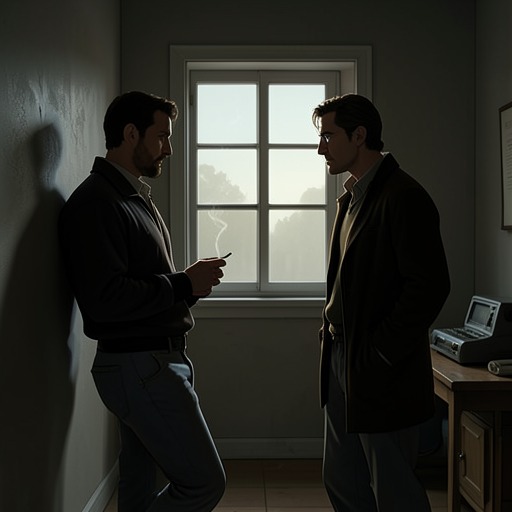
The room he finds is obscured by smoke from Holmes’s strong tobacco. Holmes sits in his dressing gown with a black clay pipe, surrounded by rolls of paper. These specific details make Baker Street a working space: private and inward-looking, but filled with the physical traces of sustained analysis. Holmes’s withdrawal is purposeful, and Watson’s return marks the end of that concentrated interval and the resumption of their shared discussion.
A Base for Watching the Streets
Baker Street also faces outward toward the movements surrounding the case. While Dr. Mortimer reads the Baskerville legend, Holmes twice goes to the window to look for loiterers. He has reason to suspect that Sir Henry has been shadowed since arriving in London: the pursuer apparently learned quickly that Sir Henry had chosen the Northumberland Hotel. Holmes sees no suspicious figure from the window, but the absence of an obvious watcher does not settle the matter.
After their visitors leave, Holmes follows in hopes of identifying the unseen attendant. He reasons that the pursuer has chosen a cab rather than following on foot, allowing him either to linger behind or pass ahead while remaining ready to follow if the others take a cab. The street beyond Baker Street thus extends the investigation from discussion into surveillance, even as the watcher’s method helps him evade detection.
Investigation and Narrative Function
The address marks a shift between Holmes’s solitary analysis and the practical work that follows. At Baker Street, he can compare impressions with Watson and turn the visitors’ account into questions about evidence and motive; at the window, the possibility of surveillance becomes immediate. The location joins interior reasoning to the uncertain urban space outside, where a watcher may be present without being seen.
Baker Street’s significance is therefore procedural as well as domestic. Holmes’s retreat there is not inactivity: it is the deliberate interval in which evidence is sorted before action. The room’s smoke and scattered papers register the labor of thought, while the watched street supplies a reminder that the danger surrounding the Baskerville case has reached beyond the distant moor and into London.