Devon
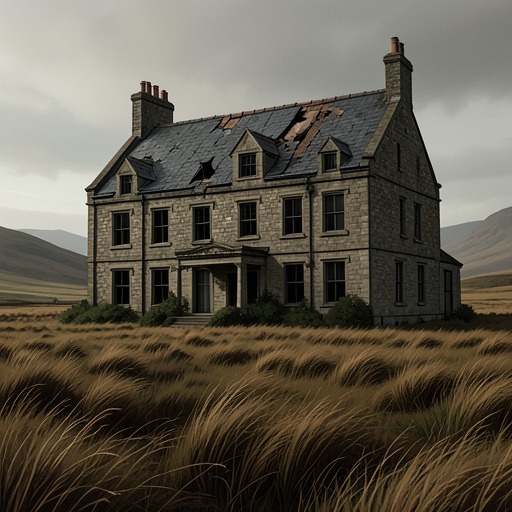
The Hound of the BaskervillesDevon is the country setting of the Baskerville case: a sparsely settled district where Baskerville Hall stands near the open moor and a handful of isolated houses. The distance between its communities, the hazards of its terrain, and the estate’s place within the landscape make the county more than a backdrop; they govern who can move safely, what can be seen, and how the crime is concealed.
Setting and settlement
The medical directory identifies James Mortimer as practising at Grimpen on Dartmoor, Devon, and as medical officer for the parishes of Grimpen, Thorsley, and High Barrow. His professional record also connects this rural post to a previous career at Charing Cross Hospital, where he had served as house-surgeon. In Devon he is not merely a visitor: his work and daily medical journeys place him within the local network of scattered communities.
Sherlock Holmes’s Ordnance map presents Baskerville Hall near the centre of the district, with woodland around it and the moor extending beside Yew Alley. Grimpen village, where James Mortimer has his headquarters, lies among only a few dwellings within a five-mile radius. The map also marks Lafter Hall, a house associated with the naturalist, and the moorland farmhouses High Tor and Foulmire. Princetown jail lies fourteen miles away. These are separated points in a broad, sparsely inhabited landscape, rather than parts of a continuous settlement.
Local society and homecoming
The small population gives local relationships unusual weight. James Mortimer describes Sir Charles Baskerville as a retiring man whose illness brought the two together; their shared interest in science then sustained their friendship. Sir Charles had returned from South Africa with scientific knowledge, and the two spent evenings discussing comparative anatomy. Mortimer identifies Frankland of Lafter Hall and the naturalist, later revealed to be Roger Baskerville, among the few other educated men within many miles. In such isolation, professional contact, friendship, and observation overlap.
Devon is also a place of return for Sir Henry Baskerville, though not one he knows from experience of the Hall. On the journey south, he recognizes the changing countryside as Devon scenery and expresses a strong attachment to the county. He explains that he had been a boy in his teens when his father died, had never visited Baskerville Hall, and had gone from the South Coast to live with a friend in America. His eagerness to see the moor therefore combines inherited connection with the anticipation of discovering an unfamiliar home. Mortimer interprets this attachment through contemporary theories of head shape and ethnic temperament; the explanation belongs to his period’s assumptions, not to an independently demonstrated fact about Henry.
Moorland and movement
The moor’s apparent openness is deceptive. From a rise, the northward plain looks suitable for a gallop, but its scattered bright-green patches mark dangerous ground where people have lost their lives. Roger Baskerville warns Dr. Watson against entering it alone, explaining that safe passage depends on remembering complex landmarks. The terrain grants local knowledge a practical advantage and turns an ordinary excursion into a risk.
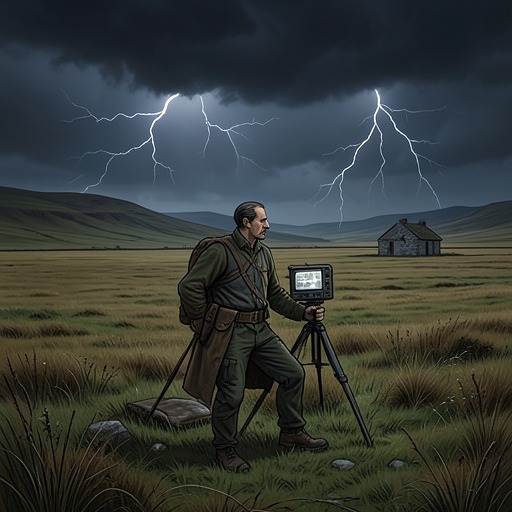
The landscape also controls visibility. During Watson and Sir Henry’s pursuit of a fugitive, a candle burns in a cleft among rocks, sheltered from the wind and screened so that it can be seen only from the direction of Baskerville Hall. A granite boulder conceals their approach. Elsewhere on the moor, Watson follows a boy to a group of old stone huts and finds one with enough roof to shelter someone from the weather. The scattered rocks, ruins, and hollows offer concealment as well as danger. At Grimpen Mire, a dense white fog advances towards the investigators, making the uncertain ground still harder to read.
Devon in the case
The county’s isolation helps turn proximity into opportunity. Roger Baskerville establishes himself near his ancestral home and cultivates Sir Charles and the neighboring residents while investigating his prospects of inheritance. The later discovery that he is a Baskerville makes his presence in Devon part of the succession plot: the apparently local naturalist is a concealed claimant living close to the estate whose inheritance he seeks.
The investigation repeatedly converts the district into a practical map of the mystery. Holmes studies its roads, houses, and open ground before travelling there; the moor’s landmarks and hazards then shape pursuit, concealment, and the limits of safe movement. Devon holds together two different kinds of attachment: Sir Henry’s emotional return to a county he scarcely remembers, and Roger Baskerville’s calculated return to the vicinity of his family estate.