Holmes and Watson compel Laura Lyons to expose Stapleton
The Hound of the BaskervillesHolmes and Watson compel Laura Lyons to expose Stapleton by turning a concealed marriage into proof that she has been manipulated. Their interview links Laura’s request to meet Sir Charles Baskerville on the night of his death with Stapleton’s deception: when Holmes demonstrates that the woman presented as Stapleton’s sister is his wife, Laura abandons her promise to protect him and recounts how he shaped her actions.
Background and Stakes
The interview belongs to an investigation in which inheritance gives the danger a material dimension. Holmes has asked who would receive the Baskerville estate if Sir Henry Baskerville died. Because Rodger Baskerville died unmarried, the entailed estate would pass to the distant Desmond cousins; the money, by contrast, could be left by will. Sir Henry has not yet made a will, but says he believes the money should remain with the title and property. The questions establish why identifying a possible claimant matters, without making Laura’s interview itself a full account of the inheritance scheme.
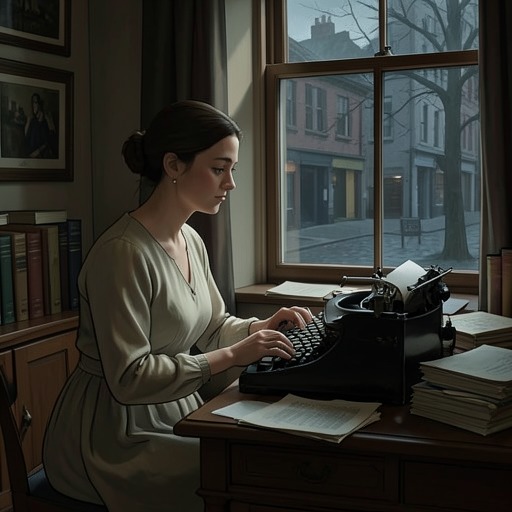
Laura’s connection to the case begins with her own vulnerable circumstances. She tells Holmes that she made a rash marriage and has since faced the prospect that her husband might compel her to live with him. She had learned that she might regain her freedom if she could meet certain expenses. Hoping for help, she wrote to Sir Charles, whose generosity she trusted, and asked him to meet her at the gate. Her appeal was personal and urgent; she insists that she did not anticipate harm to the man she regarded as her kindest friend.
The Confrontation
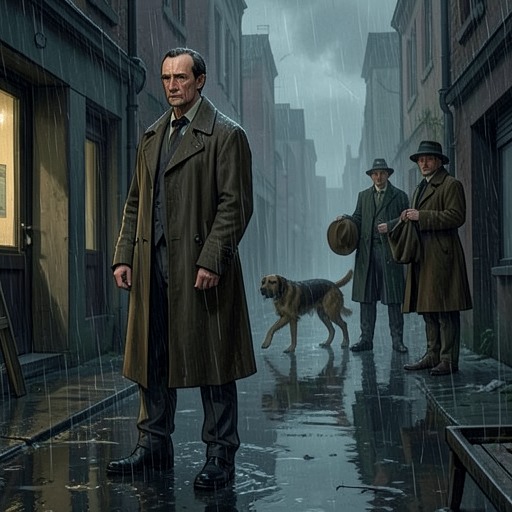
Holmes opens the interview directly, making clear that he knows both what Laura has disclosed and what she has withheld about Sir Charles’s death. She denies that her request for a meeting is connected to the death. Holmes counters that the coincidence is extraordinary and tells her that the case is being treated as murder, with evidence that may implicate Stapleton and his wife. The reference to a wife startles Laura: she believes Stapleton is unmarried.
Holmes then states the concealed relationship plainly. The woman who has passed as Stapleton’s sister is, in fact, his wife. Laura challenges him to prove it. Rather than rely on assertion, Holmes produces a photograph of the couple taken in York four years earlier, identified as Mr. and Mrs. Vandeleur, together with three written descriptions by witnesses who knew the pair when they kept St. Oliver’s private school. The documentary evidence gives Laura a way to recognize the deception for herself. Her initial disbelief gives way to anger at the man whose promises she had trusted.
Laura’s Disclosure
Laura explains that Stapleton had offered to marry her if she obtained a divorce from her husband. She now understands that this promise, and the apparent assistance he offered, were part of his deception. She had believed his actions were for her sake; learning that he was already married changes the meaning of their relationship in retrospect. She decides she has no reason to shield him from the consequences of his conduct and agrees to answer Holmes’s questions.
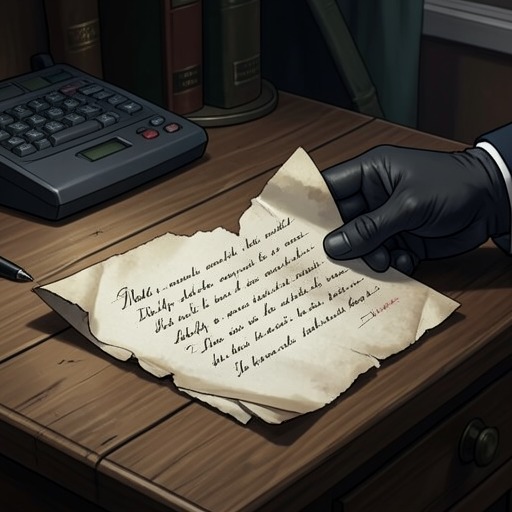
Holmes reconstructs the letter’s role, and Laura confirms the essential steps. Stapleton dictated the letter asking Sir Charles to meet her, presenting the prospect of financial help with her divorce expenses as the reason for the appointment. After she sent it, he persuaded her not to go. He claimed that accepting another man’s money for that purpose would offend his self-respect, while promising that he would devote his own resources to removing the obstacle between them. The promise of help thus became the means by which he prevented the meeting he had arranged.
Laura says she heard nothing further until she read the newspaper reports of Sir Charles’s death. Stapleton had also made her promise not to mention the appointment, frightening her with the prospect that she would be suspected if the facts became known. Her silence had therefore been produced by both his influence over her and his warning about the consequences of disclosure. In the interview, Holmes’s evidence about the marriage breaks that hold: Laura no longer accepts Stapleton’s account of his motives or feels bound to preserve his secret.
Consequences and Significance
Laura distinguishes her own involvement from knowledge of a murder plot. She admits that Stapleton directed the letter and the subsequent concealment, but insists that when she wrote to Sir Charles she did not imagine that the old man would be harmed. Her testimony supplies Holmes with a causal sequence connecting her appointment to Stapleton: he initiated the request, stopped her from attending, and then induced her to keep quiet after the death. It also gives the investigation a basis for treating her as a deceived participant rather than as someone who knowingly arranged Sir Charles’s death.
The scene’s decisive instrument is proof. Holmes does not merely accuse Stapleton of lying; he sets a photograph and witness descriptions before Laura, forcing his public identity and private marriage into the same frame. The revelation changes what she is willing to say, and her account fills in the method by which the meeting was arranged and suppressed. The interview consequently advances two strands of the inquiry at once: it clarifies how Laura’s letter was used and exposes the personal deception that had kept her from explaining it sooner.