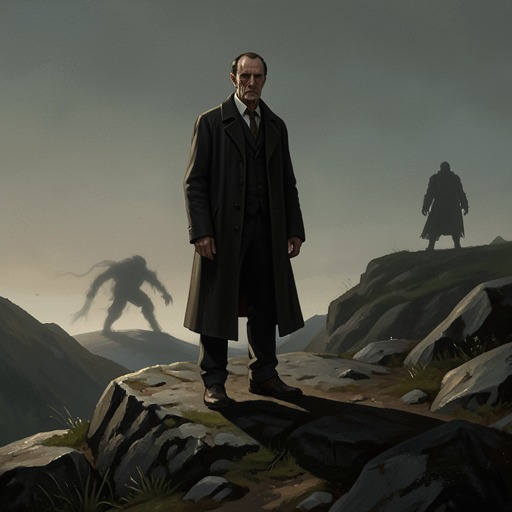
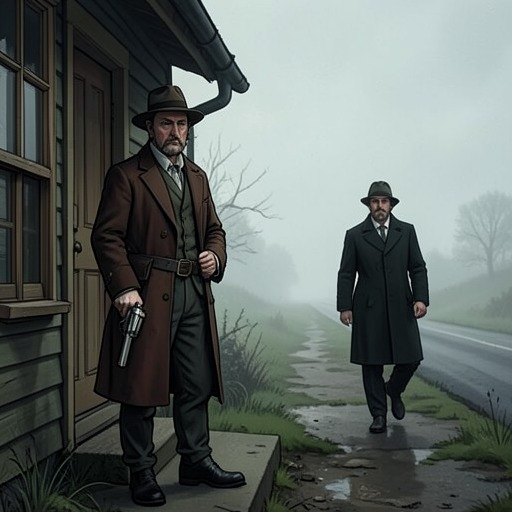
Holmes and the others kill the hound and save Sir Henry
The Hound of the BaskervillesHolmes and the others kill the hound and save Sir Henry at the moment when the apparent family curse becomes a physical danger—and a danger that can be met with ordinary weapons. The rescue turns the pursuit into a decisive confrontation: Sir Henry survives, the hound is dead, and its unnatural appearance is traced to a deliberate phosphorus preparation.
The Ambush and the Pursuit
Holmes understands that the party cannot risk being overtaken before the expected man reaches them, so he insists they hold their position. He listens against the ground and believes he can hear someone approaching. When a man emerges from the fog, he passes close to the concealed group and continues up the slope, repeatedly looking behind him. The scene establishes the conditions of the trap: the watchers remain hidden, the approaching man moves into the open, and the hound’s arrival is detected only when Holmes warns the others.
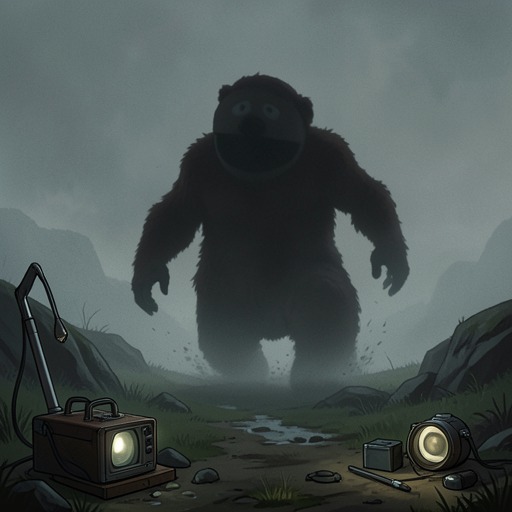
A thin, continuous patter comes from within the fog bank. The cloud is close, but the men cannot see what is moving inside it. Holmes has his pistol ready; Dr. Watson watches him, while Inspector Lestrade reacts with terror when the creature breaks from the fog. The hound’s appearance initially overwhelms the group, and that moment of shock matters tactically: it gives the animal time to pass them and continue after Sir Henry Baskerville. The fog has concealed the danger until it is nearly upon them, leaving little time to respond.
The Attack and Counterattack
The hound races down the path after Sir Henry. Holmes and Dr. Watson fire together, and the creature’s cry shows that at least one shot has struck it, but it keeps moving. That response supplies the crucial evidence that the apparition is vulnerable: it can be hit, and therefore it is not an invulnerable supernatural force. The group’s fear gives way to action, and Holmes runs ahead of Dr. Watson and Inspector Lestrade toward the pursuit.
They find Sir Henry in immediate danger, with the hound having brought him down. Holmes fires five rounds into the animal’s side. It falls and dies, ending the attack before it can kill him. Dr. Watson presses his own pistol to the creature’s head but finds that no further shot is needed. The rapid change—from a seemingly otherworldly pursuer to a creature stopped by gunfire—resolves the scene’s central question through action rather than speculation.
Sir Henry’s Rescue and the Hound’s Appearance
Sir Henry lies unconscious after the attack. Holmes and the others loosen his collar and check for a wound; finding none, Holmes is grateful that they reached him in time. Sir Henry soon begins to stir, and Inspector Lestrade gives him brandy. When he can speak, Sir Henry asks what the creature was. Holmes answers that it is dead and treats its destruction as the end of the family ghost, joining the immediate rescue to the larger question of the Baskervilles’ supposed haunting.
The dead animal is exceptionally large and strong, but its build is not that of a pure bloodhound or a pure mastiff; it appears to combine the two. Its jaws and muzzle continue to seem luminous even after death. Dr. Watson identifies the substance as phosphorus, and Holmes confirms that it was a carefully prepared application. He also notes that the preparation did not produce a smell that would interfere with the animal’s scenting ability. The glow that made the hound appear infernal is thus exposed as an artificial disguise, while its ability to track remains intact.
Consequences and Significance
Holmes apologizes to Sir Henry for exposing him to the fright, explaining that he had expected a hound but not one of this kind and that the fog left little time to receive it. Sir Henry recognizes the outcome plainly: Holmes and the others have saved his life. The episode therefore closes with both a physical rescue and a change in what the threat means. The hound’s apparent supernatural power has been reduced to animal strength, concealment, and a chemical effect; its mortality makes it possible to stop.
The scene also makes the success of the rescue contingent rather than effortless. The party is armed and waiting, yet the fog delays recognition, the creature passes the watchers, and Sir Henry is reached only after the pursuit has become an attack. Holmes’s initial insistence on holding their ground proves important because it keeps the group in position to intervene, but their response depends on recognizing the hound’s vulnerability quickly enough to pursue it. The dead animal and the phosphorus on its coat supply physical answers to the terror that its appearance had created.