The hound's phosphorescent disguise
The Hound of the BaskervillesThe hound's phosphorescent disguise was a deliberately applied luminous mixture that made Stapleton's dog appear to be the legendary supernatural beast. Its force lay not in changing the animal's nature but in changing what witnesses thought they saw: the glow transformed a powerful dog into an apparent embodiment of the family curse, making fear itself part of Stapleton's method.
Making the Apparition
Stapleton's scheme depended on a real animal and a false appearance. Sherlock Holmes later explained that the dog was a cross between a bloodhound and a mastiff, selected for its size and savagery. Stapleton bought it in London from Ross and Mangles, then brought it south on the North Devon line. To avoid attracting attention, he walked a considerable distance across the moor with it before reaching its hiding place.
Stapleton had already learned how to cross Grimpen Mire during his insect hunts. He used that knowledge to conceal the dog on a bog-girt island, where it could be kept out of sight while remaining available for his plans. The location helped him hide the animal, but it could not silence it: its cries were heard from a distance and became one of the signs of its presence.
The disguise was part of a broader design, not an isolated flourish. Stapleton knew of the family legend and understood that Sir Charles Baskerville took it seriously. He also knew from Dr. Mortimer that Sir Charles had a weak heart. By making the dog appear diabolical, Stapleton could use the old man's belief and fear to create a lethal shock while making the attack difficult to attribute to an ordinary human plot.
Appearance and Operation
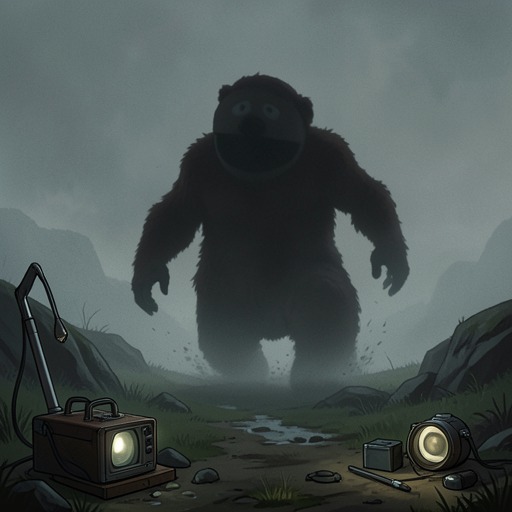
The mixture gave the dog's dark body a visibly luminous outline. In the fog, witnesses first heard a steady patter from within the approaching bank, then saw a huge black hound emerge with its muzzle, hackles, and dewlap picked out by a flickering glow. Its open mouth and eyes seemed to shine with fire. The shifting light did not merely decorate the animal: it obscured the distinction between a living dog and the hellhound that the legend had led people to expect.
After the animal was killed, Dr. Watson touched its glowing muzzle and saw the light transfer to his fingers. He identified phosphorus; Holmes described the preparation as cunningly made and noted that it had no smell that would interfere with the hound's ability to scent. The method therefore combined spectacle with practical concealment. It made the dog appear unnatural without, as far as Holmes could determine, compromising its tracking power.
Stapleton's choice of effect was tied directly to the family story. Holmes traced the luminous mixture to the image of the family hellhound and to Stapleton's wish to frighten Sir Charles to death. The legend supplied the interpretation; the painted animal supplied apparent proof. The result was especially effective because a witness who glimpsed such a creature on the moor might be too frightened to investigate closely or give a reliable account of it.
Use Against the Baskervilles
Stapleton tried more than once to get Sir Charles outside his grounds at night, but the old man could not be lured out. During these unsuccessful attempts, Stapleton or the dog was seen by local people, and the reports gave the demon-dog legend fresh apparent confirmation. Stapleton had hoped that his wife would draw Sir Charles into danger, but she refused to help, despite his threats and blows. The disguise was thus one element in a plot that required both an opportunity and a victim already susceptible to the legend.
That opportunity came through Mrs. Laura Lyons. Stapleton used his influence over her to arrange for her to write Sir Charles asking for an interview on the evening before the baronet planned to leave. He then persuaded her not to attend. Returning from Coombe Tracey, he had time to retrieve the hound, apply the luminous mixture, and bring it to the gate where he expected Sir Charles to be waiting.
The dog pursued Sir Charles down Yew Alley. Holmes's reconstruction holds that the baronet died from heart disease and terror, rather than from an attack by the animal. The hound had followed the grassy border while Sir Charles ran along the path, leaving no track of its own there. After the old man fell, the dog apparently approached, then was called off and taken back to its lair in Grimpen Mire. This arrangement left a visible trace that Dr. Mortimer noticed while concealing the central agent and preserving the mystery around the death.
The same deceptive appearance threatened Sir Henry Baskerville. On the moor, Sherlock Holmes, Dr. Watson, and Inspector Lestrade watched the glowing hound emerge from the fog and pursue Sir Henry. The sight initially froze the observers; Holmes and Dr. Watson fired only after the animal passed them, and the hound continued after its target. They caught up as it attacked Sir Henry, and Holmes's revolver fire killed it. The disguise had again turned a dog into a seemingly supernatural terror, but the animal's vulnerability exposed the practical truth beneath the apparition.
Discovery and Significance
The luminous coating remained on the dead hound, where its glow could be examined directly rather than encountered as a frightening spectacle at a distance. Holmes identified the preparation as the mixture responsible and later found a tin containing the luminous paste among Stapleton's traces. An abandoned mine, ruined miners' cottages, a chain and staple, and gnawed bones helped establish the place where the dog had been kept. These clues connected the visible effect to a material substance, a concealed animal, and a controlled system of confinement.
The disguise's consequences extended beyond its immediate victims. It helped make Sir Charles's death look like a fulfilment of the curse, revived local reports of a supernatural dog, and contributed to the terror experienced by later witnesses, including the fugitive Selden. It also gave Stapleton a way to exploit the legend while reducing the chance that observers would challenge what they had seen. Once the dog was dead and the phosphorus identified, the apparent ghost became evidence of deliberate human deception. The trick's exposure did not erase the fear it had produced; it showed how successfully Stapleton had converted a story into an instrument of murder.