Attic Imprisonment and Freedom
The HousemaidAttic Imprisonment and Freedom describes the repeated transformation of a room inside the Winchester home into a site of coercion. For Millie Calloway, a locked door first seems plausibly accidental, then becomes unmistakably deliberate: Andrew Winchester has the key, can watch her through a hidden camera, and imposes a physical punishment as the price of release. The same room carries Nina Winchester’s memories of confinement during her marriage. When Nina returns to help Millie, she finds Andrew dead, and the prospect of escape immediately gives way to Millie’s fear that she will spend the rest of her life in prison.
A Room That Repeats the Past
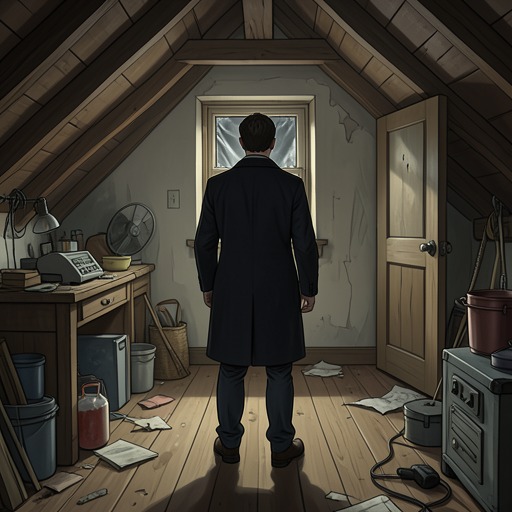
The Attic Room is not a neutral refuge from the rest of the house. Nina remembers spending many horrible days there during her marriage, and when she returns to the house, the sight of light beneath its door identifies the room as the place where Millie may now be trapped. The space therefore links two women’s experiences across time: what Nina once endured is happening to Millie, even though Nina had believed Millie stronger than herself and had left her behind.
The room’s physical details make confinement immediate rather than abstract. Millie finds the door locked and initially imagines that Andrew may have shut it automatically when he left, mistaking it for a closet. That explanation is possible enough for her to cling to at first, despite the discomfort of the cot and her need to leave. Her uncertainty is part of the trap: before she understands that she is being held, she must contend with the possibility that she is simply asking Andrew to correct an innocent mistake.
Millie’s Confinement and Andrew’s Control
The books on the floor change the meaning of the locked door. Millie finds three volumes there: a guide to United States prisons, a history of torture, and a phone book. When she calls Andrew, he confirms that he has the key. He then brings up the books she had read from his bookcase. Millie’s earlier assumption of an accident gives way to suspicion: she can no longer reconcile that assumption with Andrew’s control of the key and his deliberate attention to the books.
Andrew also tells Millie that he can see her. She searches the walls for a camera, but he says it is well hidden and that he has been watching her only since a few weeks earlier. The revelation changes the room from a locked space into a space under surveillance. Millie’s actions inside it are visible to Andrew while she cannot see the device or know the full extent of his access. Confinement thus includes not only the inability to leave but also the loss of privacy and the uncertainty of being watched.
The punishment is made into a condition of release. Andrew tells Millie to keep the books resting on her belly for three hours, after which he will let her out. Before submitting to it, she uses a bucket because she cannot bear to wait longer, then finds that the mini-fridge where she usually keeps snacks has been emptied. Only three small bottles of water remain; she drinks from two and immediately worries that she may need the water if Andrew keeps her there for hours or days. These details make the imposed wait a problem of bodily need as well as fear.
Millie puts on jeans and a fresh T-shirt, lies on the uncarpeted floor, and begins with the heavy book about prisons. It is the beginning of summer, and the Attic Room is unbearably stuffy, although the floor feels cool. The prescribed arrangement of books turns Andrew’s control into a bodily burden that Millie must endure while hoping compliance will secure her release. She considers doing as he says so she can get out and leave permanently; the promise of an exit is present, but only on terms he dictates.
Nina Returns to the Room
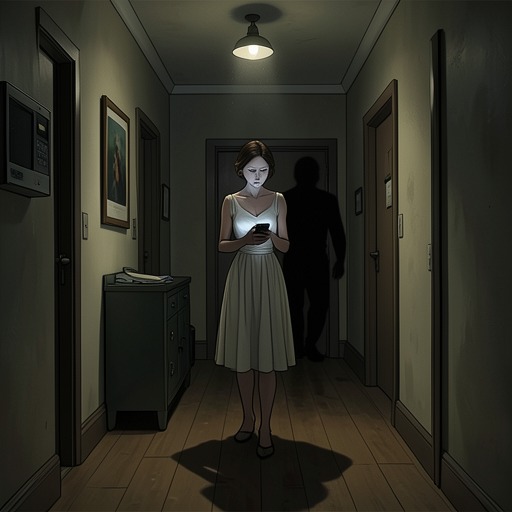
When Nina comes back, her first concern is that Millie has been locked inside and that Andrew has done it. The sight of his car at the house complicates her attempt to find him, but she climbs the fourteen steps to the attic landing. Light shows beneath the door. Nina murmurs that she will help Millie, and recognizes that leaving her there was a mistake for which she now feels responsible. The familiar route and the remembered room place Nina’s past confinement beside her present attempt to intervene.
Nina expects Andrew to move when she reaches out to check his pulse. He does not. She finds no pulse and tells Millie that he is dead. Millie lowers the pepper spray, sinks onto the cot, and buries her face in her hands. Her response shifts the scene from immediate confrontation to recognition of what has happened. She tells Nina that she expects to go back to prison for the rest of her life. The door’s opening does not instantly feel like freedom: the man who controlled the room is gone, but Millie understands his death as a possible source of renewed captivity elsewhere.
Freedom Without Certainty
The room’s recurring function is to make control visible through ordinary domestic objects and arrangements: a door, a key, a cot, a bucket, a nearly empty mini-fridge, books, and a concealed camera. Andrew’s power operates through both confinement and the terms he attaches to release. Millie’s experience also recalls Nina’s, making the Attic Room a container for a history that Millie initially does not fully understand and Nina cannot simply leave behind.
The eventual reversal is stark but unresolved. Nina comes upstairs intending to rescue Millie from a confinement she recognizes from her own marriage; instead, the discovery of Andrew’s death places Millie’s freedom beside her fear of punishment. In this account, escape is not a clean passage from captivity to safety. The locked room opens, but its history remains present in Nina’s guilt and Millie’s dread of what will happen next.