Cecelia Winchester
The HousemaidCecelia Winchester is the daughter of Nina Winchester and Andrew Winchester, and a child caught in the adults’ struggle for control. First introduced through Millie Calloway’s wary gaze as an unnervingly watchful girl, Cecelia later emerges as perceptive and affectionate, but also as someone forced to live with arbitrary rules and the fear that her mother may disappear. Her escape with Nina is a decisive break from the household in which Andrew has made Cecelia’s conduct a lever against her mother.
Identity and Introduction
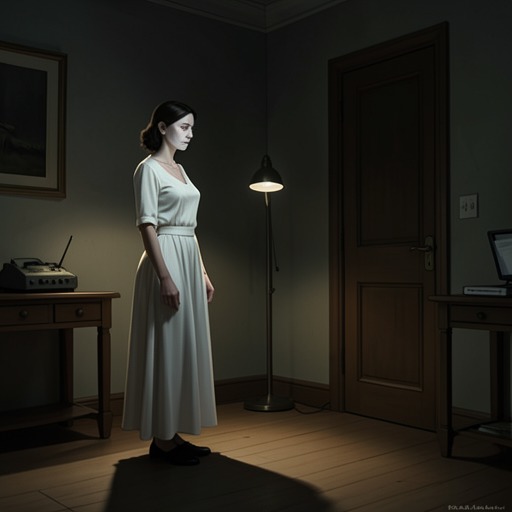
Cecelia first appears in the Winchester home’s hallway after Millie has been interviewed by Nina. Nina introduces the two, and Cecelia answers Millie politely. She is described as about nine years old, with very pale blue eyes like her mother’s and blond hair so light it appears almost white. Her pale dresses and steady gaze make an immediate impression on Millie, who reads her as uncanny and frightening. That impression belongs to Millie’s nervous point of view: Cecelia has done nothing threatening, but Millie is unsettled enough to imagine the child as dangerous even while she hopes to get the job.
Their next encounter takes place in the kitchen, where Millie has spent the day clearing a backlog of dirty dishes. Cecelia appears without Millie seeing her enter and asks who she is. Millie’s descriptions again turn Cecelia into something doll-like and eerie, underscoring how little the new housekeeper understands about the girl or the household. The scene also establishes Cecelia’s alertness to Millie’s presence, before the two have built any trust.
Food, Fear, and Andrew’s Contradiction
When Millie suggests a peanut-butter-and-banana sandwich, Cecelia reacts with alarm, saying that she is allergic and that peanut butter could kill her. She runs to find Nina, accusing Millie of trying to hurt her. Millie is startled both by the accusation and by the fact that peanut butter is kept in the pantry. The incident initially leaves Millie unsure whether the danger is real and whether Nina has failed to tell her something important about the child in her care.
Andrew later dismisses the allergy, telling Millie that Cecelia is not allergic and reasoning that the family would not keep peanut butter in the house if she were. Nina’s later account establishes that Cecelia does have a real allergy, although it is not life-threatening: exposure causes welts and an uncomfortable rash. Andrew keeps peanut butter in the pantry despite knowing this, and Nina repeatedly throws the jar away only for it to reappear. At times Andrew puts some into Cecelia’s dinner, using the rash that follows to demonstrate his control and to punish Nina. The early dispute over the sandwich therefore foreshadows a household in which an ordinary food becomes an instrument of intimidation.
A Child Made Part of Andrew’s Punishments
Andrew’s control reaches Cecelia through Nina. When Cecelia does something Andrew considers unacceptable, he punishes Nina rather than her daughter, sending Nina to the attic for days. He also insists that Cecelia wear itchy, frilly dresses she dislikes. Other children make fun of her clothes, but Cecelia complies because she understands that refusing to wear them or getting them dirty may lead to her mother disappearing. Nina believes Andrew uses those disappearances to teach her that clothing is a privilege, and she accepts the punishment rather than risk having Cecelia targeted directly.
This arrangement gives Cecelia only partial knowledge of what is happening, but she recognizes its consequences. Andrew is the only father she has known, and he is the one who picks her up when Nina has vanished. At school drop-off, Cecelia anxiously checks that Nina, not Andrew, will collect her. She does not say that she hates him, but Nina understands that her daughter is frightened by his role in the repeated absences. Nina watches for signs that Andrew has physically harmed Cecelia and says she has never seen a suspicious bruise; the danger described in their home is instead carried through threats, punishment, and the power Andrew exercises over Nina.
Separation and the Mother-Daughter Bond
Cecelia’s relationship with Nina includes a devastating rupture as well as a strong attachment. During Nina’s attempted murder-suicide, Cecelia is found in a bathtub with the water rising above her shoulders and her eyes closed. Nina reaches her before the water covers her head. The episode places Cecelia in immediate danger and is followed by a period in which she and Nina are separated. Nina later recalls that she was not allowed to see Cecelia for the first several months of her confinement. When Andrew eventually brings the child to visit, mother and daughter cling to each other, and Cecelia cries when visiting time ends.
That reunion helps explain the intensity of their later bond without erasing the earlier harm. After Nina is able to return home, Cecelia remains attached to her and looks forward to her coming back. At the same time, the household’s rules have taught her to monitor adult reactions and anticipate whether Nina will vanish. Cecelia’s childhood happiness persists, but it exists alongside an awareness that her mother’s presence can be taken away as punishment.
Escape and What Follows
Nina’s departure changes the terms of Cecelia’s life. When Nina collects her from camp, Cecelia is with new friends, sunburned, scraped at the elbow, and dressed in shorts and a T-shirt instead of one of Andrew’s frilly dresses. Nina is glad to see her in comfortable clothes and hopes she will never have to wear those dresses again. Cecelia has grown enough that the top of her head now reaches Nina’s shoulder; as she hugs her mother, she asks where they are going. Nina has packed extra clothes in the car because she intends to take her daughter somewhere other than home.
Cecelia’s happiness at camp has not been extinguished by the years under Andrew’s rules. She jumps with excitement at the prospect of going, then stops to ask about her father. Nina tells her that he is not coming, and Cecelia visibly shares her relief. Nina believes Andrew has never laid a hand on the girl, but she also recognizes that Cecelia understands how her own perceived misbehavior has led to Nina’s punishments. Their escape is therefore not merely a change of address: it removes Cecelia from the system that made her feel responsible for her mother’s disappearances.
After Andrew is gone, Nina and Cecelia stay together in a hotel while the former family home is put on the market. Cecelia shares a bed with Nina, pressing close rather than choosing a separate one. She does not yet understand what happened to the man she called her father and does not ask about it; what she does understand is that he is gone, and she is relieved. Cecelia’s ending is not presented as an instant resolution of everything she has witnessed. It is a first stretch of safety and closeness with Nina, away from Andrew’s punishments and the clothes, food, and absences he used to enforce them.
Narrative Significance
Cecelia’s story shows how coercive control can reach a child without requiring the child to understand its full design. She notices the pattern between her behavior and Nina’s disappearances, fears Andrew’s involvement in her daily life, and adapts to rules whose consequences fall on her mother. Her pale dresses and the peanut-butter jar are not incidental household details: they make Andrew’s control visible in the ordinary objects and routines surrounding a child.
At the same time, Cecelia is not defined only by fear. Her reunion with Nina, her friendships at camp, her excitement about leaving, and her instinct to seek reassurance about who will collect her show a child still capable of attachment, pleasure, and hope. Her relief when Andrew is excluded from their new life gives the escape its emotional measure: the freedom Nina seeks is also the possibility that Cecelia can grow up without being made responsible for keeping her mother safe.