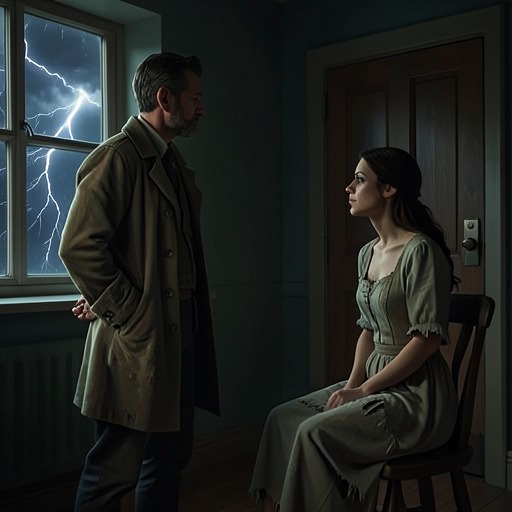
Enzo and His Sister Antonia
The HousemaidEnzo and His Sister Antonia are joined in the novel through Enzo’s memory of her death and the lasting consequences of his attempt to answer it. Antonia’s abusive marriage ends in a fatal assault; Enzo’s grief becomes a tattoo, a failed act of retaliation, and later a measure against which he understands Millie Calloway’s danger. Their relationship is revealed not through Antonia’s own voice but through the marks and choices her brother carries forward.
A memorial before the story is told
Before Millie knows who Antonia is, she notices her name etched inside a heart on Enzo’s biceps, mostly concealed beneath his shirt. The tattoo gives her a question but not an answer: she wonders who Antonia might be and assumes Enzo is probably unmarried. At this point, the name is private and unexplained, a trace of a relationship whose importance is not yet visible.
That first sighting occurs against a modest picture of Enzo’s daily kindness. He plants flowers in the Winchester yard, patiently names them for Cecelia Winchester, and gives her a small job in the flower bed when she asks to help. Millie sees him as someone she might trust, even though he speaks no English at the time and she cannot readily confide in him. The contrast matters: while the tattoo signals an undisclosed loss, his care for Cecelia offers Millie a visible reason to believe he might understand vulnerability. She also misses working, which Andrew Winchester will not allow her to do, and thinks Enzo would understand that deprivation.
Antonia’s marriage and death
Enzo eventually explains that Antonia was married to a man he describes as resembling Andrew: rich, powerful, and violent toward his wife. Enzo urged his sister to leave, but she did not. One day her husband pushed her down the stairs; she never woke up in the hospital. Enzo recounts the assault plainly, making the stairway and hospital the decisive points in a history that had previously been legible to Millie only as a name on skin.
As he tells Millie what happened, Enzo pulls up his T-shirt sleeve and reveals the heart tattoo she had noticed before. Its meaning is now explicit: he wears Antonia’s name as a way of remembering her. The tattoo is not simply an emblem of grief detached from events; in the account, it accompanies the story of her abuse, Enzo’s warning that she should leave, and the fatal violence that followed. The gesture also changes Millie’s understanding of the man she has watched working in the garden. He is not merely a potential confidant but someone whose family has suffered a comparable form of abuse.
Grief, retaliation, and its cost
Enzo says there was no justice for men like Antonia’s husband: no jail and no punishment for killing his sister. He therefore decided to punish the man himself. The evidence does not specify exactly what Enzo did, and his account resists a clean story of successful vengeance. When Millie asks whether he killed the husband, Enzo says he did not go that far and regrets what he did. He describes the aftermath as a life worth nothing and says he had to use everything he had to get out; if he returned, he believed he would be killed before leaving the airport.
His answer makes the cost of retaliation part of Antonia’s continuing effect on him. The attempt did not restore her or deliver the public justice he says was absent. Instead, it left Enzo displaced and unable to return safely. His grief is therefore represented both by the visible tattoo and by the consequences of an action whose exact nature remains undisclosed. The name on his arm preserves remembrance, while his account shows that remembrance has also organized a dangerous and costly response to her death.
Antonia’s legacy in Enzo’s offer to Millie
When Enzo learns what Andrew has done to Millie, Antonia’s history becomes more than a story of his past. Millie recalls the dark look in his eyes when she told him, and Enzo proposes killing Andrew as a backup plan if their escape plan fails. He insists that Andrew deserves to die and says he will do for Millie what he should have done for Antonia. The parallel is direct: in both situations, Enzo sees a powerful abusive husband and a woman in danger, and he measures his present response against the moment when he could not save his sister.
That offer is protective, but it also repeats the pattern Enzo regrets. He has already said that his own punishment of Antonia’s husband ruined his life and forced him to leave; now he is prepared to risk another act of violence on Millie’s behalf. He tells her she will not go to jail, though the exchange does not establish how he intends to ensure that outcome. Antonia’s death thus shapes Enzo’s loyalty and his readiness to act, while the earlier cost of retaliation shadows the plan. Her absence remains active in the story: the tattoo preserves her name, and Enzo’s promise to Millie turns his unresolved grief into a proposed intervention in another abusive relationship.