Gaslighting through psychiatric diagnosis
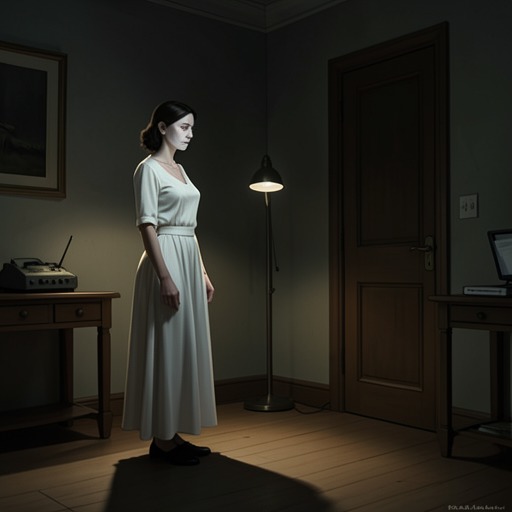
The HousemaidGaslighting through psychiatric diagnosis is the use of Nina Winchester’s mental-health history to discredit her account of abuse and reinforce Andrew Winchester’s control. Its force comes from the collision between two realities: Nina has been diagnosed and treated for serious psychological distress, yet her vivid memories of confinement are not merely delusions. By making the diagnosis explain away those memories, Andrew turns a record of illness into a tool for isolation—and Nina comes to doubt the very experiences that would help her resist him.
Diagnosis and the First Account
After Nina spends eight months at Clearview Psychiatric Hospital, the account repeatedly given to her is that she took sedatives prescribed by her physician, put some in her daughter Cecelia’s bottle, and placed her in a bathtub with the water running. The explanation casts the episode as an attempt to kill both herself and Cecelia, interrupted when Andrew suspected something was wrong and the police arrived. Nina has no memory of taking pills or putting Cecelia in the bathtub; she does not even remember the physician prescribing the medication, though the family doctor assures them that he did. The missing memory does not resolve the event for her. Instead, it makes other people’s account the one she must inhabit.
At Clearview, Nina is diagnosed with major depression and delusions. Her therapist explains the alleged two-day captivity in the attic as a delusion and attributes the purported murder-suicide attempt to depression. Nina initially resists this account because her memories of the attic feel vivid, including the sting of pulling out her hair. Dr. Barringer’s explanation—that a delusion can feel real—offers a framework in which the intensity of her recollection becomes no proof of its truth. Nina begins taking an antipsychotic and an antidepressant, attends sessions, and accepts responsibility for what she is said to have done despite remembering none of it. The narrative does not make the treatment itself evidence of abuse; it shows how a diagnosis can be used to make the abuse Nina describes seem medically implausible.
The Attic Recast as a Symptom
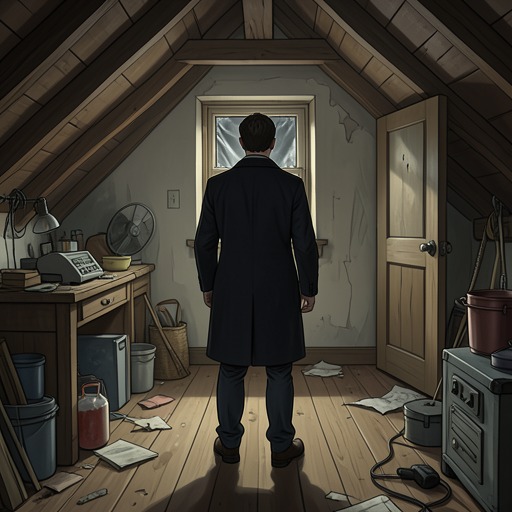
The physical inspection of the attic appears to settle the question against Nina. A police officer sent to investigate finds a storage closet filled with boxes and papers, not the room Nina has described. Nina interprets that finding through the diagnosis she has accepted: something went wrong with the chemicals in her brain, she thinks, and she imagined Andrew holding her hostage. In retrospect, she calls the hair-plucking punishment for missing a hairdresser appointment insane. Yet the memory remains potent enough to shape her behavior: she diligently colors her hair after returning home, just in case.
The stairwell door is kept closed, and, as far as Nina knows, Andrew has not opened it since she came home. Dr. Hewitt suggests that going upstairs could be therapeutic, because seeing the storage closet might deprive the place of its power over her. Andrew also encourages her to go and see for herself. These invitations use the logic of recovery to direct Nina back toward the location she fears, while presuming that her fear is a symptom to be corrected. When she is later locked in the attic again, Andrew points to the police inspection, her hospitalization, and her own admission as reasons no one will believe her. He says he wanted her to understand what would happen if she tried to get away. The earlier “delusion” is thus exposed as a memory of actual coercion, while the psychiatric and police record has furnished Andrew with a ready-made way to deny it.
Credibility Extended Beyond the Marriage
Andrew’s use of Nina’s diagnosis reaches beyond the house. Nina recalls that whenever she made a new friend, he approached that person, disclosed her mental-health history and the earlier bathtub incident, and instructed them to contact him if she seemed to be having another episode. A warning framed as concern prepares others to treat Nina’s disclosures as signs of illness before they hear what she has to say.
Nina’s friendship with Suzanne shows how this strategy works in practice. After drinking together, Nina confides what Andrew has done and says she wants to go to the police but cannot do so without support. Suzanne holds her hand, promises to work it out with her, and sends her home believing she has finally been heard. But Suzanne has briefly left the conversation to call Andrew, telling him Nina is having delusions again. He is waiting when Nina returns, and she is sent to Clearview for another two months. There, she discovers that at least one of the directors is a golfing buddy of Andrew’s father. Suzanne later apologizes, saying she was worried and glad Nina got help. Nina forgives her, believing Suzanne was tricked as she was, but their friendship is never the same and Nina says she can no longer trust anyone.
That loss of trust is not incidental to the control: it removes the support Nina says she would need to approach the police. The people she hopes will hear her instead repeat the explanation Andrew has supplied. In the last five years, she reflects, the police, doctors, and her best friend have all called her crazy or delusional; she has been locked up for talking about what Andrew did. The diagnosis consequently operates both inside Nina’s understanding of herself and between her and potential witnesses. Each failed attempt to disclose abuse gives the next listener more reason, on the surface, to dismiss her.
Recognition and the Limits of the Label
The pattern begins to break when Nina meets Enzo and believes he will listen. She tells him about the attic room, Andrew’s torments, and finding Cecelia unconscious in the bathtub. Nina recalls Cecelia’s face beneath the water with a vividness that has survived the years and the official account. Enzo responds with anger and says he will kill Andrew. The scene does not undo Nina’s hospitalizations or restore her lost trust, but it gives her a listener who does not immediately translate her account into a symptom.
The concept’s central contradiction is that Nina’s psychiatric history is real while Andrew’s use of it is manipulative. Her lack of memory, diagnosis, treatment, and hospitalization help explain why her own certainty falters; they do not establish that the attic confinement was imagined. Andrew’s repeated appeals to the first episode, the police, and Nina’s admission convert those circumstances into a credibility trap. The eventual confirmation of the attic abuse forces the reader to reconsider what earlier seemed to be clinical evidence against Nina: the diagnosis has not simply described her distress; in Andrew’s hands, it has helped make his violence difficult for her—and for others—to name.