Millie Calloway
The HousemaidMillie Calloway, whose given name is Wilhelmina, is a formerly incarcerated woman attempting to secure work and a place to live without revealing her past. Her move from sleeping in her car to working in the Winchester household offers a precarious opening into a more stable life, but that apparent opportunity gives way to captivity: Andrew Winchester watches her through a hidden camera and confines her in the attic. Her story links economic vulnerability to the household’s coercive power.
Identity and Background
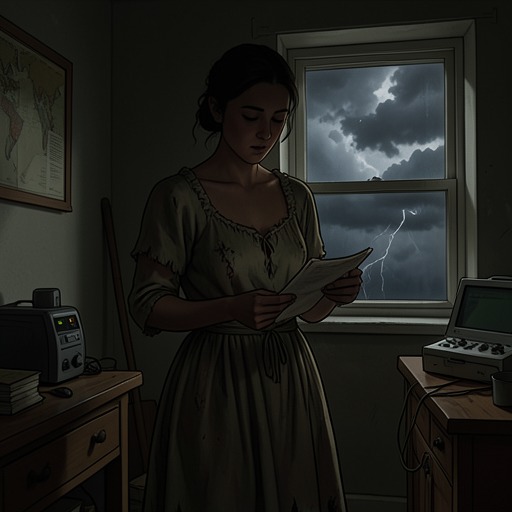
A caller addresses Millie by her full name, Wilhelmina Calloway, prompting her to explain that Wilhelmina was her paternal grandmother’s name. Her parents are estranged from her, and she has long preferred Millie, correcting people who use the name she does not identify with. The exchange establishes both her chosen everyday identity and her distance from her family.
Millie has spent the previous ten years in prison. She does not disclose that history to Nina Winchester while they discuss her coming to work, privately wondering whether Nina would still welcome her if she knew. Her silence is not incidental: Millie is entering a relationship on unequal terms, with an important part of her past kept from the prospective employer.
Work and Precarious Circumstances
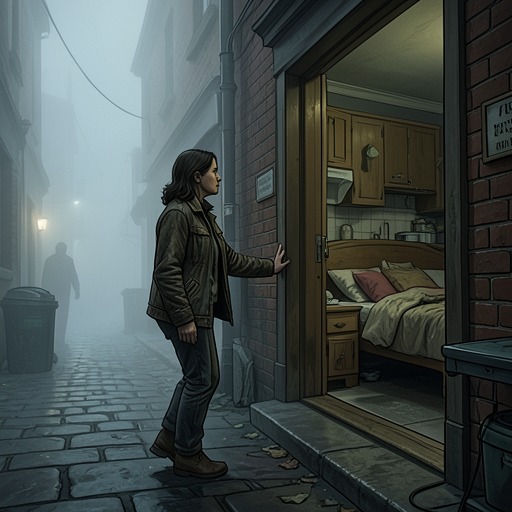
Before the Winchester opportunity, Millie is living in her car and trying to find paid work. She has interviewed at Munch Burgers, where the available prospect is entry-level work at the counter or grill, with advancement possible if she works hard. The immediate importance of the job is practical: earning enough to move out of her car. A prepaid flip phone is all she can afford, another small measure of how limited her resources are.
Her exchange with Nina offers a different route. Millie keeps the fact that her belongings are already packed in her car to herself, answering lightly that she is a fast packer. Nina responds warmly and looks forward to having her come to work. The contrast between Millie’s outward ease and the precarity she conceals marks the start of her employment in the household.
The Attic and Andrew’s Surveillance
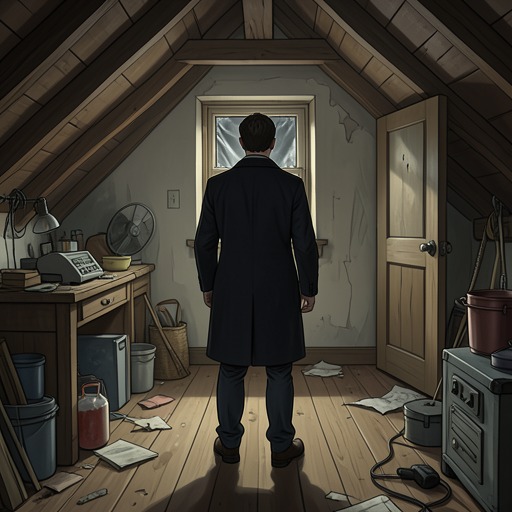
During an attic episode, Millie uses her phone to translate the Italian word pericolo. The result is danger. The weak signal makes even this small act of finding information slow, and the word gives a stark name to the threat surrounding her there. The chapter then moves to seven hours of cleaning, placing labor and danger close together in the account of her time in the house.
Later, while confined in the attic, Millie learns that Andrew can see her. She searches the walls for a camera, only for Andrew to tell her that it is well hidden and that he has been watching her only for the past few weeks. The revelation changes the meaning of her isolation: she is not merely locked away, but observed without knowing where or when the watching began. When she pounds on the door and demands release, Andrew calmly tells her she is not in a position to make demands. His composure sharpens the imbalance between them; her urgent resistance meets a captor who controls both the room and the terms of the exchange.
Narrative Role and Significance
Millie’s circumstances make the promise of employment inseparable from the need for shelter and income. She approaches the Winchester household after prison and homelessness, concealing her history as she tries to establish a foothold. That dependence gives the household’s power over her material force, while her attic confinement makes its coercion literal.
Her account also emphasizes how control can operate through information and access. Millie must search for a camera she cannot see, learn that Andrew has been watching her, and confront his declaration that she has no standing to demand freedom. The movement from a hoped-for job to confinement makes her vulnerability central to the novel’s portrayal of domestic power: the home that seemed to offer work and shelter becomes a place where another person controls her privacy and ability to leave.