Millie’s parole conditions
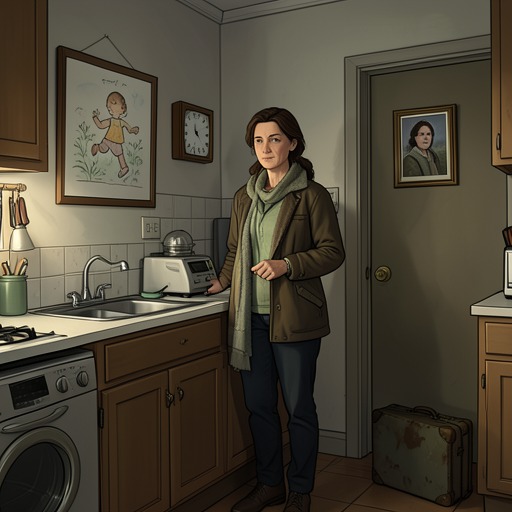
The HousemaidMillie’s parole conditions turn ordinary questions of work and housing into matters with the power to return her to prison. Her monthly meetings with her parole officer, Pam, offer practical support but also expose the danger of concealment: Millie knows that lying to Pam and having no residence are violations, and she fears losing her freedom before completing the remaining five years of her sentence. Her new position living and working with the Winchesters gives her a way to claim that her life is back on stable ground, though the stability she presents is incomplete.
Supervision and the Risk of Return
About three weeks after moving in with the Winchesters, Millie schedules her first meeting with Pam for a day off. She does not want her employers to know where she is going. By then, the meetings have become monthly. Pam is described as someone who genuinely wants to help, a quality that makes Millie feel worse about the lies she has told her. Supervision is therefore not presented simply as hostile surveillance: Pam has helped Millie find work before, but the reporting relationship still places Millie’s freedom at risk when her circumstances deteriorate.
The rules Millie understands are stark in their consequences. She recognizes that lying to a parole officer violates parole, and that living without a residence, including living in a car, is also a violation. If her parole were revoked, she could be sent back to prison to serve the last five years of her sentence. This possibility shapes her choices more powerfully than any abstract concern about being caught: she cannot let herself be returned to prison.
The Unraveling of Work and Housing
After leaving housing subsidized by the prison, Millie had obtained her own place with help from Pam, who helped her get a waitressing job at Charlie’s. When that job ended, the consequences spread from employment to housing. Millie was fired, then lost her apartment and became homeless. At the previous meeting, a little over a month before the one described, she concealed both developments from Pam. She had also claimed that she quit Charlie’s rather than admit that she had been fired.
The circumstances of that firing deepen the pressure around the concealment. Millie says the firing was unfair, but the employer let her leave quietly on the condition that the police would not be involved. She had little choice: if the employer had gone to the police about what happened, she believed she would have been sent back to prison. She avoids telling Pam because she expects Pam would contact the employer to ask why she was fired. The fear of disclosure thus connects the workplace, parole supervision, and the possibility of incarceration, while Millie’s loss of housing gives her another serious violation to hide.
For a month, Millie has been living in her ten-year-old Nissan, with everything she owns packed in its trunk and her sleeping place in the backseat. The car is not merely temporary shelter in the background of her story: it is the material fact that makes her housing situation a parole risk. When Nina asks whether she has a car, Millie can truthfully say yes, but the car is also all she has. Her later account of missing a toilet, a sink, and room to straighten her legs makes the deprivation concrete without changing its legal significance.
A New Job, Presented as a Fresh Start
Millie’s employment by the Winchesters changes what she can report to Pam. At the meeting, she can say she has a new job and a place to live, and she feels safer than at the appointment when she was sitting on the edge of her seat. Her improvement is real in those respects, but it does not erase what she withheld: she does not tell Pam about the firing, the eviction, or the month in her car. Her assurance that things have turned around is therefore paired with the qualification that she can be honest only almost.
The job is both paid work and a home. When Millie arrives with two pieces of luggage, Nina leads her into a house that has become markedly different from the immaculate place Millie saw at her interview. Six cups, crumpled newspapers and magazines, a dented pizza box, scattered clothes, garbage, and the remains of dinner fill the living areas. Millie sees substantial cleaning ahead, but also sees a way to make herself difficult to dismiss: if she becomes invaluable, she thinks Nina may be less likely to fire her if the truth comes out. The possibility of losing this position consequently reaches beyond wages; it threatens the residence on which her improved account to Pam depends.
Domestic Labor and the Limits of Stability
The work that sustains Millie’s new position is continuous and specific. Nina expects her to clean the house and occasionally help with Cecelia, including taking her to lessons or playdates. As the Winchesters prepare for a Parent Teacher Association gathering, Millie faces a house that is messy again after her morning’s efforts. Nina has sent repeated reminders about collecting hors d’oeuvres, while Millie describes wet towels on the bathroom floor, toothpaste caked in the sink, and clothes left outside the laundry basket. These tasks establish the labor through which Millie tries to secure her place in the household; Nina’s disorder creates more work, while the value Millie places on being needed gives her an incentive to absorb it.
During the preparations, Andrew notices that Millie is crying and offers to help. Millie initially says she can manage, then asks him to pick up the hors d’oeuvres. The small exchange shows that the household’s demands are not limited to cleaning, and that Millie’s employment involves responding to sudden practical needs as well as routine work. It also gives the new arrangement a measure of support: Andrew helps with one task, but Millie remains responsible for making the gathering and her work succeed.
The Condition of Her Freedom
At her meeting with Pam, Millie describes the new job and home while withholding the path that led to them. Pam tells her she is proud of her progress adjusting after incarceration that began when she was a teenager. Millie accepts the praise, but continues to keep the month in the car from her. The contrast is central to the parole conditions’ place in her story: support can help her rebuild, yet the consequences attached to disclosure make honesty feel dangerous when employment and housing fail.
The Winchesters’ home therefore offers a precarious answer to the requirements of life under parole. It replaces the car with a residence and gives Millie work, but her sense of security also depends on staying useful to employers who do not know the truth about her recent instability. Her compliance is not a settled achievement so much as a fragile position regained after job loss, eviction, and concealment. Parole makes the ordinary need for a job and a place to sleep inseparable from the fear of returning to prison.