Millie’s post-incarceration and parole status
The HousemaidMillie Calloway’s post-incarceration life is defined by a narrow margin between apparent stability and the risk of returning to prison. She has spent ten years incarcerated and remains on parole, with monthly meetings and rules that make housing, employment, and even an encounter with supermarket security consequential. A position with the Winchesters gives her a place to live and a reason to hope that circumstances have turned around, but her history remains something she manages through selective disclosure.
Release and precarious footing
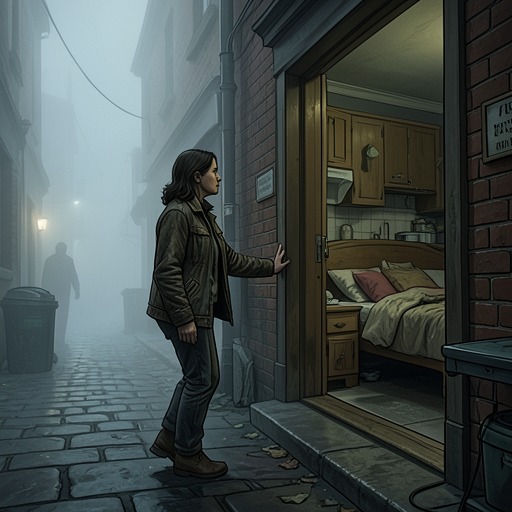
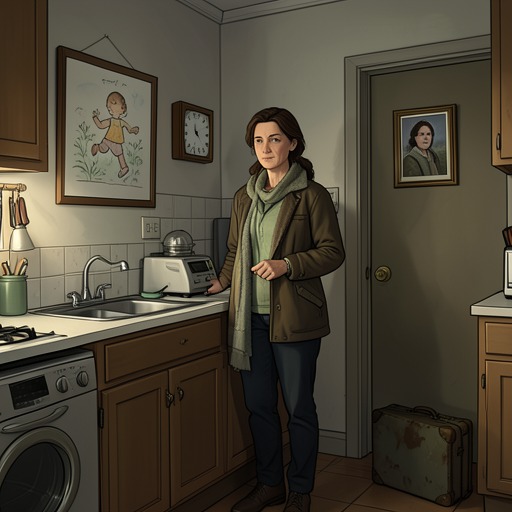
When Millie first speaks with Nina Winchester about working for her, Millie does not reveal that she has spent the previous ten years in prison. Her belongings are already packed in the trunk of her car, but she keeps that circumstance to herself and presents herself as a fast packer. The exchange establishes a pattern that continues after she is hired: the possibility of a fresh start depends partly on Nina not knowing how unstable Millie’s life has been.
After her release, Millie initially lived in housing subsidized by the prison. Her parole officer, Pam, helped her obtain a waitressing job at Charlie’s, and Millie later moved out of subsidized housing into a place of her own. That progress proved fragile. Charlie’s fired her, and she subsequently lost her apartment; for about a month, she lived in her car without telling Pam. Her circumstances therefore shifted from supported housing and employment to joblessness and homelessness, even while she tried to preserve the appearance of having things under control.
The position in the Winchester household changes that immediate situation. By the time she next meets Pam, Millie has a new job and somewhere to live, and she feels safer than she did at the preceding appointment. She describes her life as having turned around, yet this improvement does not erase the precarious period just behind it or her need to conceal it.
Parole and managed disclosure
Millie schedules her first meeting with Pam after living with the Winchesters for about three weeks, choosing her day off so that the household will not know where she is going. Her meetings have become monthly. The ordinary details of supervision—an appointment, a work schedule, and a parole officer who knows her circumstances—sit alongside the serious consequences of any breach.
Millie understands that lying to Pam is a parole violation, as is having no residence and living out of her car. She fears that losing parole would send her back to prison to serve the final five years of her sentence. That prospect helps explain why she withholds information even though she says she dislikes lying: she believes that an honest account of her job loss and homelessness could expose her to exactly the punishment she is trying to avoid.
At the meeting, Millie says she quit her job at Charlie’s, although she was fired. She considers the firing unfair, and it had been handled through an arrangement in which she left quietly and the employer did not involve the police. She believes that police involvement could have put her back in prison. She also avoids telling Pam about the loss of her apartment, because Pam might ask the former employer why Millie no longer worked there and uncover the circumstances she has concealed. Her new employment and residence make disclosure feel less dangerous, but she does not tell Pam everything: she keeps the month in her car out of the account.
Work, housing, and the threat of exposure
The consequences of Millie’s status surface again at a supermarket. While shopping for groceries for Nina Winchester, Millie notices a heavyset man watching her. Near the exit, he grips her shoulder and identifies himself as supermarket security. Millie has a receipt, and the guard says that shoplifters are prosecuted; still, as he checks her purchases against the receipt, she imagines the possibility that an item was not rung up correctly.
Her fear quickly becomes larger than the store encounter. If the guard calls the police, Millie thinks, that could violate her parole and put her at risk of returning to prison. She also imagines that Nina Winchester might welcome such an outcome as a way to dismiss her without having to fire her directly, and as revenge for Millie’s affair with Andrew Winchester. This is Millie’s anxious interpretation of Nina’s possible motives, not an established plan by Nina. The scene nevertheless shows how little room Millie feels she has for an innocent mistake: even a disputed grocery purchase appears capable of threatening both her job and her freedom.
The episode also makes the difference between Millie’s actual conduct and her fear of being suspected central to her experience. She insists to herself that she has stolen nothing and that every item is on the receipt. Yet her past incarceration gives the threat of prosecution a particular force. A routine check becomes, in her imagination, a route from the supermarket back to prison.
Stigma, trust, and a possible future
Pam treats Millie’s progress with warmth. She tells her that people who have been incarcerated since they were teenagers can find it hard to adjust, and says she is proud of how well Millie has done. Pam also encourages her to make friends and, when she is ready to date, not to settle for someone who treats her badly simply because she is an ex-con. Her advice directly acknowledges that Millie’s record may shape what she thinks she deserves in a relationship.
Millie responds to the suggestion that she make friends without meaning to follow it. Still, she briefly allows herself to imagine dating someone. Andrew Winchester comes unbidden to mind, with his charm and handsome appearance. The moment links the social future Pam encourages to the attraction already taking shape in Millie’s life, while also showing how her status enters even a conversation about romance: Pam recognizes that being an ex-con could make Millie vulnerable to accepting less than respectful treatment.
Millie’s circumstances also echo, without becoming identical to, Nina Winchester’s struggle to have her account believed. Nina recalls that Andrew disclosed her mental-health history to people she befriended, and that Suzanne called him after Nina confided in her. Nina was then returned to Clearview Psychiatric Hospital for another two-month stay. Millie’s parole history and Nina’s psychiatric history operate differently, but both parts of the narrative show personal information being used to shape how others interpret a woman’s words. For Millie, the criminal record makes a possible police call feel dangerous; for Nina, a psychiatric diagnosis helps others recast her account as delusion.
Millie’s parole status is thus not simply a record of her past sentence. It is a continuing condition that influences where she lives, how she handles losing work, what she tells Pam, and how she imagines the consequences of being suspected of wrongdoing. The Winchester job provides a measure of stability, but the fear of returning to prison persists beneath it, turning concealment into a practical strategy for holding on to the life she has begun to rebuild.