Nina and Andrew's abusive marriage
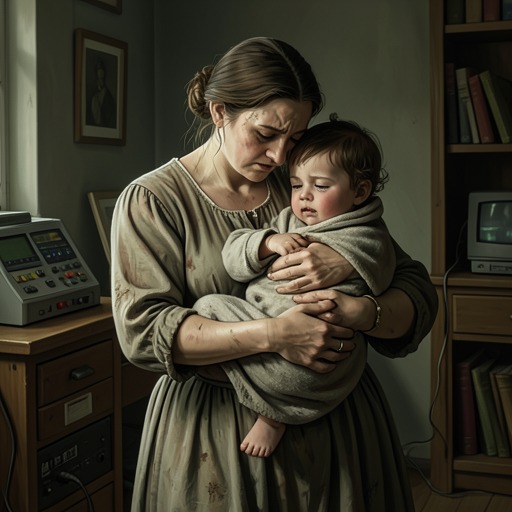
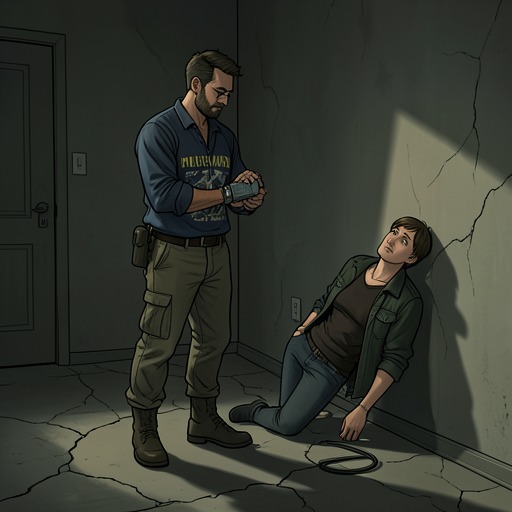
The HousemaidThe abusive marriage between Nina Winchester and Andrew Winchester is defined by the gulf between its respectable appearance and the coercive control behind closed doors. For Nina, the marriage becomes a system in which ordinary domestic life—her role as a wife and mother, her access to Cecelia, and the possibility of leaving—can all be turned into leverage.
Public Perfection and Private Hatred
After seven years of marriage, Andrew appears to have kept his promises. He supports Nina financially, acts as a father figure to Cecelia, and seems even-tempered and agreeable; measured against the other husbands in their town, he can look almost perfect. Nina’s private response is the opposite: she hates him. That contrast makes the marriage’s public respectability part of its trap: the traits that make Andrew seem dependable to others do not reveal the life Nina is enduring.
Nina has tried bargaining for a way out, offering to leave with Cecelia and only the clothes they are wearing. Andrew laughs at the proposal. She fears that her history of mental-health problems would let him portray her to the police as someone who had abducted Cecelia and might harm her again. Her own account of the marriage is therefore constrained by the prospect that seeking help could strengthen Andrew’s control rather than end it.
She also tries to prevent further punishment by performing the role of a perfect wife: cooking elaborate dinners, keeping the house spotless, and concealing her revulsion during sex. When this does not change how often Andrew sends her to the attic, she abandons the strategy and begins to repel him, snapping at him and changing her habits in the hope that he will lose interest. He does not. After he catches her eating chocolate cake, he takes her to the attic and starves her for two days. The episode makes plain that neither compliance nor defiance gives Nina reliable control over when the punishment comes.
Punishment and the Use of Cecelia as Leverage
Andrew’s punishment of Nina is unpredictable by design. On average, he sends her to the attic once every other month, though the interval can vary: once, six months passed without a visit. Nina cannot know whether she will sleep in her own bed or on the uncomfortable cot, what supposed offense Andrew will name, or what punishment he has prepared. The uncertainty makes the threat reach beyond each confinement; she must live without knowing when ordinary life will be interrupted again.
Andrew also makes Cecelia’s behavior a means of controlling Nina. He buys Cecelia itchy, frilly dresses she dislikes and other children mock. If Cecelia refuses to wear one or gets it dirty, Nina may disappear for days, apparently punished through forced nakedness. Cecelia learns to obey because her mother bears the consequence. Nina fears Andrew may eventually punish their daughter directly, but accepts the harm done to herself as long as it spares Cecelia.
The threats extend into the kitchen. Andrew has nearly drowned Cecelia, and he keeps peanut butter in the pantry despite knowing she is allergic. Nina repeatedly throws it away, only for it to reappear; sometimes Andrew punishes her for removing it. Cecelia’s allergy causes welts rather than a life-threatening reaction, but Andrew occasionally slips peanut butter into her dinner to make the rash appear after the meal. The recurring jar turns an ordinary household food into a threat Nina cannot reliably keep out of her daughter’s reach.
Nina imagines killing Andrew, but he has anticipated that possibility and prepared another means of control. He says that if he dies, whatever the cause, his attorney will send the police a letter describing Nina’s instability and threats against him. Her psychiatric history, already a vulnerability in any attempt to leave, would make that accusation harder to resist. She stays, does not act on her fantasies, and postpones escape until Cecelia is older and safe. In this marriage, Andrew’s control operates through more than confinement: it makes Nina weigh every possible act of resistance against the danger it could bring to her daughter and to herself.
Isolation, Surveillance, and Failed Appeals
Nina’s attempts to find help are undermined by Andrew’s ability to make her sound unreliable before she can tell her story. A few years earlier, after Nina confided in Suzanne and asked for support in going to the police, Suzanne promised they would work it out together. But she had briefly slipped away and contacted Andrew, warning him that Nina might be having delusions. When Nina returned home, Andrew was waiting; the disclosure was followed by another two-month stay at Clearview Psychiatric Hospital, where Nina learned that one of its directors was a golfing buddy of Andrew’s father. Suzanne later apologized and said she had only been worried, and Nina forgave her, but the friendship was never the same. Nina says she was no longer able to trust anyone.
Andrew also works to discredit Nina with each new friend she makes. He tells them about her mental-health history and what she had tried to do years earlier, then asks them to contact him if they have reason to worry because she might be having another episode. The result is more than a private betrayal: a person Nina might turn to for help is given Andrew’s interpretation of her in advance. Her previous involuntary hospitalization gives that account force, while leaving her with little confidence that speaking openly will bring protection rather than another confinement.
The attic makes that isolation physical. Nina pounds on its door and scrapes at the wood until her fingernails splinter, then screams in the hope that neighbors will hear. Andrew tells her that the space below the attic is soundproofed, so even a dinner party downstairs would not hear her. When Enzo considers breaking down the door, Nina begs him not to intervene: Andrew could hurt Cecelia, have Nina locked away again, or use his money and influence to endanger Enzo. Though she wants Enzo to stay, she tells him to leave to protect him from becoming another target; he warns that he will return the next morning and call the police if she is not there.
Andrew’s control reaches even into Nina’s perception of privacy. He tells her he can see her, prompting her to search the walls for a camera, and explains that it is well hidden and that he has been watching only since a few weeks earlier. When she demands to be released, he calmly tells her she is in no position to make demands, then promises he will let her out. The hidden camera and the soundproofed attic sharpen the marriage’s central imbalance: Andrew can observe and confine Nina, while she cannot reliably make herself heard or call on help without fearing what he will do to her, Cecelia, or anyone who intervenes.
The House as a Prison
The marriage’s coercion extends beyond the attic into the meaning of home itself. When Suzanne drives Nina back from lunch, they pass through the gate Nina once thought charming; after years with Andrew, she sees it instead as the boundary of a prison. The changed image gathers the contradiction at the center of their marriage: a residence that can look like a marker of security from outside has become the place from which Nina cannot safely leave.
That boundary also reaches into the household’s everyday communications. Nina gives Millie a phone to use, and Patrice observes that it allows Nina to keep track of Millie’s location at all times. Patrice’s remark presents the device as surveillance, extending the household’s control beyond its walls and into the movements of its live-in employee. In this light, the gate and the phone are complementary signs of a domestic order organized around knowing where women are and limiting the consequences of their attempts to act independently.