Nina and Cecelia’s Mother-Daughter Relationship After Leaving Andrew
The HousemaidNina and Cecelia’s Mother-Daughter Relationship After Leaving Andrew changes from a bond constrained by Andrew Winchester’s control into a partnership shaped by protection, shared relief, and deliberate closeness. Their departure does not erase what Cecelia witnessed or what Nina fears; it gives mother and daughter room to imagine a life beyond him, even as Nina remains unsure what comes next.
A Daughter Growing Beyond Andrew’s Control
When Nina greets Cecelia at camp, she sees her happier than she has been in some time. Cecelia is among new friends, her face bright, with sunburn on her shoulders and cheeks and a scrape on her elbow beneath a half-detached Band-Aid. Her casual shorts and T-shirt sharply contrast with the frilly dresses Andrew Winchester had insisted she wear. Nina is glad to see her dressed comfortably and hopes she will never have to wear one of those dresses again. The clothing makes visible a change in who gets to shape Cecelia’s everyday life.
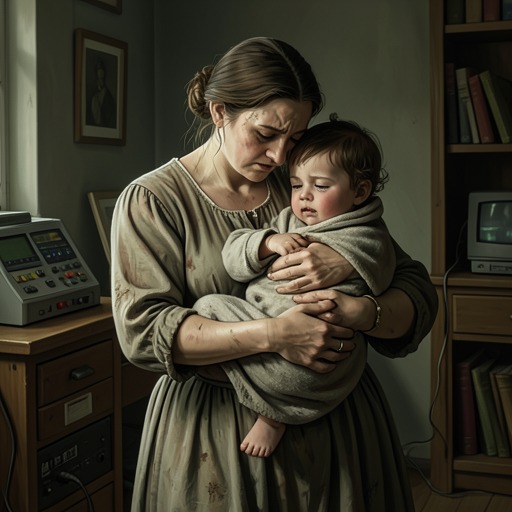
Cecelia’s physical growth catches Nina by surprise: the top of her head now reaches Nina’s shoulder. When Cecelia wraps her thin arms around her mother and rests her head against her, Nina registers both the familiar comfort of the embrace and the time passing. Cecelia’s greeting has also changed from “Mommy” to “Mom.” Nina knows Suzanne once described that transition as painful, but Nina welcomes it. To her, Cecelia growing up means approaching an age when Andrew will no longer have power over her, or over them together. The milestone carries hope because it points toward independence from the person who has controlled their lives.
Planning a Life Beyond the House
Nina has prepared for the possibility that she and Cecelia will not go straight home after camp. While Cecelia packed, Nina asked her to bring extra clothes; some of her bags are still in the trunk. The provision is practical, but it also preserves an escape route. Nina did not know whether their plans would work or whether events would fall into place. Remembering that they are free brings tears to her eyes, a response that gives their departure its full weight: liberation is real, but it has arrived after prolonged uncertainty.
When Nina asks where Cecelia would like to go, Cecelia chooses Disneyland. Nina agrees and considers taking her to California, which would put three thousand miles between them and Andrew. Distance is not merely a vacation plan; it is insurance against the possibility that Andrew might decide they should be together again. Nina also privately connects the plan to Millie Calloway, whose actions Nina still hopes will unfold as she expects. The hoped-for future therefore rests on both Nina’s own efforts to get away and an outcome she cannot fully control.
Cecelia’s excitement is immediate and physical: her face lights up and she jumps. Nina recognizes in that delight a child’s ability to inhabit the moment, and takes comfort that Andrew has not taken it entirely from her. But Cecelia soon stops and asks about her father. Nina tells her he is not coming. The relief on Cecelia’s face matches Nina’s own, making their shared response plain without requiring either of them to explain it.
Protection, Fear, and What Cecelia Knows
Nina says Andrew never laid a hand on Cecelia, as far as she knows, and emphasizes that she watched carefully. She had decided that even the smallest suspicious bruise would have led her to tell Enzo to kill Andrew. This severe contingency shows how completely Nina’s protective instincts were organized around the possibility of harm to her child. At the same time, Cecelia’s question about her father and her relief at his absence reveal that the danger in the household was not measured only by visible injury.
Cecelia understood that some of her own transgressions resulted in Nina being punished. Nina regards her as perceptive, and her assessment complicates the reassurance that Andrew did not physically hurt the girl: Cecelia had still learned to connect her behavior with her mother’s suffering. Their bond thus includes an awareness Nina cannot simply remove by leaving. Nina’s attention to Cecelia’s safety, and Cecelia’s understanding of what Nina endured, place protection and shared knowledge at the center of their relationship.
Separation and Their New Domestic Closeness
After Andrew’s death, Nina asks whether Cecelia is all right and is told that she is fine. When Nina speaks to her daughter by phone, Cecelia asks when Nina will come to get her. Nina promises that it will be soon, while privately recognizing that she is lying; she tells Cecelia to keep working on her Italian and says she loves her. Cecelia returns the declaration. The exchange offers tenderness, but its reassurance is shadowed by their separation and Nina’s inability to give her daughter a definite reunion time.
Nina and Cecelia later stay in a hotel because Nina cannot bear to enter the house she shared with Andrew, which she has put on the market. Nina even says she is about eighty percent sure the old house is haunted. For the night, mother and daughter share a queen-size bed. Nina could have arranged a separate bed, but Cecelia wants to stay close. She does not yet understand what happened to the man she called her father and has not asked; she is, Nina observes, relieved that he is gone. Nina asks Enzo to take Cecelia to get food after they have both been there for a long time. In these practical acts—finding somewhere else to stay, letting Cecelia choose closeness, and attending to her immediate needs—their new life takes shape without requiring Cecelia to understand every part of its beginning.