Paperweight
The HousemaidThe Paperweight is an ordinary desk object that becomes the instrument of Millie Calloway’s intervention when she finds Duncan assaulting Kelsey. Its decisive use stops the attack but kills Duncan, shaping Millie’s life long after the moment itself.
The Paperweight as a Weapon
At Millie’s disciplinary boarding school, she and her friend Kelsey sneak out to a party in the boys’ dormitory. Passing a bedroom, Millie hears Kelsey screaming for help and enters the dark room. Duncan, a much larger classmate and football player, is forcing himself on Kelsey. Unable to pull him away, Millie feels across a desk until her hand finds the Paperweight.
Millie strikes Duncan in the head with it repeatedly. He dies before reaching the hospital. The object’s ordinary place on a desk gives way, in the darkness and urgency of the room, to its use as a means of stopping the assault; that same act becomes the basis of a murder case and the beginning of Millie’s imprisonment.
Legal Aftermath and Recollection
The Paperweight’s use followed Millie beyond the dormitory. She was sixteen when arrested and was imprisoned at seventeen; photographs of Duncan’s visibly crushed skull made it difficult to argue that she had not intended to kill him. Given her age and the circumstances, she eventually pleaded guilty to a lesser manslaughter charge. Duncan’s family wanted vengeance for his death but also did not want him publicly branded a rapist, a conflict that shaped the resolution of the case without undoing its consequences for Millie.
Years later, while confronting Andrew from the other side of a locked attic door, Millie recalls the dark bedroom, Kelsey’s screams, and her own moment of reaching across the desk. The remembered weight of the object links her past intervention to her present resistance: she thinks of how good it felt to strike Duncan until he stopped, and of the possibility that doing so saved other girls. The Paperweight thus returns not as a simple emblem of violence, but as the material hinge between an act that cost Millie years of freedom and the force she draws on when refusing to release another man who has made her a prisoner.
The Paperweight as Evidence
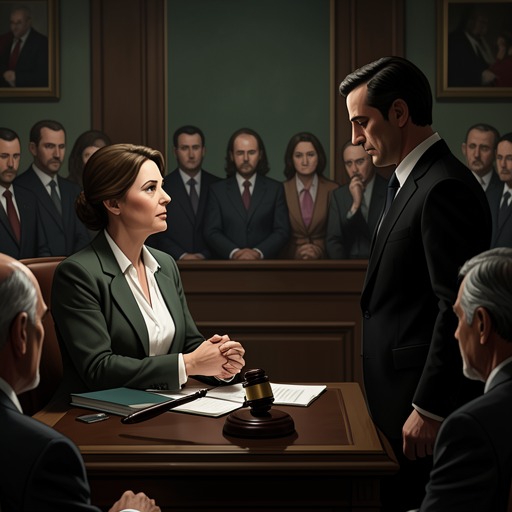
The Paperweight acquires a second meaning after the attack: it is no longer only the object Millie reaches for in the dark, but part of the case through which others judge what she did. Photographs of Duncan’s crushed skull made the repeated blows difficult to frame as anything other than intentional killing, even as Millie’s attorney argued that she had acted to defend Kelsey. The object itself settles neither interpretation. Its force is visible in the injuries, while the circumstances that prompted Millie to use it remain essential to understanding the act; the legal outcome reflects that tension in her plea to a lesser manslaughter charge.
Material Agency and Control
The Paperweight’s role also contrasts with the surveillance Andrew uses to control people inside the house. In the dark dormitory, Millie finds the object by touch and turns it into an immediate means of stopping Duncan; in the attic, Andrew relies on a Hidden camera and the image displayed on Andrew’s phone to watch Millie and judge her actions. One object becomes usable through Millie’s urgent reach, while the others give Andrew an informational advantage over a prisoner who cannot see where she is being watched from. The contrast makes the Paperweight more than a weapon: it marks a rare moment when Millie’s physical action alters the balance of power, even though the consequences of that action follow her for years.