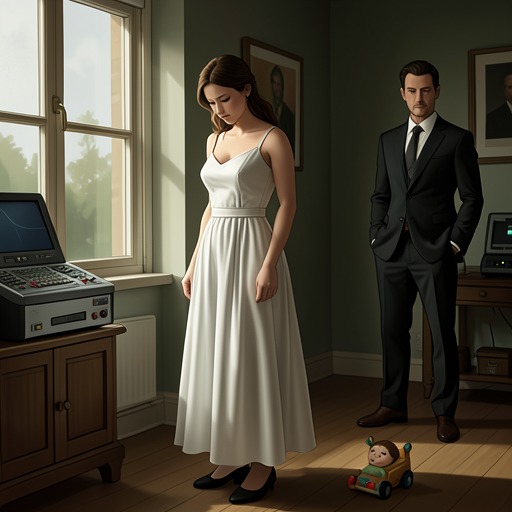
The Winchesters learn they cannot have another child
The HousemaidThe Winchesters’ discovery that they cannot have another child closes a future they had been actively imagining and exposes the difference between their grief and the way each tries to manage it. Seen through Millie Calloway, the appointment is not only a medical turning point: its aftermath briefly makes Andrew Winchester seem unusually vulnerable, drawing Millie into an intimate confidence whose significance changes as the wider story unfolds.
Hopes Before the Appointment
Andrew and Nina Winchester have been nervous and excited about meeting a fertility specialist. Nina has undergone several tests, and she expects the results to lead to IVF. The couple can afford treatment, but money cannot guarantee the outcome they want. Their preparations make the hope tangible: they have discussed turning the guest room into a nursery, and Millie thinks both parents seem eager for a new baby.
While the couple attends the appointment, Millie is responsible for Cecelia Winchester. The everyday task of watching their nine-year-old daughter places the hoped-for future alongside the child already in their home. Cecelia returns from an activity with her shoes and backpack scattered about, and Millie tries to manage the small domestic disorder while the adults seek a medical answer. The juxtaposition gives the appointment a household setting: another child is not an abstract wish but a future the Winchesters have begun to make room for.
The Diagnosis and Its Immediate Effect
The appointment ends badly. Nina goes upstairs with a pounding headache, and her slammed bedroom door makes clear to Millie that something has gone wrong. Andrew sits on the leather sofa, lowers his head, and tells Millie that Nina will not get pregnant. The couple’s specialist has concluded that there will be no baby; Millie, who knows little about fertility treatment, recognizes that the expert’s judgment outweighs her own speculation about what money or medical intervention might make possible.
Andrew describes himself as disappointed, even as he says that he loves Cecelia as though she were his own. He admits that he had always dreamed of having another child. His words distinguish his affection for Cecelia from the separate longing for a baby, without diminishing either. He also says that Nina is devastated and that he needs to be strong for her. In this first account of the news, he presents himself as a husband trying to contain his own disappointment so that he can support his wife.
Millie offers sympathy and asks whether she can do anything. Andrew asks her to find out when Nina would like to see a show in the city and to book orchestra seats. He believes an evening out would lift Nina’s spirits. The request turns his private disclosure into a practical gesture of care, but it also extends the conversation between him and Millie beyond the household task that brought her into the room. Millie registers the exchange as their deepest conversation so far and feels that it is pleasant to have him open up to her.
What the Moment Changes
The diagnosis changes the Winchesters’ immediate expectations: the nursery they had discussed will not be for the new baby they hoped to have. It also reorganizes the emotional scene in the house. Nina withdraws upstairs, while Andrew speaks with Millie downstairs, placing Millie beside him at a moment when he is distressed and seeking comfort. The sequence matters because their growing closeness develops through an apparent act of trust rather than through a declared change in their relationship.
For Millie, the appointment’s result is certain because it comes from a leading specialist. Her response is compassionate, but her understanding of the marriage remains limited to what the couple and Andrew tell her. The chapter allows her to read his disclosure as openness and his plan for Nina as devotion. It does not establish that the infertility caused later conflicts or explain either spouse’s subsequent conduct; its immediate evidence is the loss of a hoped-for pregnancy and the way Andrew and Millie respond to it.
Retrospective Significance
Later revelations complicate the account of the Winchesters’ household without undoing the medical news. Nina spends eight months at Clearview Psychiatric Hospital after being told that she attempted to kill herself and Cecelia; she has no memory of the alleged attempt and is treated for major depression and delusions. She remembers being held in the attic, but clinicians tell her that this memory was delusional. Years later, Nina recalls confiding in Suzanne, who contacted Andrew; he had already told Nina’s new friends about her mental-health history and asked them to alert him if she seemed unwell. Nina says the resulting intervention led to another two-month hospital stay and left her unable to trust anyone.
These later accounts make the fertility scene’s intimacy legible as part of Millie’s restricted view of the household: at the time, she sees Andrew’s grief and his proposed kindness toward Nina, not the full history through which Nina’s testimony is discounted. A detective later questions the claim that Andrew’s attic confinement was impossible to verify and notes the influence the Winchesters once had among local police. That later scrutiny does not change what the specialist told the couple, but it sharpens the contrast between the medical certainty of the diagnosis and the uncertainty surrounding whose account of life inside the marriage will be believed.