Women Supporting One Another and Protecting Abuse Survivors
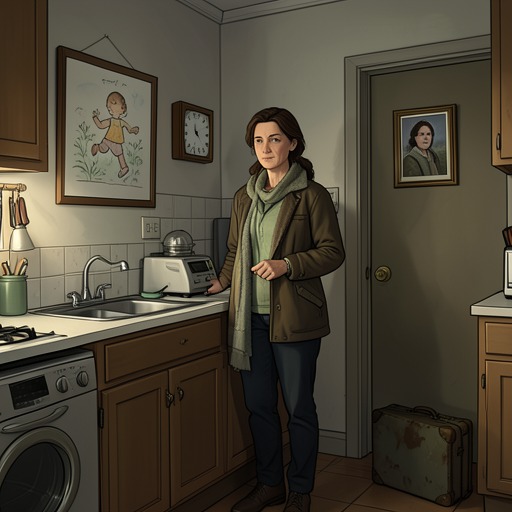
The HousemaidWomen Supporting One Another and Protecting Abuse Survivors takes shape through a chain of women recognizing danger and acting on that recognition. Its clearest pattern begins when Millie Calloway intervenes to stop a sexual assault, becomes morally complicated when Nina Winchester recruits her as part of a plan against Andrew Winchester, and finds a quieter continuation when Nina recommends Millie to Lisa. These acts are not interchangeable: protection can mean direct violence, concealment, or the practical opening of a door. Together they make solidarity an active response to danger, while showing the risks of asking a vulnerable woman to bear them.
Intervention as Protection
At sixteen, Millie hears her friend calling for help from behind a bedroom door at her disciplinary boarding school. Inside, she finds a two-hundred-pound football player forcing himself on the girl. Millie picks up a paperweight from a desk and strikes him repeatedly; he dies before reaching the hospital. The scene makes her intervention immediate and physical: she does not wait for permission or distance herself from the threatened girl, but enters the room and acts.
The consequences complicate any easy celebration of that choice. Photographs of the boy’s crushed skull made it difficult to argue that Millie had not meant to kill him. She eventually pleaded guilty to lesser manslaughter charges, with her age and the circumstances taken into account. The boy’s family wanted vengeance but also did not want him publicly branded a rapist. Millie’s attempt to protect her friend thus brings her a prison sentence and a criminal record, while the public account of the assault remains shaped by competing interests. Her history establishes both her courage and the severe personal cost that can follow intervention.
The Winchester Household: Solidarity and Risk
Years later, Millie’s circumstances leave her with little room to refuse danger. Before taking the Winchester housekeeper job, she has spent a month sleeping in the back seat of her ten-year-old Nissan, with everything she owns in the trunk. She is on parole and fears being sent back to prison to serve the remaining five years of her sentence. She has concealed from her parole officer that she was fired from a waitressing job and later lost her apartment; at the time of her first meeting with Nina, a secure place to live and work is not an abstract benefit but a fragile way out of immediate precarity.
The job places that need inside a household whose labor demands are concrete and constant. On her arrival, Millie finds six sticky cups, crumpled newspapers, a dented pizza box, discarded clothes, and the remains of dinner across the Winchester living and dining rooms. Nina needs her to restore order, clean, and help with Cecelia, including transportation to lessons or playdates. Nina also expects her to prepare for a Parent Teacher Association gathering and repeatedly reminds her to collect the hors d’oeuvres. Millie wants to make herself invaluable, partly because she fears Nina may discover her past and fire her. Her dependence on the position therefore shapes what she can safely do, even as her labor makes her useful to the family.
Nina’s plan changes the meaning of that employment. She initially hopes a new housekeeper might become her replacement, so Andrew will fall in love with another woman and let her go. But Nina gives Millie a copy of the attic-room key and leaves pepper spray in a blue bucket in the closet for another purpose: she has hired Millie hoping she will kill Andrew. This is not a straightforward offer of rescue. Nina equips Millie to act, but conceals the purpose from her, turning a relationship built on paid domestic work into a dangerous and ethically compromised alliance. The plan depends on Millie’s capacity for force without giving her informed knowledge of the role Nina has assigned her.
Taking Responsibility for Another Woman
After Andrew’s death, Nina sees Millie’s fear that she will return to prison for the rest of her life. Nina decides to protect her by telling the police that Millie was not present during the week Andrew died and that Nina had given her the week off. She points to her own history of psychiatric hospitalization as a possible explanation for what may happen to her, and tells Millie to leave. The choice shifts the danger onto Nina: rather than let Millie face the consequences alone, Nina offers her own account and accepts the risk that it may return her to psychiatric care.
This act differs sharply from Nina’s original plan. Recruiting Millie to kill Andrew made Millie a hidden instrument in Nina’s escape; taking responsibility after his death recognizes Millie as a person whose future is at stake. Nina’s protection does not erase the manipulation that came before it, but it does change the direction of their relationship. She uses her own vulnerability and history as a shield for Millie, who is especially exposed because a parole violation could send her back to prison.
A Recommendation That Opens a Door
Nina’s later recommendation of Millie to Lisa carries their alliance beyond the Winchester household. When Lisa asks about hiring help with cleaning, laundry, and light cooking, Millie still has the background-check problem created by her prison record. Lisa’s hands rest near a block of knives; as she tugs at her blouse, Millie notices a dark purple bruise on her upper arm shaped like fingers. A photograph on the refrigerator shows Lisa with a tall, stocky man. Millie imagines his fingers gripping Lisa’s arm, but the scene leaves the cause of the bruise unconfirmed.
Millie understands why Nina has recommended her: Nina knows her well enough to recognize that she may respond to the sign of danger. Lisa asks whether Millie can help, and Millie agrees. The offer of household work is also the opening through which a possible appeal for help is made. Nina does not confront Lisa’s situation for her; instead, she connects her with someone she trusts to notice what may be happening. Millie, in turn, can answer without demanding that Lisa first explain or prove her fear.
Meaning and Limits
The pattern is defined by action rather than by a claim that every choice is safe or sufficient. Millie’s first intervention protects Kelsey but leads to a fatal outcome and imprisonment. Nina’s effort to use Millie against Andrew exposes Millie to grave danger without her knowledge. Nina’s later decision to take blame protects Millie at a cost to herself, while her referral to Lisa offers a less coercive form of assistance: a connection that leaves Lisa free to ask for help.
The concept therefore holds together different kinds of care without treating them as morally identical. Its most durable gestures are specific—a paperweight lifted in a dark room, a key and pepper spray placed for a concealed purpose, a false account offered to shield someone from prison, and a recommendation that helps one woman recognize another’s distress. The novel presents solidarity as consequential and imperfect: it can preserve a person’s chance to leave, but it can also entangle her in risks she did not choose.