
The Narrator’s Changing Relationship to Humanity
The HumansThis thread follows the movement from disgust and superiority to recognition, empathy, and a chosen human identity.
increasing Bearing strength in each event
 decreasing
Bearing strength in each eventdecreasingDisgust at Human Appearance
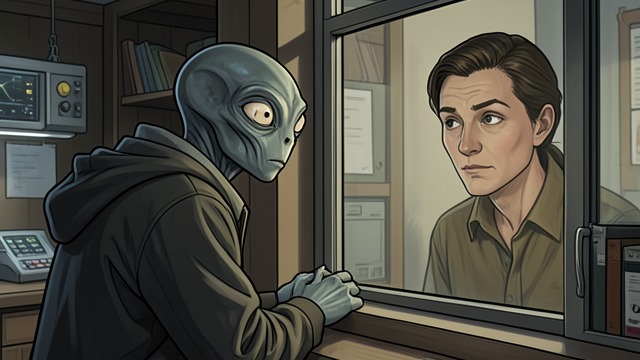
The Alien Gaze
An unfamiliar species
The narrator finds human faces grotesque, their bodies exposed and difficult to understand. He interprets ordinary features as signs of biological strangeness.
Distance preserved
Disgust supports his belief that humanity is fundamentally other and makes the assignment to intervene easier to accept.
Learning Human Signals
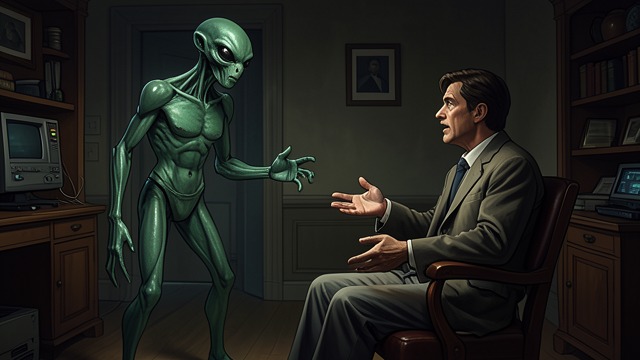
A Social Vocabulary
Observation
The narrator learns that smiles, clothes, rooms, and gestures carry meanings not contained in words. He repeatedly misreads politeness, humor, and emotional cues.
Dependence on others
His survival depends on interpretation and imitation. The attempt to remain an outsider paradoxically forces him to attend closely to human behavior.
Empathy Emerges
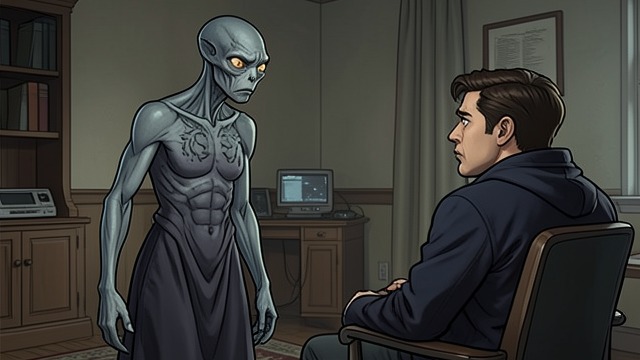
Another Person’s Pain
A new recognition
The narrator witnesses Tabitha Russell’s anguish and later feels concern for Newton and Gulliver Martin. Individual suffering begins to matter beyond its strategic significance.
A changing self
Empathy is not a theory he chooses but a response that alters his decisions. The species he had judged from a distance becomes a collection of particular lives.
Humanity Chosen
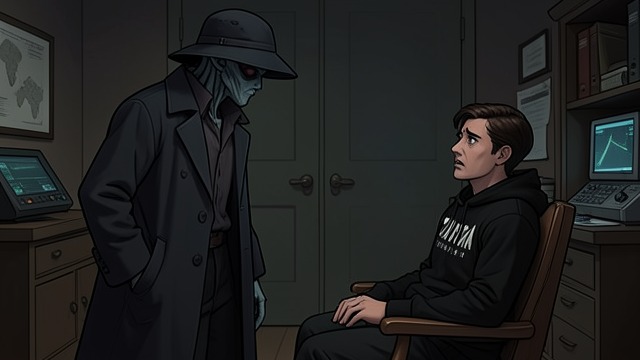
The Cost Accepted
Renouncing advantage
The narrator asks to lose the gifts that let him heal, travel, and live indefinitely. He wants to stay in a human body despite understanding its risks.
Identity through choice
He does not become human through appearance alone. He becomes human by accepting limitation and choosing responsibility for people who can be hurt.
A Human Life Continued
Belonging Without Certainty
A changed perspective
The narrator lives with loneliness, regret, and longing, yet also finds pleasure in music, nature, and conversation. He no longer measures life by the absence of pain.
A return chosen
He wants a family and happiness in the present. His humanity remains imperfect and unfinished, but it is now a life he actively wants.
The first night on Earth
During the first days in Cambridge
After watching Tabitha Russell grieve
After the roof rescue
The final chapters, after the return to Cambridge
