Andrew Martin’s abduction and replacement
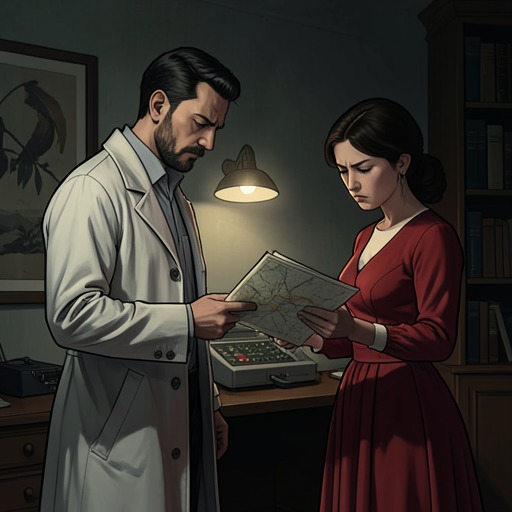
The HumansAndrew Martin’s abduction and replacement is the concealed origin of the Alien narrator’s human identity and mission. After Andrew reaches a mathematical breakthrough, the hosts abduct and kill him; the Alien narrator is then made to assume his role and sent to halt human progress by destroying the proof and its traces. The substitution is physical, not a transfer of Andrew’s memories or inner life, leaving the impostor to learn the human world from within a life already in motion.
The Abduction and the Mission
Andrew is a forty-three-year-old mathematician at Cambridge University who has spent eight years pursuing a problem that had resisted solution. Shortly after his breakthrough, he is taken by the hosts, who are the Alien narrator’s employers. The narrator identifies Andrew’s death as part of the abduction, making clear that the professor’s disappearance is not a voluntary departure or a temporary removal: the original man is gone.
The breakthrough gives the abduction its purpose. The Alien narrator has been sent to halt progress and destroy the evidence Andrew produced. That evidence exists not only in computers but also in living human beings, so the mission reaches beyond deleting files or suppressing a result. The hosts’ directive treats knowledge itself—and the people who carry it—as something to be eliminated.
The Replacement and Its Limits
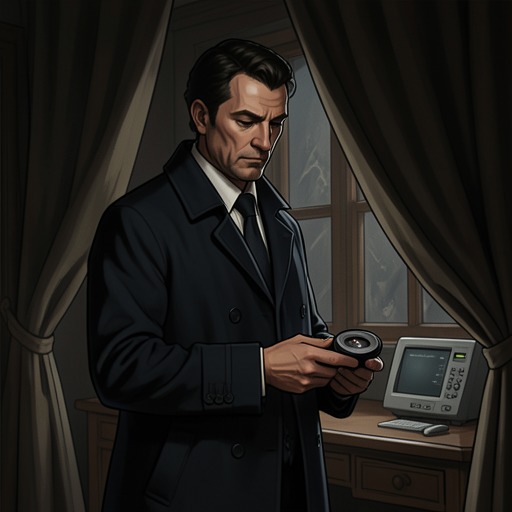
The narrator takes on Andrew’s physical identity, but the transformation does not make him Andrew. He stresses that the professor was a role and a disguise, and that he felt no connection to the man whose place he occupied. The gap between appearance and identity is central to the replacement: the narrator can pass as a forty-three-year-old human, yet arrives on Earth as a kind of newborn, without the experience needed to inhabit that life naturally.
The narrator had met Andrew only briefly, just long enough for an incomplete reading. The physical reading was complete, but the mental one was not. The explanation is that human brains can be cloned, while their stored contents cannot be reproduced in full; the replacement therefore has to learn much for himself. His limited access to Andrew’s mind leaves the assumed identity full of practical and personal blanks, and the narrator later recognizes that a proper meeting might have prepared him for what followed.
Consequences for the Story
The replacement turns Andrew’s intellectual achievement into the starting point of the narrator’s human life. The mission depends on impersonation, but the imperfect transfer means the narrator must encounter the people and circumstances around Andrew without the original’s full knowledge. The resulting distance between a borrowed body and an incomplete mind makes the disguise unstable from within, even before its purpose is considered.
The event also establishes the novel’s central conflict between mathematical progress and the authority that seeks to suppress it. Andrew’s proof is not merely an academic result: it is the reason for his death, the reason the narrator is sent to Earth, and the target of a directive that includes erasing human witnesses as well as computer records. The replacement begins as an instrument of that suppression, carrying out a task whose human consequences will emerge through the life he has taken over.