Andrew Martin’s proof of the Riemann hypothesis
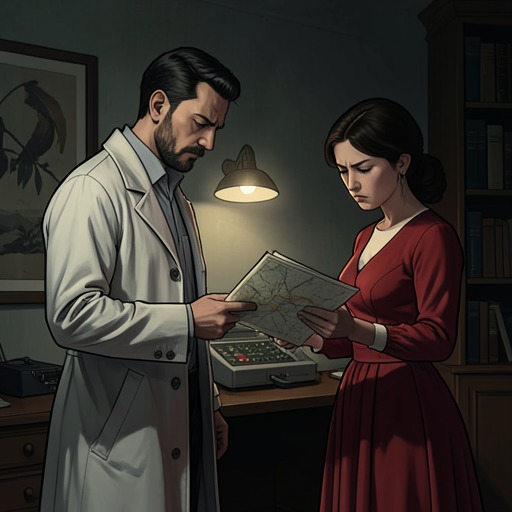
The HumansAndrew Martin’s proof of the Riemann hypothesis is a completed mathematical breakthrough whose destruction gives the Alien narrator’s mission a human cost: the proof represented possibilities for humanity that he had helped to erase. The surviving book about Andrew’s pursuit preserves the scale of his ambition, while the proof itself is gone.
The proof and the book that survives
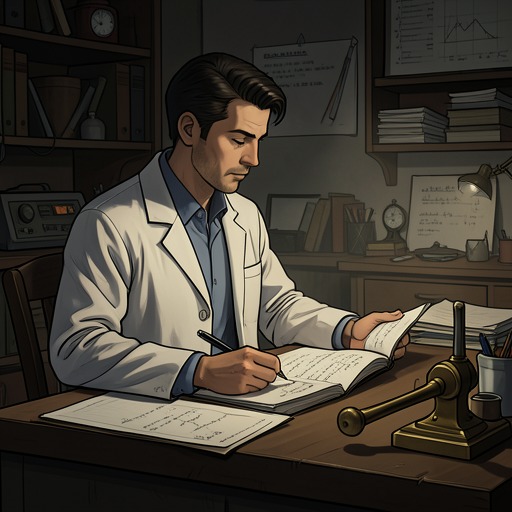
The Alien narrator encounters Andrew’s slim book, The Zeta Function, marked as an uncorrected proof copy. After locking the door, he sits in Andrew’s chair and reads it in full. The book recounts Andrew’s effort to prove the Riemann hypothesis and explain the pattern of increasing gaps between prime numbers. Its account makes the achievement feel especially painful: Andrew had written about a quest that seemed futile, but he solved the problem afterward. By the time the narrator reads the book, he has destroyed the proof, so the account remains while the decisive result does not.
That distinction gives the object a double significance. The Zeta Function records Andrew’s search, but it is not the proof itself; its pages make legible the work and desire behind a result that can no longer deliver what Andrew hoped for. The narrator’s reading turns a technical subject into an encounter with the human effort he has interrupted.
A lost future
The narrator measures the proof’s consequences against the Second Basic Theory of Prime Numbers, the mathematical breakthrough that enabled his own civilization to travel through the universe, inhabit other worlds, transform into other bodies, extend life, and search minds and dreams. He recognizes that destroying Andrew’s proof has not simply stopped one mathematician from succeeding. In his view, it has helped stop humanity from reaching advances that might have followed.
The book sets this lost potential beside a record of human achievements, from fire and the plough to the printing press, steam engine, microchip, and discovery of DNA. The narrator acknowledges these milestones but sees a gap between them and the advances he associates with mature mathematical development: synchronized brains, free-thinking computers, automation, and intergalactic travel. The proof therefore stands at a threshold. Andrew’s result could have opened a path toward capacities that humanity had not yet attained; its destruction makes the narrator feel that he has killed that future.
The result and the secret
Later, the proof’s having been established becomes a point of distinction in a conversation about Ari’s death. The Alien narrator objects that Ari did not know the Riemann hypothesis had been proved. His adversary confirms that Ari did not know, but explains that the order to kill extended beyond people who knew about the proof: it covered anyone told of the narrator’s origins. This exchange separates two kinds of dangerous knowledge—the mathematical breakthrough and the narrator’s identity—while showing how the proof’s existence remains entangled with the larger effort to control what others can know.