Clockwork radio
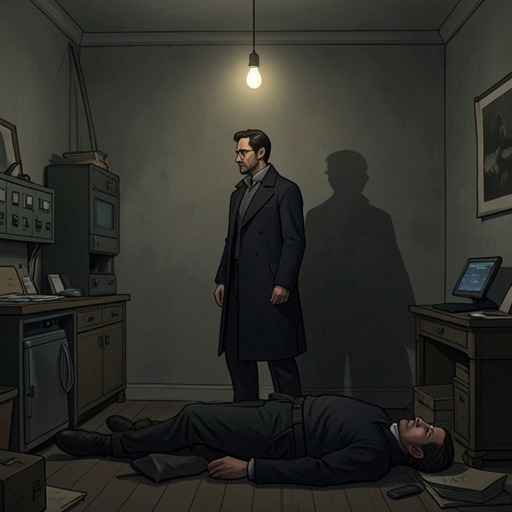
The HumansThe clockwork radio is an ordinary household object turned into a means of resistance during Jonathan Roper’s attempt to compel Gulliver to cut his wrist. The Alien narrator switches it on and uses its loud classical music as part of a deliberately layered assault on the silence in which Roper’s mind control is taking effect. Its importance lies not in any special power of its own, but in the way sound interrupts the scene and helps create an opening for intervention.
Appearance and Operation
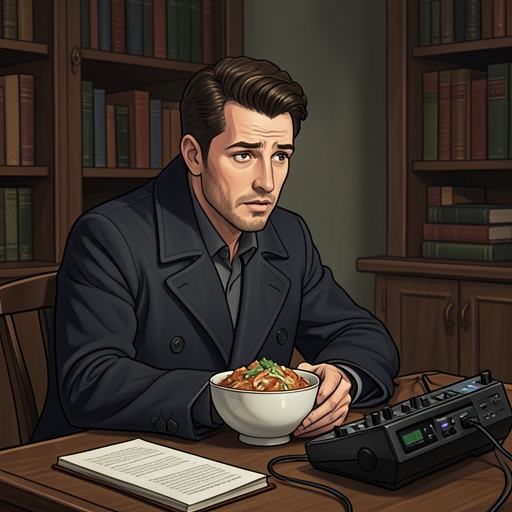
The radio is on a bookcase when the Alien narrator puts his plan into action. He turns its power dial through a full 360-degree rotation and presses the button marked with a small green circle. The display lights up at 90.2 MHz. These concrete steps give the device a simple, physical presence in a scene otherwise shaped by the invisible pressure of Roper’s influence: a dial, a button, a display, and then sound.
The broadcast is classical music, which blares at almost full volume as the narrator carries the radio along the hallway. He thinks it is Debussy, though the narration preserves his uncertainty rather than identifying the music definitively. The scene offers no station name or explanation for the frequency; what matters in the moment is that the radio produces a strong, continuous sound.
Use During the Confrontation
Roper’s instructions have begun to direct Gulliver toward a knife and toward cutting his wrist. The narrator turns on the radio at the point when he senses that the attempt is about to happen. The music reaches Gulliver as the narrator approaches the kitchen. Gulliver asks what the noise is, and the narration marks his head as clearing. That response makes the radio’s intervention legible: it does not overpower Roper physically, but sound breaks into the sequence of commands and interrupts their hold on Gulliver.
The radio is only one part of the narrator’s plan. After entering the kitchen, he sees Roper with a hand on Gulliver’s head and switches on the kitchen’s own radio as well. The television in another room is already on, as the narrator had intended. Classical music, television newsreaders, and rock music then fill the house together. The first radio thus begins a wider sound strategy: multiple sources make the rooms acoustically crowded while the narrator moves to pull Roper’s arm away from Gulliver.
The immediate action remains dangerous. The knife falls, Gulliver collapses and convulses, and Roper turns on the narrator, gripping him by the throat and pressing him against the refrigerator. When Gulliver’s convulsions stop, he looks between the two identical men struggling in the kitchen. The radio does not resolve the confrontation by itself; it helps disrupt Roper’s control, while the narrator’s physical intervention and the continuing noise shape what follows.
Tactical and Narrative Significance
The narrator’s stated objective is to keep Roper in the kitchen, where the radios are playing and the television sounds from the next room. In that arrangement, he believes they will be equally matched. The clockwork radio therefore serves both as a direct countermeasure to the attempted suicide and as one component in a contest over the conditions of the struggle. The narrator does not rely on a single decisive blow: he uses sound to unsettle Roper’s control, then tries to separate Roper from Gulliver and keep the confrontation within the noisy space.
The radio’s ordinary character sharpens this reversal. It sits among household furnishings, yet the narrator’s deliberate handling of its dial and button makes it an instrument in a life-or-death intervention. Its music does not erase the violence or guarantee safety; it changes the immediate circumstances enough for Gulliver’s attention to break through the command and for the narrator to act. In a scene organized around coercive words and physical contact, the device makes sound itself part of the resistance.