Gulliver’s suicide attempt on the roof
The HumansGulliver’s suicide attempt on the roof turns a rain-soaked night into a test of whether the Alien narrator can still accept death as an abstract fact. Faced with Gulliver’s apparent death, he abandons the effortless detachment of his former life: he hopes, acts, and spends himself trying to bring the boy back. The rescue saves Gulliver, but leaves the narrator collapsing in pain and violet light.
Discovery in the attic
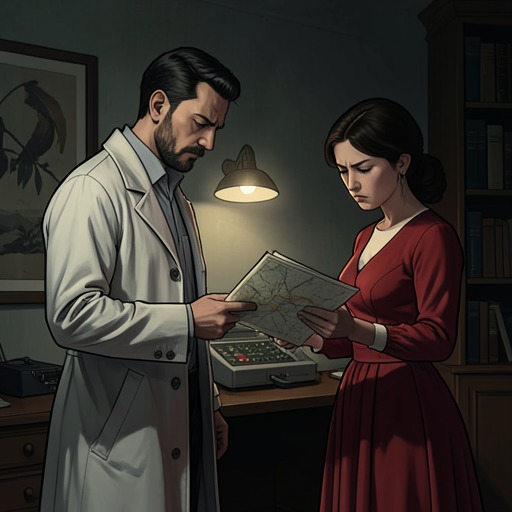
Rain has kept the Alien narrator from sleeping. He leaves Isobel in bed and goes downstairs to speak with Newton, only to find the dog sound asleep in his basket. On his way back upstairs, he notices that the air is cooler than it should be and that the cold seems to come from above, against the expected order of things. Remembering Gulliver’s bruised eye, he follows the chill toward the attic.
The room appears undisturbed: the computer, Dark Matter posters, and scattered socks are all in place. Gulliver is the one thing missing. A breeze from the open window carries a small piece of paper toward the narrator; its message is an apology. Looking out into the night, he sees the stars and recognizes the sky as both alien and familiar. Beyond it lies his home, and he realizes he could return if he completed his task. That prospect makes the scene’s immediate human danger starkly concrete: the window opens onto a sloping roof, easy enough for him to climb out onto, but a considerable exertion for Gulliver.
The attempt and its immediate danger
The rain is relentless, and the narrator recognizes that the difficulty is not simply reaching Gulliver but doing so on a roof made treacherous by the weather. When Gulliver reacts with nervous intent, the narrator tells him not to go through with it. Gulliver lets a small plastic cylinder fall into the gutter. It is empty; it had held all twenty-eight diazepam tablets.
The narrator moves closer, aware that suicide is a real possibility for humans, and unsettled that Gulliver’s decision matters so much to him. As he nears the boy, Gulliver’s eyes close and he slips into sleep, or something the narrator cannot distinguish from prayer. A roof tile comes loose beneath the narrator. He slips sideways on the rain-greased tiles and catches the gutter rail. He could climb back up, but Gulliver is tilting forward. The danger has shifted from a desperate act already begun to a fall that may happen while the narrator is still within reach.
From apparent death to intervention
The narrator knows he could call for help, but imagines the delay of an ambulance and hospital, and the limits of human medical knowledge in the dark. He also recognizes that Gulliver’s death is one he was supposed to approve of, yet cannot accept. When he checks, Gulliver has no pulse. His body temperature has already begun to fall; by the narrator’s reckoning, he has arrived seconds too late.
That conclusion ought, rationally, to end the matter. Instead, the narrator thinks of the people in Isobel’s writing who persist against the odds, most without success, and of humanity’s capacity to hope. He sees that hope is irrational and effortful—qualities wholly unlike the perfectly effortless existence of his home. Rather than merely wishing from a distance, he presses his left, gifted hand to Gulliver’s heart and begins to work. The rescue is not a simple exercise of power: effort tears through him as pain, while Gulliver remains still.
A life regained, at a cost
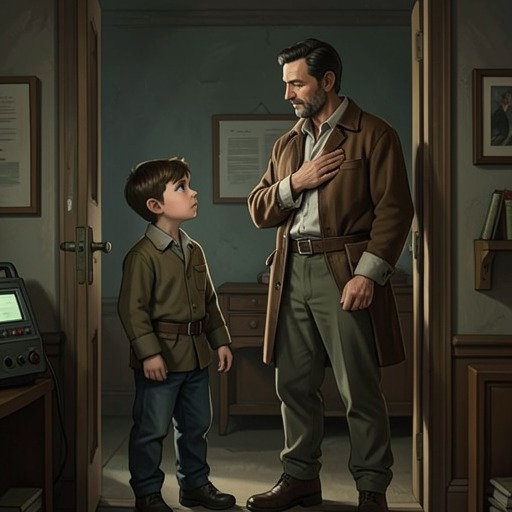
A light comes on inside the house. Isobel may have woken, perhaps because Newton is barking, but the narrator is no longer attending to what is happening around him. He feels the faintest pulse beneath his hand. Gulliver is alive: his lips twitch, his bruised eyes move, and both eyes open. The narrator reads those eyes as the visible sign of the person and life within them, and experiences what he calls the exhausted wonder of a father.
There is no uncomplicated relief. The narrator is being flooded with pain and violet, and feels himself about to collapse onto the wet ground. Footsteps approach behind him; they are the last thing he hears before darkness overtakes him. The event’s reversal—from a body with no pulse to a living boy—makes the narrator’s inward change physical: the being who could have returned to a painless world instead chooses costly effort for Gulliver. His intervention preserves Gulliver’s life, while its immediate consequence is the narrator’s own collapse.